 Pin
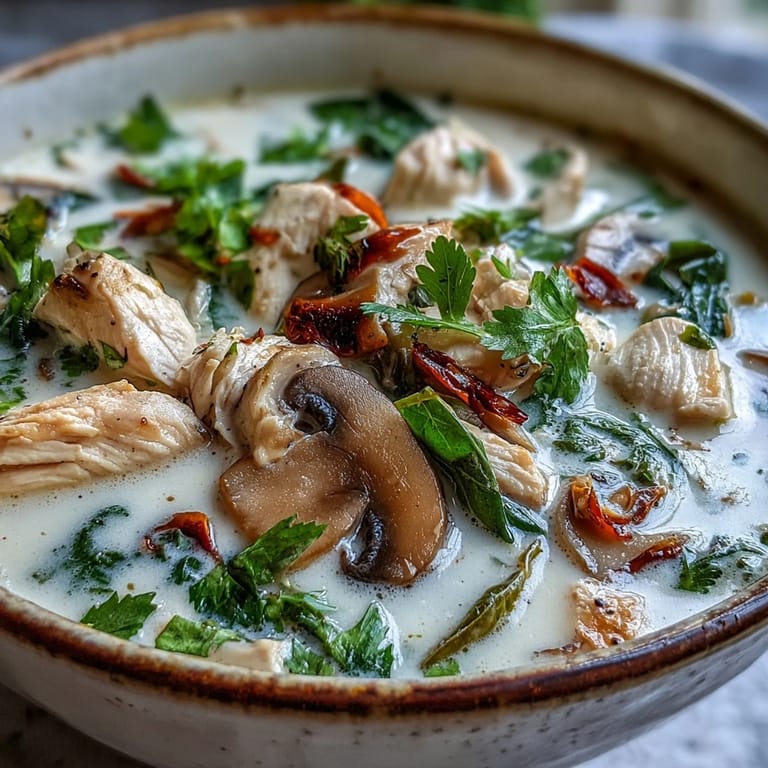
Pin My first encounter with real Tom Kha Gai wasn't in a restaurant—it was in a cramped Bangkok kitchen at 6 AM, steam rising from an enormous pot while my friend's mother moved with practiced precision, adding aromatics one by one. She didn't measure anything, just knew when the broth smelled alive enough to welcome the chicken. Years later, I finally understood what she was listening for: that precise moment when lemongrass and galangal stop being separate voices and become one whispered song. This soup has become my answer to almost everything—a quiet bowl when I need comfort, a showstopper when I'm cooking for people I want to impress.
I served this to my skeptical brother who claimed he didn't like soup, and he ate two bowls in silence before asking for the recipe. That moment—when someone stops talking and just eats—told me everything I needed to know about whether I'd gotten it right.
Ingredients
- Chicken broth (3 cups): Use good quality broth; it becomes the foundation everything else rests on, so mediocre broth means a mediocre soup.
- Lemongrass stalk: Trim the dry outer layers, smash it gently with your knife's spine—you're cracking it open to release the oils, not pulverizing it.
- Fresh galangal (4 slices): This rhizome is sharper and more peppery than ginger; if you absolutely cannot find it, use ginger but know the soup will taste gentler.
- Makrut lime leaves (4 torn pieces): These are non-negotiable for that distinctive citrusy depth; frozen ones work beautifully if fresh aren't available.
- Thai bird's eye chilies (3, lightly crushed): Lightly crushing them releases heat gradually as the soup simmers, giving you control rather than a sudden burn.
- Boneless, skinless chicken thighs (1 lb, thinly sliced): Thighs stay moist and flavorful during cooking, unlike breast meat which can turn stringy and sad.
- Full-fat coconut milk (14 oz): The richness is essential here; lite versions will leave the soup tasting thin and disappointed.
- Fresh mushrooms (5 oz, sliced): Straw mushrooms are traditional and delicate, but cremini work beautifully too with a earthier presence.
- Shallot (1 medium, thinly sliced): Shallots add a whisper of sweetness that balances the funk of fish sauce.
- Fish sauce (2 tbsp): Yes, it smells funky in the bottle, but trust it—this is what makes the soup taste authentically Thai.
- Lime juice (1 tbsp plus more): Fresh lime is crucial; bottled tastes hollow and wrong in this delicate broth.
- Palm sugar (1 tsp): A pinch of sweetness rounds everything out; brown sugar works if you can't find palm sugar, though the flavor won't be quite as rounded.
- Fresh cilantro and green onions: These aren't garnishes—they're the final conversation the soup has with your palate.
Tired of Takeout? 🥡
Get 10 meals you can make faster than delivery arrives. Seriously.
One email. No spam. Unsubscribe anytime.
Instructions
- Build the aromatic base:
- Pour your broth into a medium pot and bring it to a gentle simmer—you want small bubbles, not an aggressive roll. Add the smashed lemongrass, galangal slices, torn lime leaves, and crushed chilies, then let them swim together for 5 to 7 minutes, allowing the broth to turn golden and fragrant.
- Welcome the chicken:
- Slip the thinly sliced chicken and shallot into the simmering broth and cook for just 3 to 4 minutes—you're looking for the meat to turn from pink to opaque, not to cook it through completely since it'll continue gentling in the residual heat.
- Add richness and vegetables:
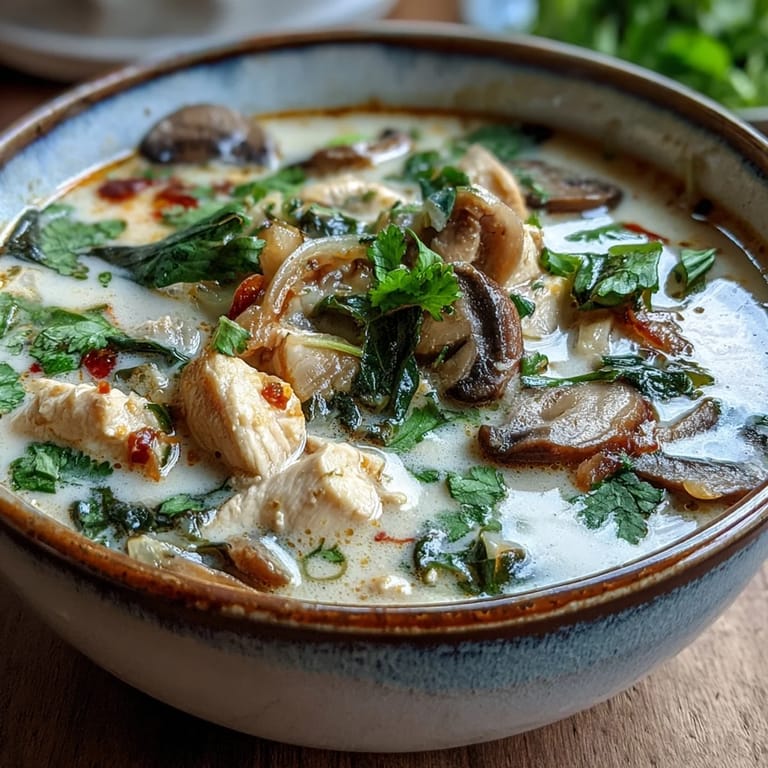
- Scatter in your mushroom slices, then pour the coconut milk in a thin stream while stirring gently. Bring everything back to a soft simmer; let the soup bubble just slightly but never aggressively, as vigorous boiling can break the emulsion and make it look oily.
- Season with intention:
- Add the fish sauce, palm sugar, and lime juice, then taste and adjust—this is the moment where you're balancing salty, sour, and sweet into harmony. You might need a touch more lime juice or an extra pinch of sugar depending on your broth and coconut milk.
- Rest and finish:
- Remove from heat and let it settle for a moment—some cooks strain out the galangal, lemongrass, and lime leaves, while others leave them in for continued flavor and tradition. Ladle into bowls and crown each one with cilantro, green onions, and a squeeze from a lime wedge.
 Pin
Pin A friend once told me that eating Tom Kha Gai transported her back to a trip she took years ago, even though she'd never had this exact soup there. That's when I realized this dish isn't just food—it's a memory maker, a moment where flavors do the talking and everything else falls away.
The Aromatics Are Everything
What separates this soup from ordinary chicken soup is those first few minutes when you're infusing the broth. The lemongrass, galangal, and lime leaves aren't just ingredients—they're the voice of the dish. Many people rush this step or skip it entirely, which is why their Tom Kha tastes pleasant but forgettable. Spend those five or seven minutes letting the broth drink in the aromatics, and you'll taste the difference in every spoonful.
Why Coconut Milk Matters Here
Coconut milk isn't a substitute or an afterthought in this soup; it's a player. The full-fat version creates a creamy suspension that carries all those aromatic flavors directly onto your palate, while lighter versions leave gaps where the flavor should be. When you pour it in slowly while stirring, you're creating an emulsion—a partnership between the broth and the fat that keeps everything from separating and looking sad.
Balancing the Four Tastes
Thai cooking is built on balance, and Tom Kha Gai is no exception. Every element—the fish sauce's funk, the lime's brightness, the palm sugar's gentle sweetness, the spice from chilies—is designed to talk to the others. This is why tasting and adjusting as you go matters so much more than following the recipe like scripture. Your palate is the real guide here, so trust it and adjust as needed.
- Add fish sauce gradually because it's potent—you can always add more, but you can't take it out.
- Lime juice should taste bright without making you pucker, so use fresh lime and adjust based on how acidic your particular fruit feels today.
- If it tastes flat, it usually needs either more fish sauce or lime juice, not more salt.
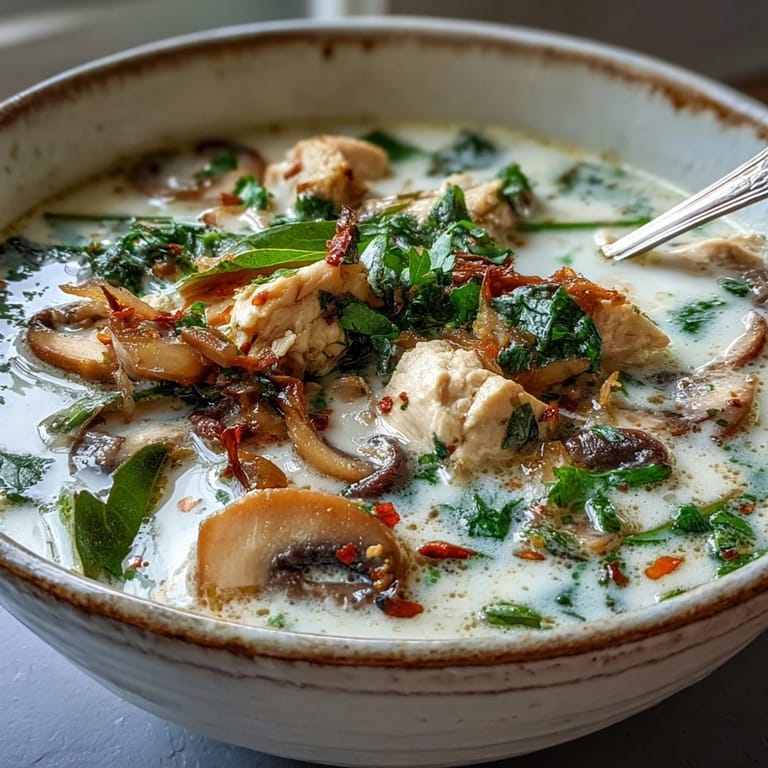 Pin
Pin This soup is proof that some of the best things in life don't require complicated techniques or rare ingredients, just patience and respect for what you're making. Make this once, and it becomes part of your kitchen vocabulary forever.
Recipe Questions
- → What makes Tom Kha Gai different from Tom Yum?
Tom Kha Gai features creamy coconut milk as its base, creating a richer and smoother soup. Tom Yum relies on a clear, intensely sour broth without coconut. The galangal and lime leaves remain prominent in both, but Tom Kha's coconut mellows the heat and adds luxurious texture.
- → Can I substitute galangal with ginger?
While ginger provides some spicy warmth, galangal offers distinct piney and citrus notes essential to authentic flavor. If unavailable, use younger ginger and increase the quantity slightly, though the taste profile will shift slightly from traditional.
- → How do I prevent the coconut milk from separating?
Keep the soup at a gentle simmer rather than a rolling boil. Vigorous boiling causes coconut milk to curdle and separate. Stir gently when adding coconut milk and maintain low heat throughout cooking for smooth, creamy consistency.
- → What type of chicken works best?
Boneless, skinless chicken thighs are ideal because they remain tender and juicy even after simmering. Breast meat can become dry and tough in the hot broth. Slice thighs thinly against the grain for even cooking and tenderness.
- → Can I make this vegetarian?
Substitute vegetable broth for chicken broth, replace chicken with firm tofu cubes or extra mushrooms, and use soy sauce or tamari instead of fish sauce. The aromatic base remains unchanged, preserving the essential Thai character.
- → How spicy should this soup be?
Traditional Thai preparation delivers noticeable but not overwhelming heat. Start with 2-3 crushed bird's eye chilies and adjust based on your preference. The coconut milk naturally tempers the spice, creating a warming rather than burning sensation.