 Pin
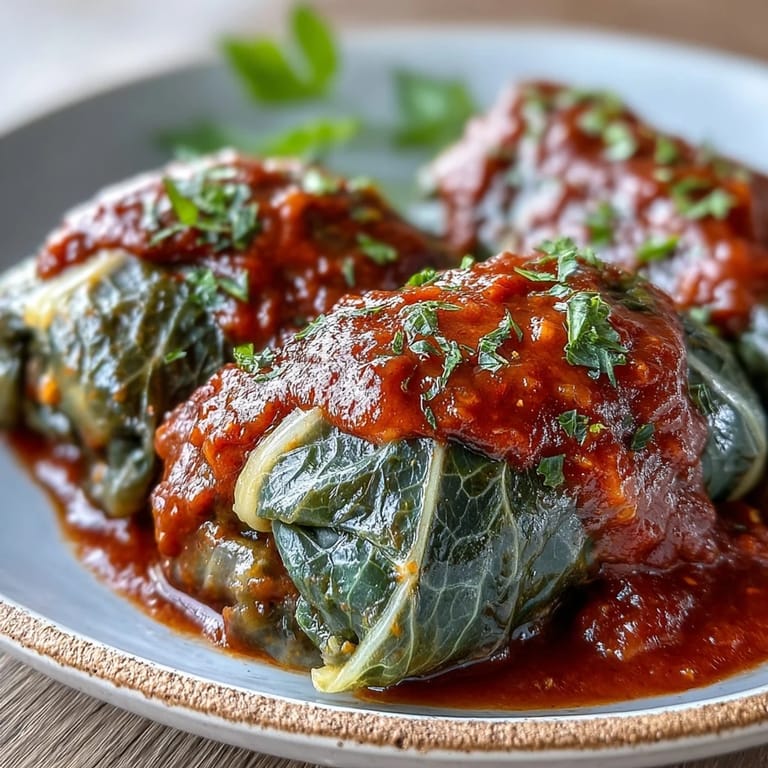
Pin My neighbor Maria handed me a plate of cabbage rolls through her kitchen window one autumn afternoon, steam still rising from the ceramic dish. She'd made them the way her grandmother did back in Poland, but everything was vegan now—no meat, no dairy, just humble vegetables and grains wrapped in soft leaves. I bit into one and couldn't believe how satisfying it was, how the lentils gave it substance without pretending to be something they weren't. That's when I decided to develop my own version, one that honored the tradition but made it accessible to everyone at my table.
I made these for my partner's family dinner last winter, nervous because his mom is a traditional cook who doesn't eat plant-based. She took one bite and asked for the recipe, then paused and said, 'No, actually, you should keep this one.' That small moment of acceptance meant more to me than any compliment about the food itself.
Ingredients
- 1 large head green cabbage: Look for one that feels dense and heavy for its size; the outer leaves are your wrapping paper, so choose a head with leaves that separate cleanly.
- 1 cup cooked brown rice: Brown rice holds its texture and adds a nutty flavor that white rice can't match, but day-old rice works beautifully here.
- 1 cup cooked green or brown lentils: These are the heart of the filling—they provide protein and a slightly earthy taste that anchors the whole dish.
- 1 small onion, finely chopped: Dice it small so it disappears into the filling and releases its sweetness as it cooks.
- 2 cloves garlic, minced: Fresh garlic is non-negotiable; the minced variety from a jar will taste flat in comparison.
- 1 medium carrot, grated: Grating instead of chopping means it softens faster and distributes its sweetness evenly throughout the filling.
- 2 tbsp tomato paste: This is your umami secret—use good quality paste and don't skip it, as it deepens the entire flavor profile.
- 1 tbsp olive oil (for filling): Use a mid-range extra virgin; save your expensive bottles for finishing dishes.
- 2 tbsp chopped fresh parsley: Fresh herbs make the filling taste alive, so don't substitute dried parsley here.
- 1 tsp dried thyme: Thyme is subtle but essential; it whispers in the background and makes people wonder what they're tasting.
- 1 tsp smoked paprika: This adds a hint of smokiness that evokes old-world kitchens and deepens the color beautifully.
- 1/2 tsp salt and 1/4 tsp black pepper: Start with these amounts and taste as you go—your palate is the best judge.
- 2 cups canned crushed tomatoes: San Marzano tomatoes are your best friend here; the sauce depends on their quality.
- 1 tbsp olive oil (for sauce): A separate tablespoon ensures the sauce has enough fat to carry the flavors.
- 1 small onion, finely chopped (for sauce): This is separate from the filling onion because the sauce deserves its own aromatic foundation.
- 2 cloves garlic, minced (for sauce): Again, fresh and minced, cooked gently until golden.
- 1 tsp dried oregano: Oregano is the voice of Mediterranean tomato sauce; it belongs here.
- 1 tsp sugar (optional): This trick came from my Italian friend Rosa—a tiny pinch balances acidic tomatoes without making the sauce taste sweet.
- Salt and pepper to taste: Always taste before serving and adjust; canned tomatoes vary in saltiness.
Tired of Takeout? 🥡
Get 10 meals you can make faster than delivery arrives. Seriously.
One email. No spam. Unsubscribe anytime.
Instructions
- Set your oven and prep the leaves:
- Preheat to 375°F (190°C) and bring a large pot of salted water to a rolling boil. Carefully peel 8–10 whole leaves from the cabbage head—work slowly because these are delicate and you don't want them tearing. Blanch them for 2–3 minutes until they're soft and pliable, then drain and lay them on a clean kitchen towel to cool.
- Make the filling base:
- Heat 1 tbsp olive oil in a skillet over medium heat and sauté the chopped onion and minced garlic for 3–4 minutes until they turn translucent and smell incredible. Add the grated carrot, tomato paste, thyme, paprika, salt, and pepper, cooking for another 2 minutes so the spices bloom and the tomato paste caramelizes slightly.
- Combine and season the filling:
- Transfer the cooked vegetables to a large bowl and stir in the cooked brown rice, cooked lentils, and fresh parsley. Mix everything thoroughly and taste the filling—this is the time to adjust seasoning because you can't fix it once the rolls are wrapped.
- Build the sauce:
- Heat 1 tbsp olive oil in a saucepan over medium heat and sauté the onion and garlic until translucent and golden. Add the crushed tomatoes, oregano, sugar if using, salt, and pepper, then let it simmer gently for 10 minutes, stirring occasionally so nothing sticks to the bottom.
- Layer your baking dish:
- Spread about 1/2 cup of the tomato sauce across the bottom of your baking dish—this prevents sticking and creates a flavor foundation. This small step is what keeps the rolls from drying out and gives them a built-in sauce on the bottom.
- Roll with intention:
- Lay a cabbage leaf flat on a clean surface and trim away the thick stem if it's particularly rigid. Place 2–3 tablespoons of filling at the base of the leaf, fold in the sides, and roll tightly away from you, tucking as you go so it stays secure. Place each roll seam-side down in the baking dish so it doesn't unravel during cooking.
- Top and cover:
- Once all rolls are nestled in the dish, pour the remaining sauce over them evenly and cover the entire dish tightly with foil. The foil traps steam and ensures even, gentle cooking.
- Bake low and slow, then finish:
- Bake covered for 45 minutes, then remove the foil and bake for another 10–15 minutes until the sauce is bubbling around the edges and the rolls are golden. The uncovered time lets some of the liquid reduce and concentrates the sauce flavor.
- Rest before serving:
- Let the rolls cool for 5 minutes so they firm up slightly and won't fall apart when you transfer them to a plate. This brief rest also lets the flavors settle.
 Pin
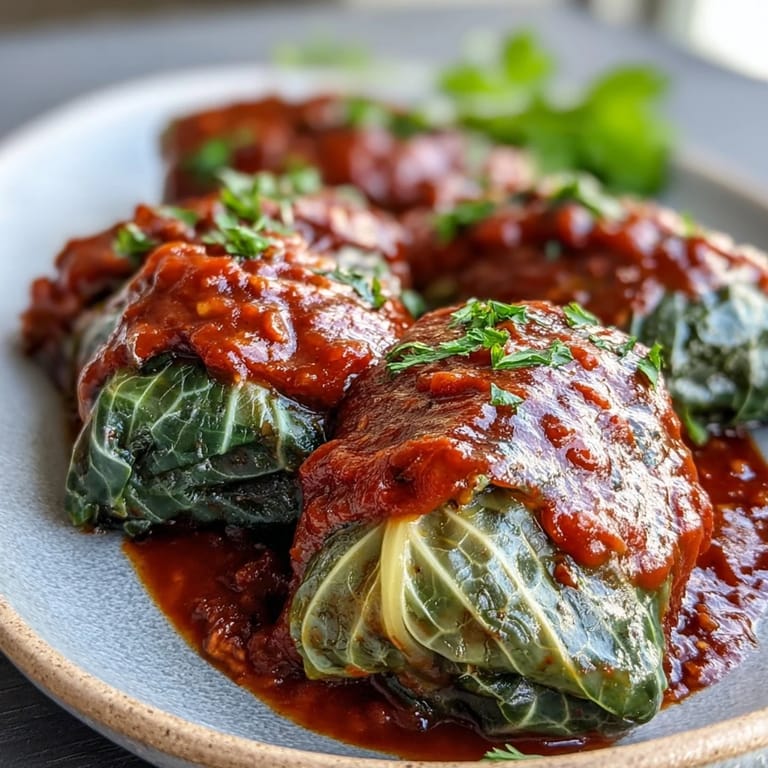
Pin My sister came home from college and said this was the one thing she missed eating, which surprised us both since she'd grown up eating meat. Now she makes them in her tiny dorm kitchen, and I like to think these humble rolls became part of her identity in some quiet way.
Why This Dish Works
The genius of cabbage rolls is that they're humble but sophisticated, a peasant dish elevated by care and attention. The blanched leaves become silky wrappers, the lentils and rice provide both substance and nutrition, and the tomato sauce ties everything together with its warm acidity. Every element is there for a reason—nothing is extra, nothing is missing.
Making It Your Own
This recipe is a foundation, not a law. I've made versions with quinoa when I wanted extra protein, and I've added sautéed mushrooms when I needed earthiness. Someone once suggested I mix in some fresh dill, and now I can't imagine leaving it out. The beauty is that as long as you respect the structure—the blanched leaves, the cooked grains, the balanced sauce—you can riff endlessly.
Serving and Storage
These rolls are best served hot from the oven, but they're equally delicious at room temperature or even straight from the refrigerator. The flavors deepen as they sit, which is why I often make a double batch and eat them throughout the week. They reheat beautifully in a 350°F oven for about 15 minutes, or you can microwave individual rolls if you're in a hurry.
- Store leftovers in an airtight container in the refrigerator for up to 5 days, and they taste even better on day two.
- Freeze unbaked rolls wrapped in foil and baked them straight from frozen, adding an extra 15–20 minutes to the baking time.
- Serve with crusty bread to soak up the sauce, or alongside creamy mashed potatoes for comfort food perfection.
 Pin
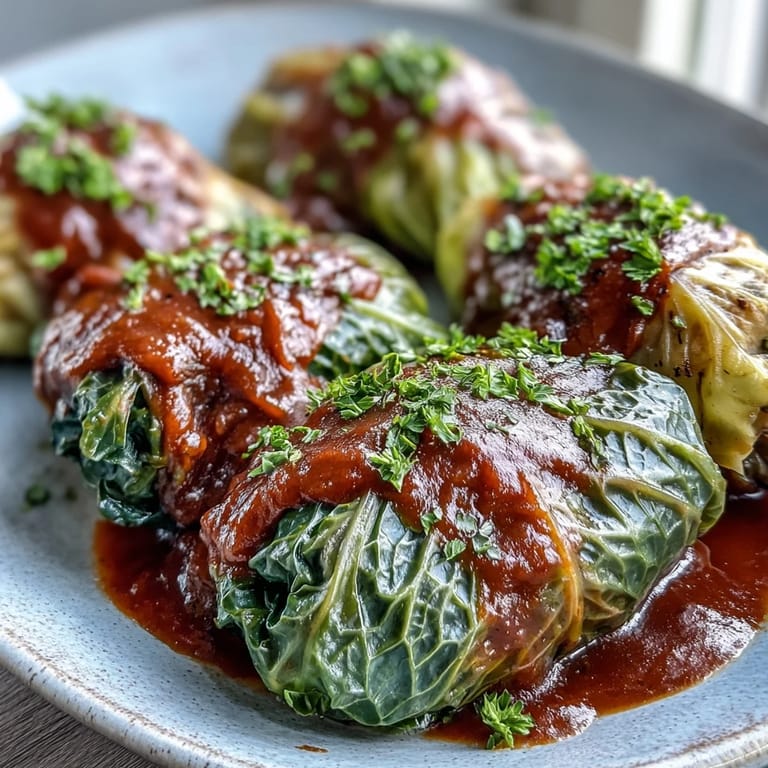
Pin These cabbage rolls have become my love letter to plant-based cooking—proof that simple ingredients, treated with respect, can nourish both body and soul. Make them for people you care about, and watch how something so ordinary becomes memorable.
Recipe Questions
- → Can I prepare cabbage rolls ahead of time?
Yes, you can assemble the rolls up to 24 hours in advance. Store them covered in the refrigerator with the sauce, then bake when ready to serve. You may need to add 5-10 minutes to the cooking time if baking from cold.
- → What if my cabbage leaves tear while blanching?
If leaves tear, you can overlap two smaller pieces to create one wrap, or simply prepare a few extra leaves as backups. Slightly overcooking the leaves makes them more pliable and less likely to tear.
- → Can I freeze these cabbage rolls?
Absolutely. Freeze assembled unbaked rolls in an airtight container for up to 3 months. Thaw overnight in the refrigerator before baking, or bake directly from frozen, adding 15-20 minutes to the cooking time.
- → What can I substitute for lentils?
You can use cooked chickpeas, black beans, or even crumbled tofu. For a different texture, try cooked bulgur wheat or finely chopped mushrooms mixed with the rice.
- → How do I know when the rolls are fully cooked?
The rolls are done when the cabbage is very tender when pierced with a fork, the sauce is bubbling around the edges, and the filling is heated through. The tops should be slightly caramelized after removing the foil.
- → Can I use savoy or napa cabbage instead?
Yes, savoy cabbage works beautifully as its leaves are naturally more tender. Napa cabbage can also work but has a milder flavor and more delicate texture, so handle carefully during rolling.