 Pin
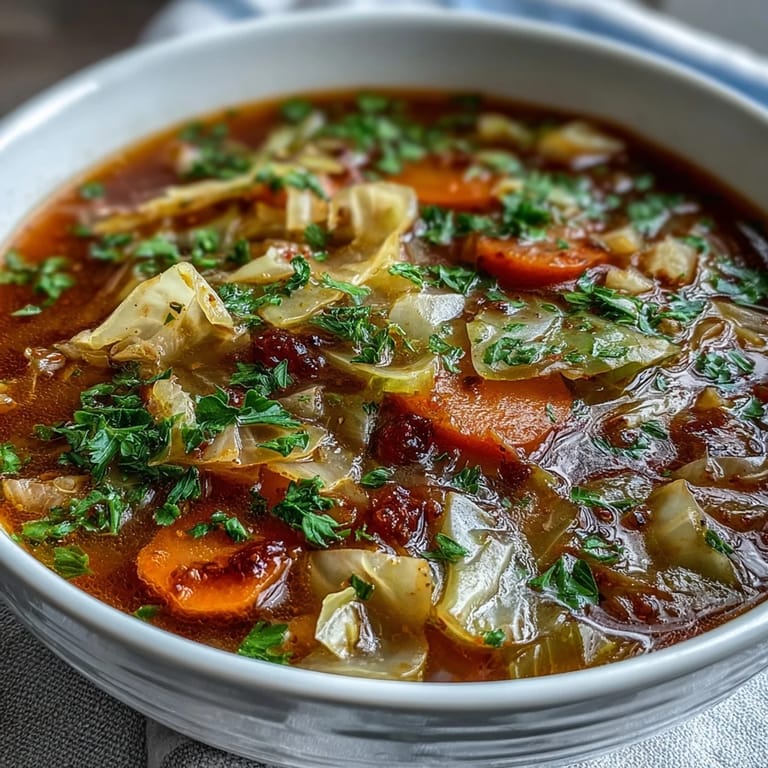
Pin My neighbor showed up at my door one October afternoon with a head of cabbage from her garden and a knowing smile—she'd grown tired of watching me buy expensive soup from the deli. That single vegetable taught me something I'd somehow missed: the best comfort food doesn't require fancy ingredients or hours of fussing. This cabbage soup became my answer to gray days, unexpected guests, and that particular hunger that only something warm and honest can satisfy.
I made this for my sister when she was stuck in bed with the flu, and watching her eat an entire bowl without complaining about the taste was its own kind of medicine. There's something about a soup that tastes like someone cares—not in an elaborate way, but in the attention to chopping things properly and letting them cook until they're actually done. She still asks me to make it whenever she visits.
Ingredients
- 1 medium head green cabbage, cored and chopped (about 6 cups): The star that holds everything together; don't skip the coring step because nobody wants to bite into a tough core.
- 2 medium carrots, peeled and sliced: They add natural sweetness that balances the tomato without needing added sugar.
- 2 celery stalks, sliced: The unsung flavor builder that gives the broth its rounded, savory backbone.
- 1 medium yellow onion, diced: Caramelize this properly and it becomes the foundation everyone tastes but nobody can quite identify.
- 2 cloves garlic, minced: Fresh garlic only—the jarred stuff gets lost in the long simmer.
- 1 can (14 oz/400 g) diced tomatoes with juice: Use canned because it's consistent and the juice is liquid gold for your broth.
- 2 tablespoons tomato paste: This concentrate deepens the flavor in a way that seems impossible from just two tablespoons.
- 6 cups (1.5 liters) vegetable broth: The quality matters here; a good broth makes you taste like you know what you're doing.
- 1 teaspoon dried thyme: It's woody and subtle, which is exactly what this soup needs.
- 1 bay leaf: Don't forget to fish this out at the end or explain to someone why they found a leaf in their bowl.
- 1 teaspoon smoked paprika (optional): This is the secret that makes people lean back and wonder what you did differently; totally optional but absolutely worth it.
- Salt and black pepper, to taste: Season aggressively near the end because the vegetables release their own liquid and dilute the flavors.
- 2 tablespoons chopped fresh parsley: A brightness that cuts through the warmth and makes the soup feel intentional.
Tired of Takeout? 🥡
Get 10 meals you can make faster than delivery arrives. Seriously.
One email. No spam. Unsubscribe anytime.
Instructions
- Build your base with onions, carrots, and celery:
- Heat oil in a large pot over medium heat, then add the diced onion, carrot, and celery. Let them soften together for about 5 minutes, stirring occasionally—you'll smell when they're ready, that sweet vegetable fragrance that means they're surrendering to the heat.
- Wake up the pot with garlic:
- Stir in the minced garlic and let it toast for just 1 minute until it becomes fragrant and slightly golden. This step takes 60 seconds but changes everything about the depth of your soup.
- Add the cabbage and let it collapse:
- Pour in your chopped cabbage and stir it all together, pushing it down into the pot. Cook for 3 to 4 minutes and watch how dramatically it wilts, surrendering from a heaping pile into something that actually fits in the pot.
- Bloom the tomato paste:
- Add the tomato paste and stir it into the vegetables for 1 minute before adding any liquid. This small act of cooking it dry first concentrates its flavor instead of diluting it immediately.
- Combine everything into one pot:
- Add the diced tomatoes with their juice, vegetable broth, thyme, bay leaf, smoked paprika if you're using it, and a generous pinch of salt and pepper. Stir everything together until the bay leaf floats free and you can't see the bottom of the pot anymore.
- Bring it to life, then let it rest:
- Turn the heat up until you see bubbles breaking the surface, then reduce to low and cover the pot. Simmer for 25 to 30 minutes—this is when the kitchen fills with the kind of steam that tells you something good is happening.
- Finish with intention:
- Fish out the bay leaf carefully, taste the soup, and adjust the salt and pepper. This last step of seasoning is where most people stumble, so taste as you go and be brave with the salt.
- Serve and celebrate:
- Ladle into bowls and scatter fresh parsley on top if you have it. The bright green against the deep red broth makes it look like you spent all afternoon cooking.
 Pin
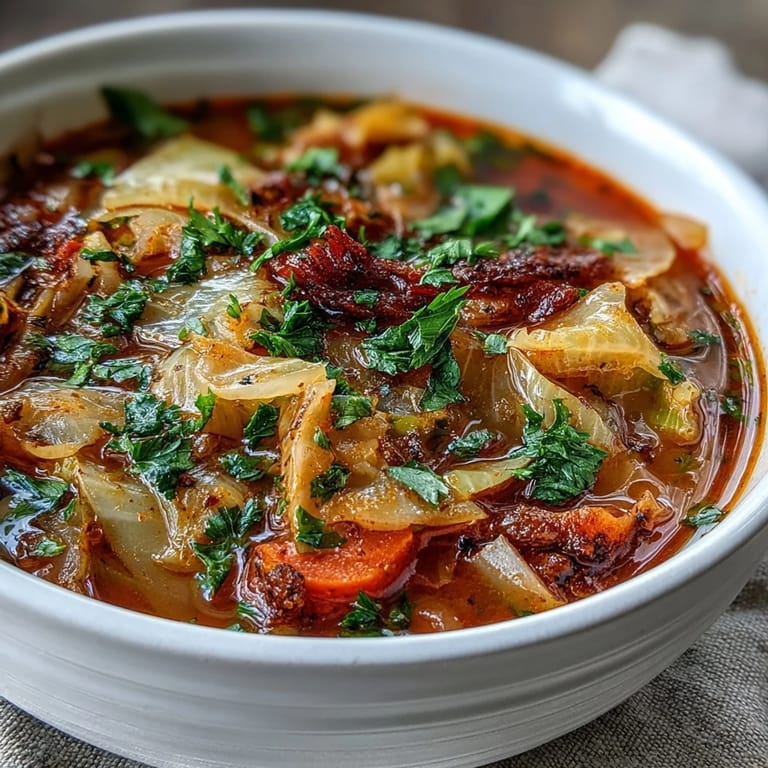
Pin My daughter, who had declared all vegetables 'textured water' for months, asked for a second bowl one night without being asked. We didn't make a big thing of it, but I noticed my partner and I exchange that look parents get when their kid unexpectedly eats something healthy. That's when I understood this soup wasn't just about being warm or easy—it was about tasting right in a way that doesn't require convincing.
Variations That Work
The beauty of this soup is that it doesn't fight back when you want to make it your own. I've added diced potatoes for heft, stirred in white beans when I remembered I had a can in the pantry, and once threw in some diced bell pepper because that's what needed using before it went soft. The core recipe—that aromatic base and the long simmer—stays steady while everything else bends to what's in your kitchen or what your mood demands.
Serving Suggestions and Pairings
This soup wants a crusty piece of bread beside it, something you can use to push the vegetables around and wipe the bowl when you think nobody's looking. Rye bread especially feels right, or anything with a good crust that doesn't dissolve the moment it touches the broth. It's equally good as a starter before a simple roasted chicken, or as the entire meal on a night when elaborate cooking feels impossible and comfort feels essential.
Storage, Reheating, and Make-Ahead Magic
This soup tastes better the next day, when all those flavors have gotten to know each other overnight and the broth has deepened into something richer. It freezes beautifully for up to three months in airtight containers, though the cabbage becomes softer when thawed, which honestly nobody minds. You can make it entirely on a Sunday and eat from it all week, or make it two hours before guests arrive and reheat it gently while you set the table, which is the kind of advance planning that doesn't feel like work.
- Cool the soup completely before refrigerating or freezing so it doesn't raise the temperature of everything around it.
- If it thickens too much after a day or two in the fridge, thin it with a splash of broth or water when you reheat it.
- Taste for seasoning again after reheating because cold storage mutes flavors and they need reminding.
 Pin
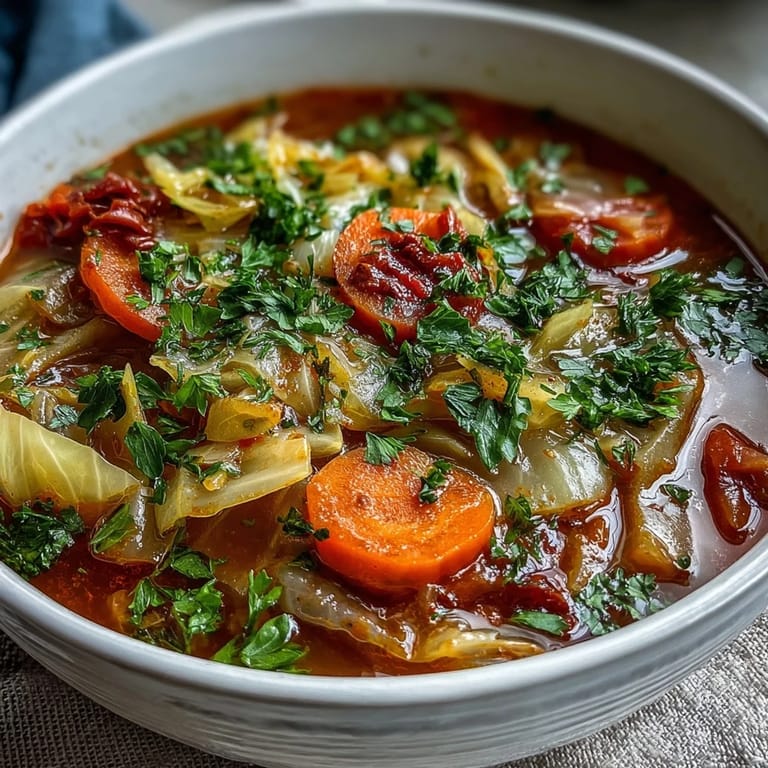
Pin This soup has a way of making you feel like a better cook than you probably are, and that feeling is worth something. Make it whenever you need reminding that the best meals aren't complicated—they're just thoughtful.
Recipe Questions
- → Can I make this soup ahead of time?
Yes, this cabbage soup actually tastes better the next day as the flavors meld together. Store in an airtight container in the refrigerator for up to 5 days, or freeze for up to 3 months.
- → How can I make this soup more filling?
Add diced potatoes during step 5 for extra heartiness, or stir in cooked white beans, chickpeas, or lentils near the end of cooking. You can also serve with crusty bread or rye rolls.
- → Can I use red cabbage instead of green?
Yes, red cabbage works well and adds beautiful color. Keep in mind it may slightly darken the broth and has a slightly earthier flavor than green cabbage.
- → What can I substitute for smoked paprika?
Regular sweet paprika works fine, though you'll miss the smoky depth. Alternatively, add a tiny pinch of cumin or a dash of liquid smoke for similar complexity.
- → How do I prevent the cabbage from becoming mushy?
Don't overcook the soup. The 25-30 minute simmer time should leave the cabbage tender but not falling apart. Check at 25 minutes and stop cooking once vegetables reach your desired texture.
- → Can I add meat to this soup?
Absolutely. Brown ground beef or sausage at the beginning, or add cooked shredded chicken during the last 10 minutes of simmering. Use chicken or beef broth instead of vegetable broth for deeper flavor.