 Pin
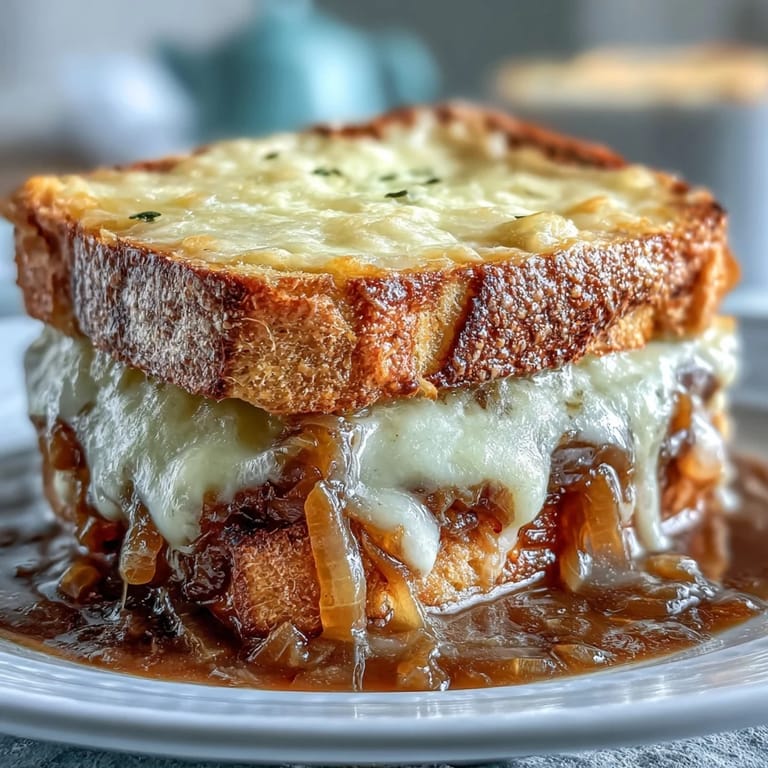
Pin There's something about a bowl of French onion soup that stops time. I discovered this during a particularly gray November afternoon when a friend showed up at my door with nothing but a vague craving and two hours to kill. We ended up in the kitchen watching onions transform from sharp slices into glossy, caramel-colored ribbons, and somewhere between the stirring and the waiting, we forgot about the weather entirely. That soup became the reason I learned that patience with onions isn't just technique—it's meditation.
I made this soup for my grandmother on her seventy-fifth birthday, and she took one spoonful and closed her eyes like she'd traveled somewhere. When she opened them again, she told me about eating it in a tiny bistro in the sixth arrondissement in 1962, and how this version tasted like coming home. Food doesn't often do that—bridge decades and continents with a single bowl.
Ingredients
- Large yellow onions (6), thinly sliced: Yellow onions caramelize better than white or red varieties because their natural sugars are more abundant and stable when heated slowly. Slice them all the same thickness so they cook evenly and turn golden together.
- Unsalted butter (2 tablespoons) and olive oil (1 tablespoon): The combination prevents the butter from burning while adding richness; butter alone would scorch during the long caramelization.
- Beef broth (6 cups): Use homemade if you have it—the difference is noticeable and worth it, though good-quality store-bought works beautifully too.
- Dry white wine (1/2 cup, optional): Don't skip this if you can; it adds complexity and helps dissolve the caramelized bits stuck to the pot bottom.
- Garlic (2 cloves, minced): Add it after the onions are caramelized or it will burn and turn bitter.
- Sugar (1 teaspoon): This small amount jumpstarts the caramelization process and deepens the onions' natural flavor.
- Fresh thyme (2 sprigs) and bay leaf (1): These herbs perfume the broth gently; remove them before serving so you don't accidentally bite into them.
- Gruyère cheese (2 cups, grated): Gruyère melts smoothly and adds a subtle nuttiness that generic cheese can't match; Emmental works if you're in a pinch.
- Crusty French bread (4 thick slices): The bread needs structure to support the weight of cheese without dissolving into the soup, so don't use soft bread.
Tired of Takeout? 🥡
Get 10 meals you can make faster than delivery arrives. Seriously.
One email. No spam. Unsubscribe anytime.
Instructions
- Melt the fat and start the onions:
- Pour butter and olive oil into a heavy-bottomed pot over medium heat and let them sizzle gently—you should hear a quiet hiss when the onions hit the pan. Add all your sliced onions and stir them around until they're coated and starting to soften, which takes about 15 minutes; your kitchen will smell sweet and savory at once.
- Coax out the color:
- Sprinkle the onions with sugar and salt, then keep stirring them frequently (every 3-4 minutes) over the next 30-40 minutes while they turn from pale gold to deep amber. This is the most important step and the one that can't be rushed; the bottom of the pot will darken, but that's flavor, not burning.
- Welcome the garlic:
- Once your onions look like melted caramel, add the minced garlic and cook it for just 1 minute, stirring constantly so it wakes up without scorching.
- Deglaze and build the broth:
- Pour in the white wine (if using) and use your wooden spoon to scrape up all those dark, crusty bits from the pot bottom—they're liquid gold. Let it bubble for 2-3 minutes, then add the beef broth, thyme, bay leaf, and black pepper.
- Simmer gently:
- Bring the whole thing to a boil, then lower the heat and let it bubble quietly for 30 minutes; the soup will smell like a French bistro. Remove the thyme sprigs and bay leaf before tasting.
- Toast the bread:
- While the soup simmers, preheat your broiler and arrange bread slices on a baking sheet, toasting them under high heat for a few minutes until they're golden and crispy on both sides.
- Assemble under the broiler:
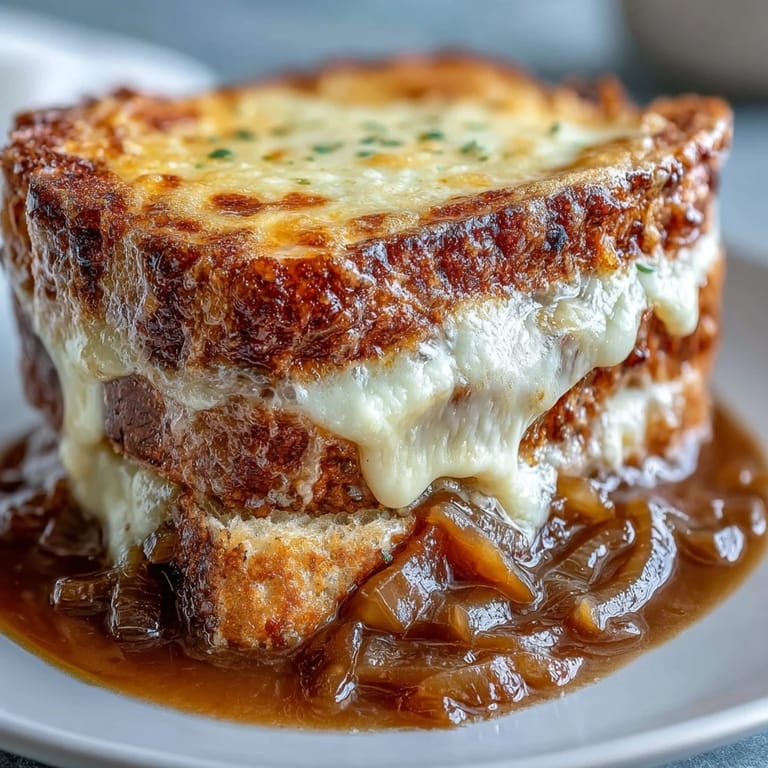
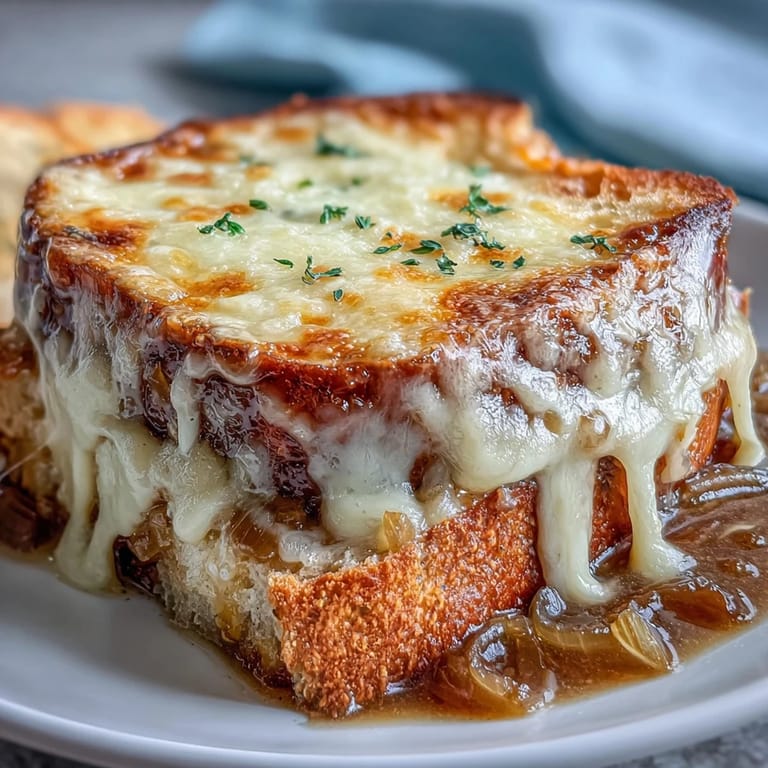
- Ladle hot soup into oven-safe bowls, place a slice of toasted bread on top of each, then pile on a generous handful of grated Gruyère. Slide them under the broiler for 2-3 minutes until the cheese melts into bubbly, golden pools.
- Serve immediately:
- Pull the bowls out carefully—the handles will be hot—and set them on the table right away so everyone gets that perfect moment when the cheese is still bubbling.
 Pin
Pin One winter evening, a neighbor stopped by unexpectedly while this soup was simmering, and the smell drew her in before she could even finish saying hello. We ended up sharing bowls and a bottle of wine, and she stayed for three hours just talking and eating. That's when I realized this soup does more than nourish—it creates the kind of moment where people slow down and remember what gathering around a table actually means.
The Science of Caramelization
Caramelizing onions isn't just cooking them until they're brown; it's a chemical transformation where their natural sugars break down and recombine, creating hundreds of new flavor compounds. The Maillard reaction (browning that happens when proteins and sugars meet heat) is what gives caramelized onions their deep, complex flavor. I learned this the hard way after trying to shortcut the process with high heat and ending up with slightly browned onions that tasted sharp and unfinished. Now I trust the slow method because I understand what's happening inside the pot.
Cheese Choices Beyond Gruyère
While Gruyère is traditional, this soup is forgiving enough to work with other melting cheeses. Emmental brings a slightly sweeter note, Swiss cheese adds earthiness, and even a good sharp cheddar can work if that's what you have on hand. The only real requirement is that your cheese melts smoothly and doesn't taste too mild—you want it to stand up to the bold, sweet onion soup. I once made this with a local aged gouda and it was unexpectedly wonderful, which taught me that the best recipe is the one that uses what you love.
Making It Your Own
The beauty of French onion soup is its flexibility—this recipe is a blueprint, not a prison. Some people add a splash of brandy instead of white wine, others stir in fresh herbs at the end, and I've even seen it made with caramelized shallots mixed in for extra sweetness. For a vegetarian version, simply use vegetable broth instead of beef broth and the soup loses nothing in the translation. Here are the tweaks that made the biggest difference in my kitchen:
- Rub the toasted bread with a cut garlic clove before adding cheese for an extra layer of flavor that catches everyone off guard.
- If you're making this ahead, caramelize the onions, cool, and refrigerate—then reheat and finish with broth when you're ready to serve.
- Use oven-safe bowls or small cast iron vessels if you have them; they keep the soup hotter longer and feel more intentional at the table.
 Pin
Pin This soup is proof that the most satisfying dishes often come from patience and a handful of simple ingredients. Make it, share it, and watch it do what good food does best—bring people together.
Recipe Questions
- → How long does it take to caramelize onions properly?
Plan for about 45–55 minutes total. First, soften the onions for 15 minutes over medium heat. After adding sugar and salt, continue cooking until they reach a deep golden color, stirring frequently to prevent burning. This slow process develops the sweet, rich flavor that makes this dish special.
- → Can I make this vegetarian?
Absolutely. Simply substitute vegetable broth for the beef broth. The flavor will be slightly lighter but still delicious thanks to the deeply caramelized onions and aromatic herbs. Omit the white wine if you prefer to keep it fully vegetarian-friendly.
- → What type of onions work best?
Yellow onions are ideal because they become naturally sweet when caramelized. You can use a mix of yellow and red onions for color variation, or sweet onions for an even sweeter result. Avoid white onions, which can taste sharper when cooked down.
- → Can I make this ahead of time?
The soup actually improves after resting in the refrigerator for 1–2 days, allowing flavors to meld. Store the soup separately from the bread and cheese. When ready to serve, reheat the soup, toast fresh bread, and broil with cheese just before eating.
- → What cheese substitutes work well?
Gruyère is traditional for its nutty flavor and excellent melting properties. Emmental or Swiss cheese make great alternatives with similar characteristics. For a sharper flavor, try adding some Parmesan mixed with your melting cheese of choice.
- → Why add sugar to the onions?
A small amount of sugar helps the onions caramelize more evenly and enhances their natural sweetness. This step is particularly helpful since onions vary in their natural sugar content. The result is beautifully golden, flavorful onions without any bitter notes.