 Pin
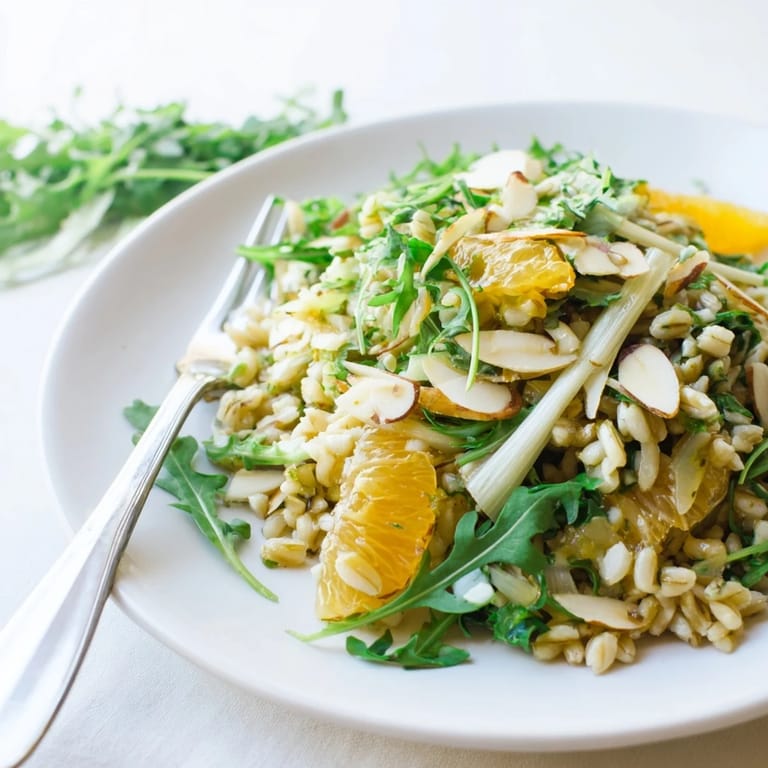
Pin The first time I made this farro salad, I'd impulsively bought a fennel bulb at the farmers market without any real plan. My kitchen was scattered with cutting boards and citrus peels, sunlight streaming through the window catching the bright orange segments. Something about that afternoon—the way the farro smelled nutty as it simmered, the sharp clean scent of fennel—made me realize salads don't have to be an afterthought. Now it's the dish I bring to every potluck, the one that disappears first from the table.
Last summer my sister came over for lunch and we ate this on the back porch, swatting away bees and talking until the sun started dipping. She kept asking what was in the dressing, convinced I'd added something secret, but it's just the brightness of the citrus against that earthy farro. I've made it for dinner parties, weekday lunches, even as a side for grilled fish, and somehow it works every single time.
Ingredients
- 1 cup uncooked whole grain farro: This ancient grain has this incredible chewy texture that holds up beautifully against all the fresh vegetables. I've tried pearled farro too, but the whole grain version has so much more character and nutty depth.
- 3 cups water: You'll need this to cook the farro until it's tender but still has some bite—think al dente pasta, not mush.
- 1/2 teaspoon kosher salt: Just enough to season the farro as it cooks, which makes a huge difference in the final flavor.
- 1 medium fennel bulb, thinly sliced: Fennel has this mild licorice flavor that's somehow refreshing and savory at the same time. Don't toss those fronds—they're gorgeous as a garnish and add a burst of fresh flavor.
- 2 large oranges, peeled and segmented: The sweetness here balances everything out. Blood oranges make it look absolutely stunning if you can find them.
- 2 cups arugula or baby spinach: I love the peppery kick of arugula, but spinach works if you want something milder.
- 2 tablespoons chopped fresh parsley: Fresh herbs make everything taste brighter and more finished.
- 1/2 cup sliced almonds, toasted: Toasting the almonds transforms them into something totally different—crunchy, nutty, golden. Keep an eye on them though, they go from perfect to burned in seconds.
- 3 tablespoons extra-virgin olive oil: Use the good stuff here. You'll taste it.
- 1 tablespoon freshly squeezed orange juice: This ties the dressing back to the orange segments in the salad.
- 1 tablespoon freshly squeezed lemon juice: Lemon adds that sharp acid that makes all the flavors pop.
- 1 teaspoon honey or maple syrup: Just a touch to balance the acid and bring everything together.
- 1 teaspoon Dijon mustard: This helps the dressing emulsify so it coats every bite evenly.
- 1/4 teaspoon sea salt and 1/4 teaspoon freshly ground black pepper: Season to taste—trust your palate here.
Tired of Takeout? 🥡
Get 10 meals you can make faster than delivery arrives. Seriously.
One email. No spam. Unsubscribe anytime.
Instructions
- Cook the farro until perfectly tender:
- Rinse the farro under cold water until it runs clear, then combine it with the water and salt in a medium saucepan. Bring it to a boil, then reduce heat to low, cover, and let it simmer gently for 25 to 30 minutes until the grains are tender but still have a satisfying chew. Drain any excess liquid and spread the farro on a baking sheet to cool—this stops the cooking and prevents it from getting gummy.
- Toast the almonds until golden and fragrant:
- Toss the sliced almonds into a dry skillet over medium heat and stir constantly for 2 to 3 minutes. You'll know they're ready when they turn a beautiful golden brown and fill your kitchen with this incredible nutty aroma. Remove them immediately from the hot pan so they don't keep cooking.
- Combine all the fresh ingredients:
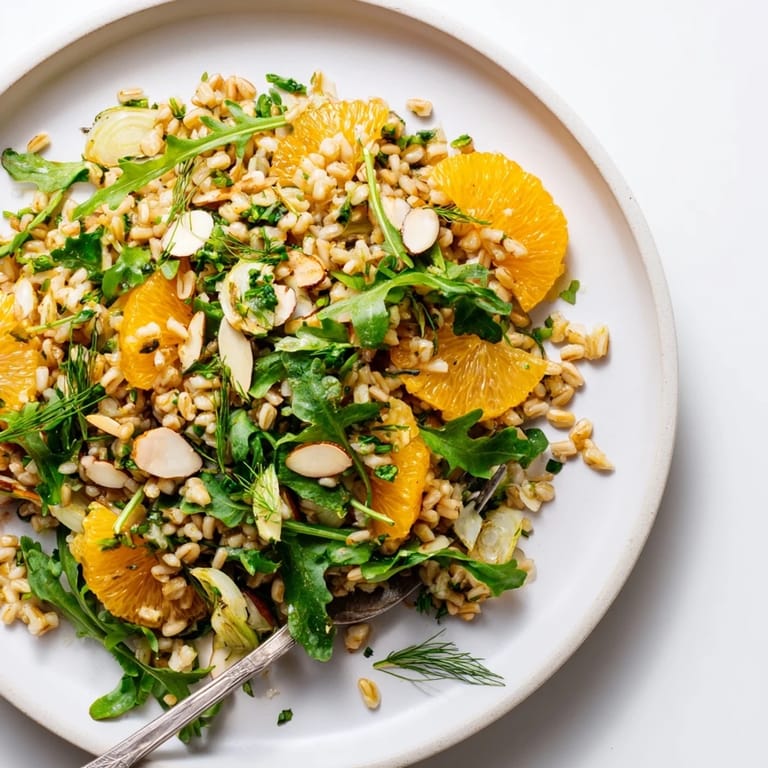
- In a large mixing bowl, add your cooled farro, thinly sliced fennel, orange segments, arugula, and chopped parsley. I like to toss everything gently at this point so the ingredients are evenly distributed before adding the dressing.
- Whisk together the bright citrus dressing:
- In a small bowl or jar, combine the olive oil, orange juice, lemon juice, honey, Dijon mustard, sea salt, and black pepper. Whisk vigorously until the mixture thickens slightly and comes together into a smooth emulsion—about 30 seconds of enthusiastic whisking should do it.
- Dress the salad and add the crunch:
- Pour the dressing over the salad and toss gently until everything is lightly coated. Fold in the toasted almonds at the end so they stay crunchy, then scatter those reserved fennel fronds over the top for a beautiful finish.
 Pin
Pin This recipe has become my go-to for new moms, friends who need a meal, or those nights when I want something that feels nourishing without weighing me down. There's something about the combination of textures and flavors that makes people slow down and really enjoy their food.
Make It Your Own
I've swapped in quinoa for farro when I needed it gluten-free, and though the texture changes slightly, the salad still works beautifully. Roasted butternut squash in the fall, fresh cucumbers in summer—this is the kind of forgiving template that welcomes whatever looks good at the market.
Perfect Pairings
Grilled chicken turns this into a hearty main, and I've even topped it with flaked salmon for a dinner that feels restaurant-worthy but takes minutes. A crisp white wine like Sauvignon Blanc cuts through the richness of the farro and brings out the citrus notes even more.
Storage and Meal Prep Tips
This salad keeps beautifully for up to three days in the refrigerator, though I recommend adding the arugula and almonds right before serving so they stay fresh and crunchy. The flavors actually develop and get better overnight as the dressing penetrates the farro.
- Store the dressing separately if you're meal-prepping for the week
- Let the salad come to room temperature before serving—the flavors are much more vibrant
- Add a handful of fresh herbs right before serving to wake everything up
 Pin
Pin Every time I make this salad, I'm reminded that the simplest ingredients—honestly prepared—can create something extraordinary. Hope it becomes a favorite in your kitchen too.
Recipe Questions
- → Can I make this ahead of time?
Yes, prepare the farro and dressing up to 2 days in advance. Store them separately in the refrigerator. Add fresh oranges, almonds, and greens just before serving to maintain optimal texture and prevent wilting.
- → What can I substitute for farro?
Barley, wheat berries, or spelt work well as similar whole grain alternatives. For gluten-free options, try quinoa, brown rice, or sorghum. Adjust cooking times accordingly since each grain requires different preparation.
- → How do I properly slice fennel?
Trim the fronds and stalks, cut the bulb in half lengthwise, and remove the tough core. Place each half flat-side down and slice thinly crosswise for delicate ribbons that integrate beautifully throughout the dish.
- → Can I use bottled citrus juice?
Freshly squeezed juice delivers superior flavor and acidity balance. Bottled varieties often contain preservatives that affect taste. If necessary, use high-quality refrigerated juice, though fresh is always preferred for vinaigrettes.
- → How long does this keep in the refrigerator?
Store assembled portions in airtight containers for up to 3 days. The flavors will meld and intensify over time. Note that arugula may wilt slightly, though baby spinach holds up better for longer storage.
- → Is this suitable for meal prep?
Absolutely. Cook farro in batches and portion with vegetables. Keep dressing separate until ready to eat. The dish actually benefits from sitting overnight as grains absorb more vinaigrette, enhancing overall flavor.