 Pin
Pin The first time I assembled The Frosted Pine, my kitchen felt like a winter wonderland for exactly twenty minutes before guests arrived. I'd been eyeing those fresh rosemary sprigs at the market all week, imagining them dusted with sugar like tiny frosted evergreens, and when I finally committed to the idea, something clicked—this wasn't just a cheese board, it was a edible landscape. My hands got sticky rolling those herbs in granulated sugar, and I remember laughing at how seriously I was taking it, but then the whole platter came together and suddenly the table looked like it had snowed indoors.
I made this for a holiday party where the host banned "the usual" appetizers, and I showed up with this snowy cheese arrangement and watched people actually stop talking to photograph it. One guest who normally reaches straight for the charcuterie spent ten minutes just admiring the sugared rosemary before eating anything, and I realized that presentation isn't shallow—sometimes it's what makes people slow down and actually enjoy their food.
Ingredients
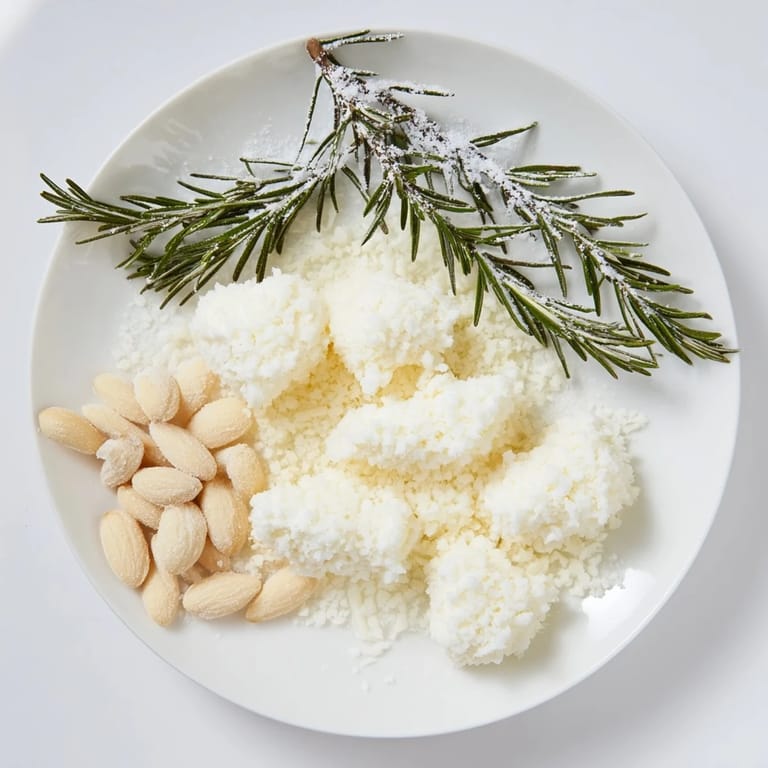
- White cheddar cheese, 200 g (7 oz), cubed or shredded: The pale color is essential here; it reads like snow on the platter and has a slightly sharp edge that cuts through the sweetness of the sugared rosemary beautifully.
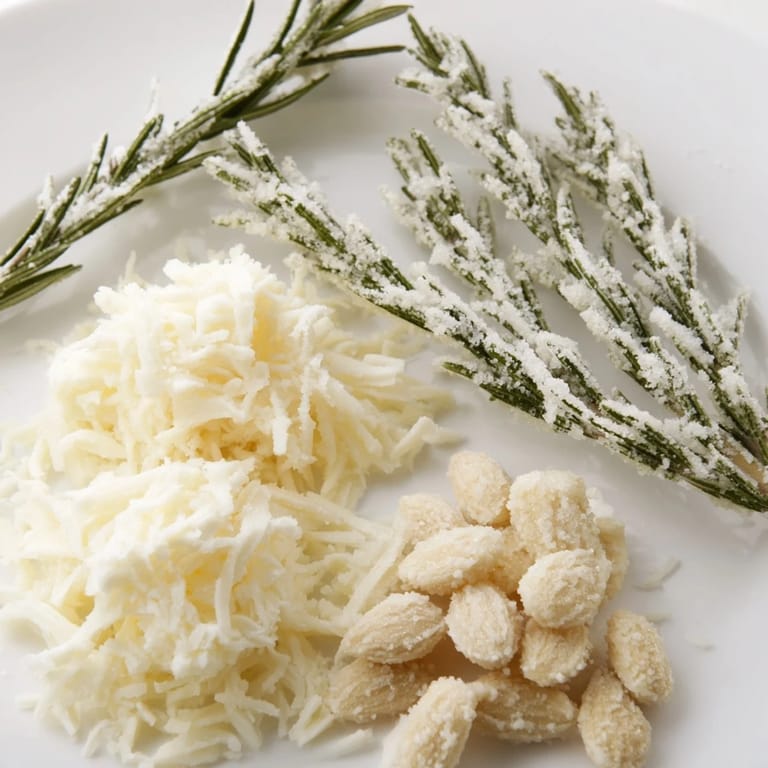
- Fresh rosemary sprigs, 12: Look for sprigs that are at least 3 to 4 inches long so they stand upright like actual tiny trees; the oils in fresh rosemary will grip the sugar and hold it through service.
- Water, 2 tbsp: Just enough to lightly dampen the leaves—oversaturate and the sugar slides off, undersaturate and it won't stick.
- Granulated sugar, 2 tbsp plus extra for dusting: Plain white sugar gives that crystallized frost effect; you'll want a bit extra to touch up any bare spots before serving.
- Whole almonds, 60 g (2 oz), raw or lightly toasted: These become your pinecones and should be left whole so they nest naturally; toasting them brings out a subtle sweetness that plays well against the salty cheese.
- Assorted gluten-free crackers, 12–16 (optional): Choose a mix of shapes and textures to break up the visual rhythm and give guests something to build with.
- Honey, 1 tbsp (optional): A delicate drizzle around the edges adds shine and a touch of golden warmth to the snowy scene.
Tired of Takeout? 🥡
Get 10 meals you can make faster than delivery arrives. Seriously.
One email. No spam. Unsubscribe anytime.
Instructions
- Frost your rosemary sprigs:
- Pour water into a small bowl and dip each rosemary sprig just enough to dampen the needles all over—you want them lightly wet, not dripping. Roll each sprig immediately in granulated sugar, turning it gently so the crystals catch on every side, then set them upright on a parchment-lined tray to air-dry for about 10 minutes.
- Build your snowdrifts:
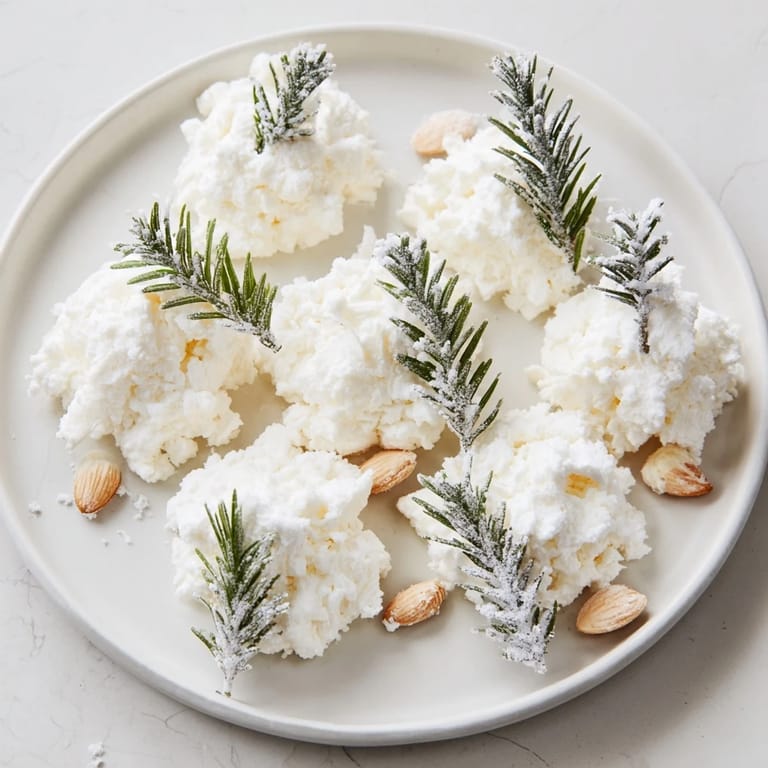
- Arrange the white cheddar on your serving platter in loose, organic mounds rather than neat piles; this looks more like natural snow and gives you crevices to tuck things into. Leave some negative space—the platter showing through adds to the landscape feeling.
- Plant your frosted pines:
- Insert each sugared rosemary sprig upright into or alongside the cheese mounds so they stand like little evergreens poking through snow. Angle a few slightly rather than making them all perfectly vertical—nature is rarely that orderly.
- Scatter your pinecones:
- Nestle the almonds in small clusters around the platter, tucking some into the cheese and leaving others on the bare platter surface. Their irregular shapes and warm color make them read instantly as something different from the snow and trees.
- Add final touches:
- If using crackers, lean them against the cheese mounds or arrange them around the border—think of them as a snowy fence. If you're drizzling honey, do it just before serving so it stays glossy and catches the light.
- Serve and let people marvel:
- This platter is best served at room temperature so the cheese flavors come through clearly; bring it out just before you want people to eat so the rosemary sugar doesn't begin to soften from humidity.
 Pin
Pin The real magic moment came when a child at the party asked if the rosemary trees were real or made of candy, and their mom realized they could actually eat the garnish. That question—that moment of genuine confusion between decoration and food—felt like the whole point.
Choosing Your Cheese
White cheddar is bright and assertive enough that it stands up to the aromatic rosemary without getting lost, but if your guests prefer milder flavors, a creamy brie or tangy goat cheese would be stunning on the same platter. Smoked cheddar also works beautifully if you want to add depth, though it'll read more gray than white—you're trading the literal "snow" look for a more sophisticated color palette. The key is choosing something that tastes good cold and won't overwhelm the delicate herbal and nutty flavors doing the supporting work.
Making It Your Own
Once you understand the basic architecture of this platter—soft creamy element, aromatic garnish, textural crunch—you can swap almost everything. I've made versions with candied thyme, toasted walnuts, and sharp aged gouda on a slate board instead of white, and each time it felt like a completely different landscape. The formula stays the same even when the ingredients change: think in terms of layers and textures and how each element catches light.
Pairing and Serving
This platter sings alongside crisp white wines or sparkling prosecco—the acidity and bubbles cut through the richness of the cheese and play nicely with the herbal notes from the rosemary. I've also paired it with dry rosé and light champagne, and honestly, the wine matters less than the fact that you're sitting with people you like, eating something beautiful enough to be worth a photograph. Consider your timing too: this works as an elegant first course at a sit-down dinner, as a statement centerpiece at a casual gathering, or as part of a larger board where it makes everything around it look intentional.
- Prep the rosemary sugar no more than 2 hours before serving to preserve the crisp frosted appearance.
- Pull the whole platter from the fridge 10 to 15 minutes before guests arrive so the cheese reaches a texture that feels luscious rather than cold and hard.
- Have extra sugar on hand to dust over any spots where the rosemary lost its coating, or to re-frost a sprig if someone handles it roughly.
 Pin
Pin Every time I make this, I'm struck by how a completely edible arrangement—nothing faked, nothing inedible hidden in there—somehow feels more special than one with flowers or other decorations. It's the kind of simple thing that sticks with people.
Recipe Questions
- → How do I frost the rosemary sprigs?
Lightly dampen the rosemary with water, then roll in granulated sugar until coated. Let dry for 10 minutes to create a frosted look.
- → Can I substitute the white cheddar cheese?
Yes, try goat cheese or brie for a creamy alternative that complements the sugared rosemary and almonds.
- → Are toasted almonds better for the pinecones?
Toasted almonds add a deeper flavor and crunch, enhancing the pinecone effect, but raw almonds work well too.
- → What crackers pair well with this platter?
Assorted gluten-free crackers offer a crisp texture without overpowering the delicate flavors of cheese and garnishes.
- → How should this platter be served and stored?
Serve immediately for best presentation. If storing, cover and refrigerate for up to 2 hours to maintain freshness and structure.