 Pin
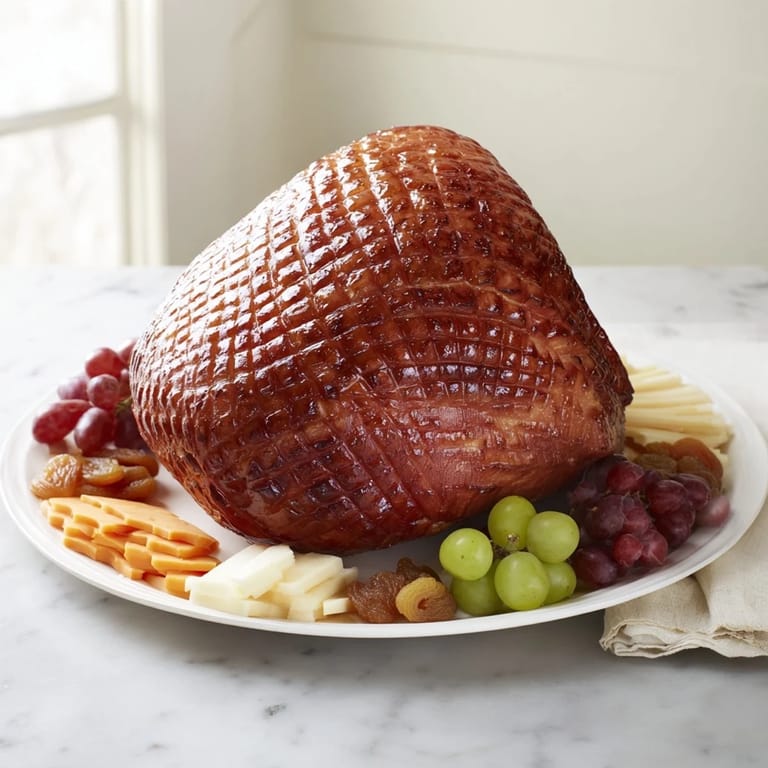
Pin I'll never forget the year my grandmother handed me her handwritten recipe card for glazed ham, a faded note scribbled in her careful cursive. She told me that a great glazed ham centerpiece board wasn't just about feeding people—it was about creating a moment where everyone gathered around something warm, glossy, and undeniably special. That first time I glazed a ham for our holiday table, watching the brown sugar and honey caramelize into a mahogany glaze that caught the light, I understood what she meant. The ham became the hero, the anchor, the reason people lingered at the table.
I remember the first time I served this board to my partner's family on Christmas Eve. His mother walked into the kitchen, and I watched her eyes follow the glossy ham at the center, then slowly expand outward to take in the radiating arcs of cheese, fruit, and bread. She didn't say anything at first—just smiled and went straight to the ham. That's when I knew this recipe had done exactly what it was meant to do: it made people feel welcomed and celebrated before they even took a bite.
Ingredients
- 1 small bone-in ham, 4–6 lbs (cooked, unsliced): The whole centerpiece depends on finding a quality, pre-cooked ham. Look for one labeled 'fully cooked' so all you're doing is adding flavor and creating that stunning glaze. Bone-in matters because it keeps the meat moist and gives you something to anchor the presentation.
- 1 cup brown sugar, packed: Don't skip the packing step—it dissolves more evenly into the glaze and creates a richer flavor. Packed brown sugar has more molasses, which is what gives the final glaze its deep, almost mahogany appearance.
- 1/3 cup honey: This is your sweetness anchor, but it also creates shine. Real honey matters here because it caramelizes beautifully and won't leave your glaze grainy.
- 1/4 cup Dijon mustard: This brings a gentle spice and keeps the glaze from being cloying. It's the secret that makes people taste something they can't quite identify—that's the mustard doing its quiet work.
- 2 tbsp apple cider vinegar: The vinegar cuts through the sweetness and adds brightness. It's what keeps this from tasting like candy and makes people want another bite.
- 1/2 tsp ground cloves and 1/2 tsp ground black pepper: Cloves add warmth and a touch of autumn spice. Black pepper gives it gentle heat that builds on the finish. These small amounts are purposeful—they whisper rather than shout.
- 8 oz sharp cheddar, 8 oz brie, 8 oz gouda: The cheese selection matters because you want variety in texture and intensity. Sharp cheddar is bold, brie is creamy and luxurious, gouda is smooth and slightly sweet. Together they tell a story without competing.
- 2 cups assorted olives, cornichons, pickled pearl onions: These brined elements provide contrast to the richness of cheese and ham. They're palate cleansers that your guests won't realize they need until they reach for one.
- 8 oz Dijon or spicy mustard for dipping: Offer both if you can—some people like the bright bite of Dijon, others prefer something smokier and more complex.
- 16 slices seeded rye or sourdough baguette, toasted: The bread is structural here. Toasting it ensures it won't get soggy from ham juices and gives people something sturdy to build their bites on.
- 1 cup salted mixed nuts: Walnuts, pecans, and almonds add textural contrast and a note of earthiness. Salted is important because it keeps your guests coming back.
- Fresh grapes, pears, apples, dried apricots and figs: These fruits create color, sweetness, and visual luxury. Fresh and dried together give you multiple textures and flavor profiles that keep people exploring.
- 1/2 cup fresh cranberries and 1/4 cup fresh rosemary sprigs: These are purely decorative—cranberries give jewel-like color and rosemary adds aroma. They transform the board from 'nice meal' into 'special occasion.'
Tired of Takeout? 🥡
Get 10 meals you can make faster than delivery arrives. Seriously.
One email. No spam. Unsubscribe anytime.
Instructions
- Preheat and score:
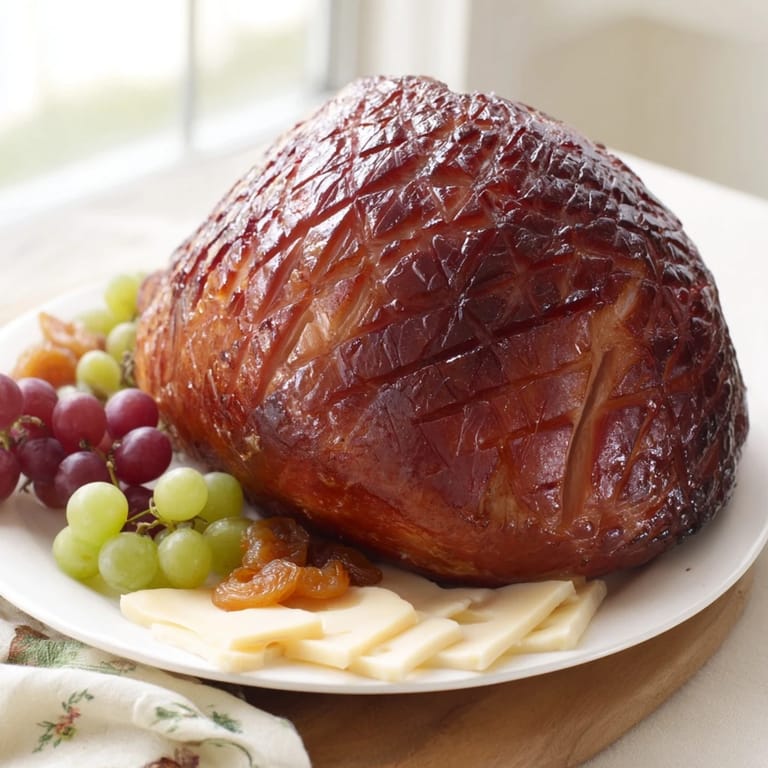
- Set your oven to 350°F and get your ham ready. Take a sharp knife and score the surface in a gentle one-inch diamond pattern, cutting just through the skin and fat layer. You'll feel a slight resistance and then a give—that's exactly where you want to stop. This scoring is both practical and beautiful. It gives the glaze somewhere to soak in, and it creates a pattern that will gleam when it caramelizes.
- Build your glaze:
- In a small saucepan, combine your brown sugar, honey, mustard, vinegar, cloves, and pepper. Whisk this over medium heat, watching as the sugar dissolves and everything comes together into something thick and glossy. This should take about 3 to 5 minutes. You'll know it's ready when the glaze coats the back of a spoon and smells warm and spiced. Be careful not to let it overcook—the moment it thickens, pull it off the heat. If you keep going, the glaze will harden and become brittle rather than lacquered and shiny.
- Begin roasting with intention:
- Place your ham flat side down on a rack in a roasting pan lined with foil. Using a pastry brush, coat about a third of your glaze over the ham, making sure it settles into those scored crevices. The ham should glisten but shouldn't be dripping. This is the first layer of many.
- Baste and build:
- Roast for 1 hour and 30 minutes, but don't just let it sit there. Every 30 minutes, take it out and brush another layer of glaze over the top. This isn't busy work—each layer builds a deeper color and richer flavor. Watch as it transforms from pale to amber to a deep mahogany. If it starts darkening too quickly, loosely tent it with foil. You're aiming for a sticky, shiny surface that looks almost lacquered.
- Rest and respect:
- Once it's done, the internal temperature should read at least 140°F on a meat thermometer. Pull it from the oven and tent it loosely with foil, then let it rest for 15 to 20 minutes. This resting period is when the magic happens—the juices redistribute throughout the meat, ensuring every slice you carve at the table is moist and tender.
- Prepare your accompaniments:
- While the ham is resting, slice your cheeses into uniform pieces. This matters more than it sounds—uniform slices look intentional and elegant. Toast your bread in a single layer at 350°F for about 10 minutes until it's golden and crisp but not hard. Arrange olives, nuts, and pickles in small bowls to contain their brines and keep everything else from getting soggy.
- Ready your fruits and garnishes:
- Slice your apples and pears just before assembly to prevent browning—a quick toss with lemon juice helps. Arrange dried fruits and grapes into small clusters. Keep your cranberries and rosemary separate. They're purely decorative, the jewelry of your board.
- Assemble with intention:
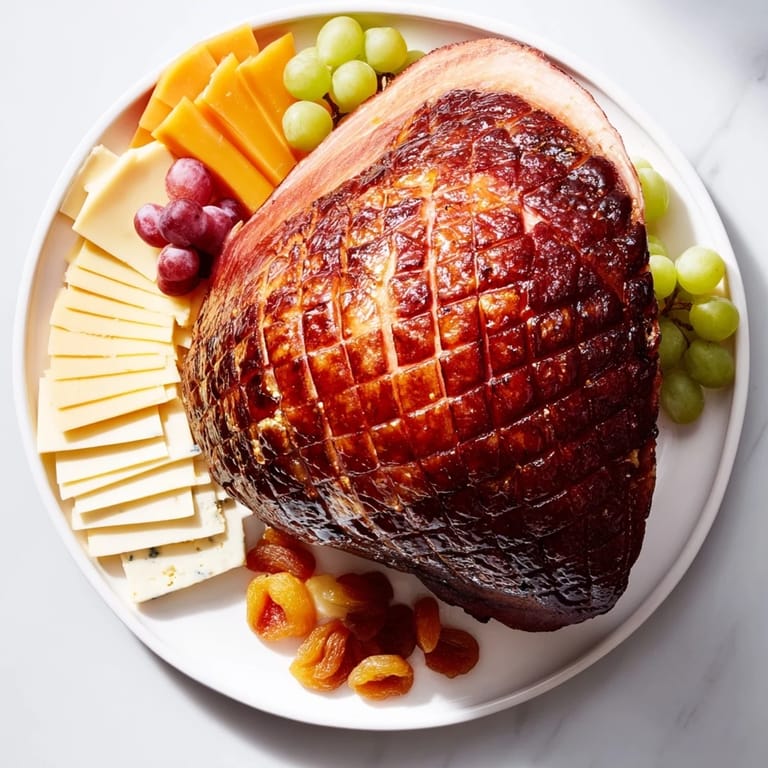
- This is where the magic happens. Place your rested ham or ham roses at the exact center of a large wooden board or platter. This is your anchor, your focal point. From there, fan your cheese slices in even arcs outward, like you're creating rays from the sun. Follow with your toasted bread. Fill the spaces between these arcs with your bowls of olives, pickles, nuts, and mustard. Tuck fruit clusters and dried fruits into the remaining gaps. Step back frequently and look at it from above—you're creating a composition, and there should be no empty patches. Finally, scatter your fresh rosemary sprigs and cranberries around the ham in intervals. The rosemary will release its aroma, and the cranberries will catch the light.
- Invite people to carve and explore:
- When your guests arrive, invite someone to carve the ham at the table, slicing thinly across the grain for tenderness. Make it participatory. Encourage people to build their own bites with various accompaniments—a slice of ham with a piece of sharp cheddar and a cornichon, a grape with a walnut, a bit of brie on toasted rye. Let them discover the combinations themselves.
 Pin
Pin There's a moment, maybe an hour into the party, when someone walks by the board and just stops. They're not hungry—they've already eaten. They're just looking, noticing how the light catches the glaze, how the colors work together, how the whole thing somehow says 'welcome' and 'abundance' at the same time. That's when I realized this recipe wasn't really about the ham at all. It was about creating something that made people feel cared for.
The Art of Board Building
Building a centerpiece board is less about rules and more about understanding how people's eyes move and how flavors work together. The ham is your anchor—everything else radiates from it. Think about symmetry not as rigid perfection, but as visual balance. A cluster of grapes on one side should have a similar visual weight on the other side. Dried fruits should be scattered throughout rather than bunched in one corner. The goal is to make someone feel like they can walk around the board and find something interesting no matter which direction they approach from. I learned this the hard way the first time I made this board—I put all the 'pretty' items on one side and the 'practical' items on the other. When my guests sat down, half of them never even noticed the gorgeous fruit clusters because they were looking at the cheeses. Now I think of it like orchestrating a conversation—every element should get a moment to be noticed.
Why Fresh Matters, Even on a Board
There's a real difference between a board made an hour before guests arrive and one that's assembled the night before. The bread gets soft from the ham's moisture. The apple slices start to brown. The cheese starts to sweat if the room is warm. I learned to do the strategic prep the day before—make the glaze, toast the bread, slice the cheese, arrange bowls. But the actual assembly happens right before people arrive. The fruit gets sliced at the last possible moment. The fresh rosemary sprigs go on when your guests are walking through the door. This way, everything tastes and looks its absolute best.
Serving Suggestions and Flavor Combinations
The beauty of this board is that it invites people to be creative with their bites. Some people will want to focus on the ham and cheese. Others will build little flavor stories—a slice of apple with brie and a walnut, a piece of sharp cheddar with a cornichon and a bit of dried fig. A spoonful of mustard bridges every element. The dried apricots have a slight chew that plays beautifully against the saltiness of the cured ham. The grapes offer pure sweetness and refreshment. The rosemary's aroma will make people's mouths water even before they take a bite. Here's what I've learned works: don't tell people how to eat it, just create the pieces and let them discover the combinations. The best compliments I get aren't about individual components—they're about how well everything works together, how each bite is different from the last, how the whole board felt like a conversation between flavors and textures.
- The ham's salty-sweet glaze pairs beautifully with sharp cheese and tart pickled items.
- Fresh grapes offer a palate-cleansing sweetness that makes people reach for another bite of ham.
- A combination of all three textures—soft (cheese), crispy (bread), chewy (dried fruit)—in a single bite creates complexity and satisfaction.
 Pin
Pin Every time I make this board, I'm reminded that the best meals aren't about perfection or complexity—they're about creating a moment where people feel welcomed. This glazed ham centerpiece board does exactly that. Serve it with joy.
Recipe Questions
- → How is the ham glazed for a glossy finish?
The ham is scored in a diamond pattern, then brushed repeatedly with a warm glaze made from brown sugar, honey, Dijon mustard, apple cider vinegar, cloves, and black pepper during roasting, creating a shiny, sticky surface.
- → What cheeses complement the ham on the board?
Sharp cheddar, brie wedges, and cubed gouda provide rich, varied textures and flavors that balance the sweet and spiced notes of the glazed ham.
- → How can I keep the bread crisp and fresh for serving?
Toast seeded rye or sourdough slices at 350°F for about 10 minutes until golden and crunchy, ensuring they’re not over-toasted to avoid bitterness.
- → What fruits are included to enhance the board’s appeal?
Fresh red and green grapes, sliced apples and pears (tossed with lemon juice to prevent browning), plus dried apricots and figs add sweetness, texture, and vibrant color.
- → How should leftover ham and accompaniments be stored?
Cover ham tightly and refrigerate up to four days; reheat gently in foil at 300°F with a splash of water. Store accompaniments separately in airtight containers to maintain freshness.
- → Are there substitutions for dietary needs?
Yes, smoked turkey breast can replace ham for a lighter option, and gluten-free bread and lactose-free cheeses can be used for specific dietary restrictions.