 Pin
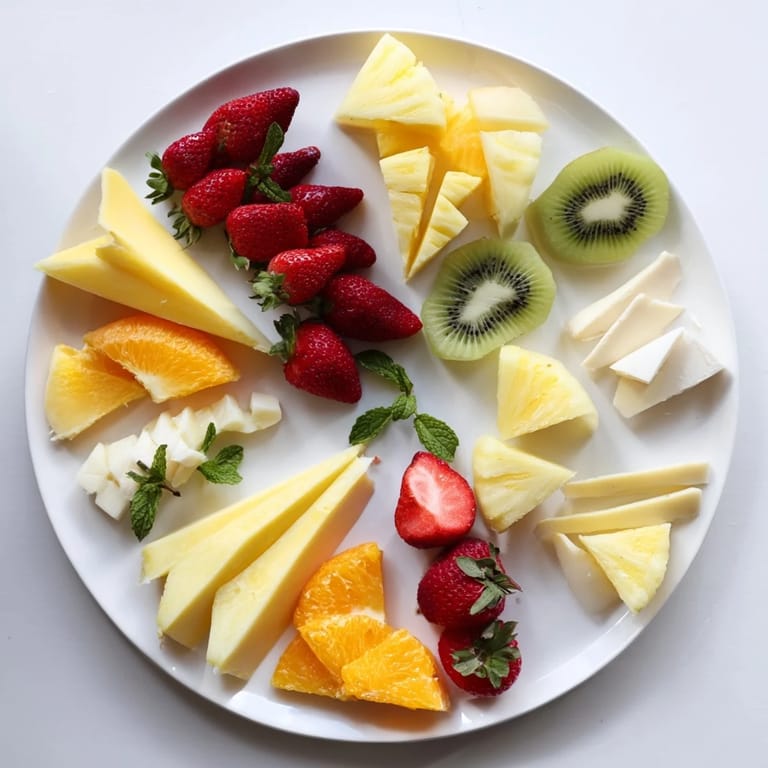
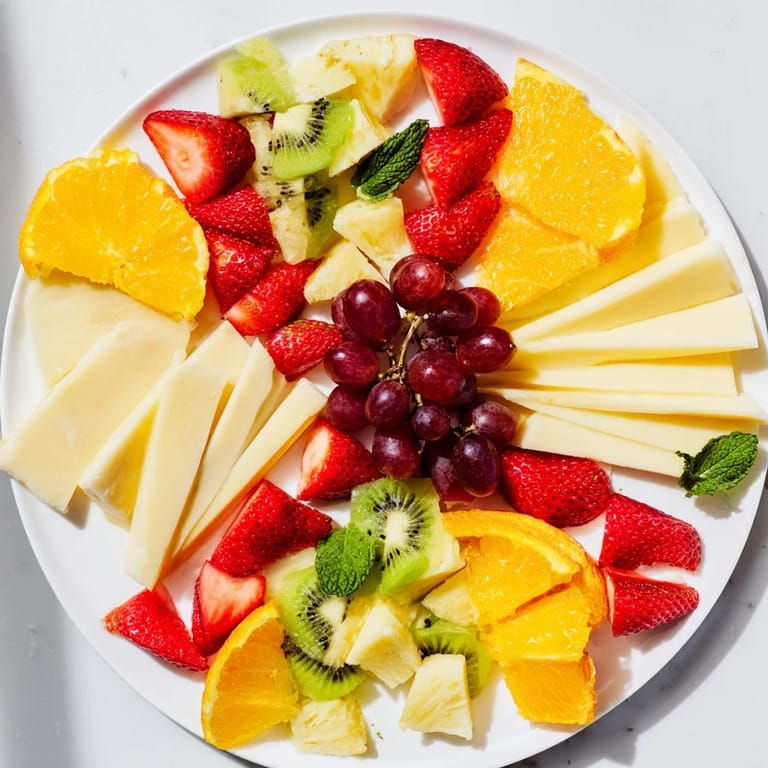
Pin The first time I arranged fruit and cheese on a platter, I wasn't thinking about impressing anyone—I was honestly just trying to use up what was in my fridge before it went bad. But as I started laying down wedges in rings, something clicked. The colors began talking to each other: deep red grapes against creamy white brie, golden pineapple next to sharp orange cheddar. My guests walked in, and before anyone said a word, they just stood there looking at it. That's when I realized a platter could be art.
I made this for my sister's engagement party on a late summer afternoon. She kept standing over it, moving just one grape here, one strawberry there, like she couldn't believe something so beautiful came from our kitchen. Her friends photographed it before eating anything, which would have annoyed me once, but in that moment, I got it. Food that makes people pause and really look at it—that's its own kind of magic.
Ingredients
- Seedless red grapes: These stay firm and glossy, adding jewel-like pops of color that don't bruise easily like berries do.
- Fresh strawberries, hulled and halved: Their pink interior contrasts beautifully with the outer red, and they're sturdy enough to hold their shape for a few hours.
- Kiwi, peeled and sliced into wedges: The bright green is a game-changer visually, and the slight tartness balances all the sweetness.
- Pineapple, cut into small wedges: Choose one that's just ripe—too hard and it looks dull, too soft and it falls apart when you handle it.
- Blueberries: They're the fill-in artists that hide gaps and add those dark, moody notes the eye needs.
- Orange, peeled and segmented: Fresh citrus brings brightness and acts as a natural separator between the cheese wedges.
- Aged cheddar, cut into triangular wedges: The sharper the age, the more it cuts through the sweetness of the fruit—trust me on this.
- Manchego, sliced into thin wedges: It's got a nutty bite that plays well with strawberries, and it holds its shape beautifully.
- Brie, cut into small wedges: The creamy richness is essential; it's the luxury element that makes the whole thing feel intentional.
- Goat cheese, sliced into rounds: Its tanginess is the secret weapon—it keeps your palate awake through all those sweet fruits.
- Fresh mint leaves: More than decoration, the mint adds a whisper of cool that ties everything together.
Tired of Takeout? 🥡
Get 10 meals you can make faster than delivery arrives. Seriously.
One email. No spam. Unsubscribe anytime.
Instructions
- Wash and prepare your canvas:
- Give all your fruits a gentle rinse and pat them dry—water droplets break the visual spell and make things look sloppy. Start prepping everything on a clean surface, grouping fruits and cheeses by color so you can grab what you need without hunting.
- Cut with intention:
- Uniform wedges are what make this work; they create rhythm. Use a sharp knife so you don't crush anything, and aim for pieces about the same size across all your ingredients.
 Pin
Pin My neighbor came over one afternoon while I was halfway through arranging one of these, and she just pulled up a chair and watched me work. We didn't even talk much—just the clink of the knife, her occasional comment about a color choice. By the time it was done, she understood something about why I loved this platter. It's meditative. It gives your hands something to do while your mind settles.
The Secret of Color Theory
The most important thing nobody tells you about platters is that what looks stunning isn't random—it's contrast. Dark purple next to pale yellow. Deep green against cream. When you're arranging, don't just grab whatever's nearest; pause and think about what color hasn't shown up in the last two segments. Your eye will thank you, and so will anyone looking at this.
Timing and Temperature
I used to stress about making these too far in advance, but the truth is, fruit and cheese are both at their best when they've had time to sit together. The flavors mingle subtly, and the cheeses soften slightly, becoming more approachable. Make this 2-3 hours ahead if you can, cover it, and refrigerate. Just pull it out 15 minutes before serving so nothing tastes cold and muted.
Variations and Confidence
Once you've made this once, you'll realize you can swap almost anything in—seasonal fruits in spring, darker berries in fall, whatever cheeses are calling to you from the market. The structure is what matters, not the exact ingredients. I've done this with stone fruits in July and pomegranate seeds in November, and both felt completely right.
- Swap in roasted almonds or candied pecans for savory depth.
- Add fresh figs or sliced pears when they're in season for a different flavor profile.
- Try a sharp blue cheese or aged gruyère if you want the cheese to be more assertive than subtle.
 Pin
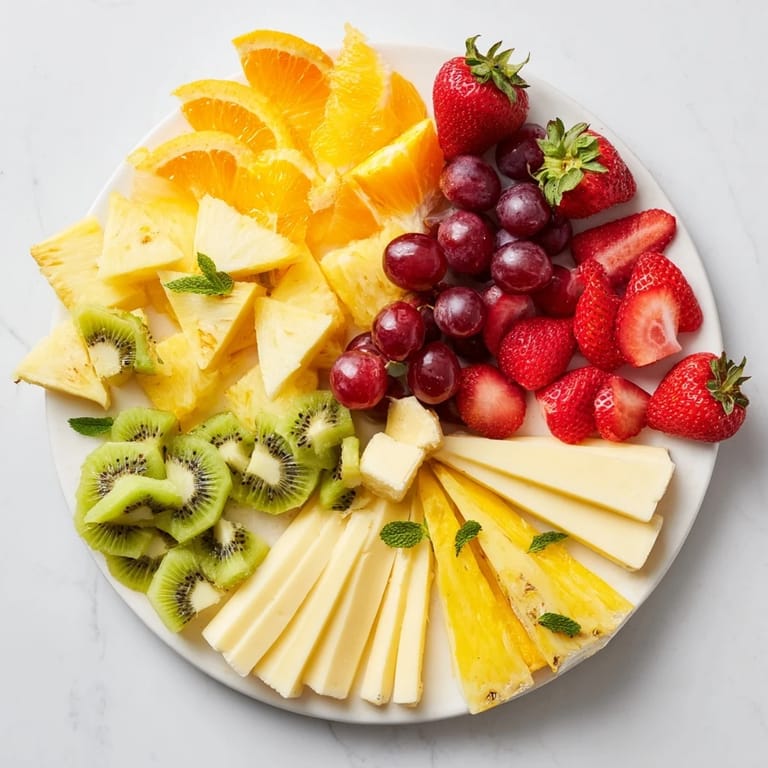
Pin This platter has become my answer to a lot of questions: what do I bring to the dinner party, how do I make something feel special with minimal stress, what's the easiest way to prove you care? Every time someone bites into a wedge of brie next to a strawberry, I think about that first accidental moment in my kitchen and smile.
Recipe Questions
- → How do I achieve the kaleidoscope effect?
Alternate wedges of fruit and cheese in symmetrical, repeating segments arranged in concentric circles on a round platter to create the kaleidoscope effect.
- → What fruits work best for this platter?
Choose colorful fruits with contrasting shapes and textures like grapes, strawberries, kiwi, pineapple, blueberries, and orange segments.
- → Can I substitute different cheeses?
Yes, feel free to swap for other firm or soft cheeses with similar shapes to maintain the visual harmony on the platter.
- → How should I prepare the fruits and cheese?
Wash and slice fruits into uniform wedges; cut cheeses into wedges or rounds matching the fruit shapes for a balanced presentation.
- → What garnishes enhance the platter?
Fresh mint leaves add color and aroma, while olives or roasted nuts can be added for a savory touch in the gaps.