 Pin
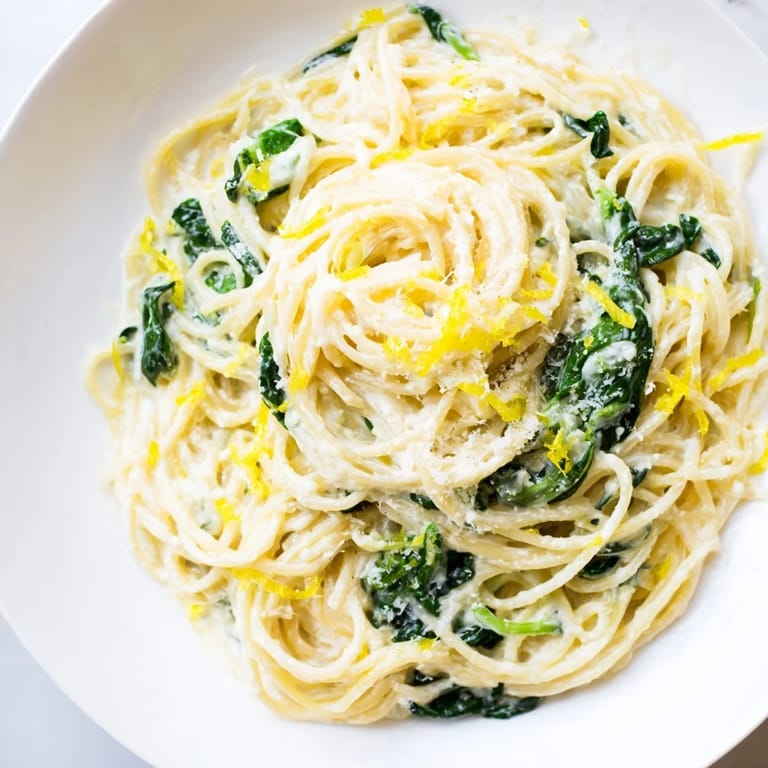
Pin My neighbor brought over a lemon from her backyard tree one Saturday morning, insisting it was the best she'd ever grown. I had spinach wilting in the crisper and a box of spaghetti staring at me from the pantry. What started as a cleanup mission turned into one of those accidental wins you can't stop making. The brightness of that lemon against the cream was something I didn't expect to crave on repeat.
I made this for my sister after a long week, and she sat at my kitchen counter with her shoes still on, twirling pasta and asking why I don't cook like this more often. We polished off the whole skillet between the two of us, scraping up every bit of sauce with crusty bread. She texted me the next day asking for the recipe, which felt like the highest compliment.
Ingredients
- Thin spaghetti: The delicate strands soak up the sauce better than thicker noodles, and they cook fast enough to keep this a weeknight win.
- Fresh baby spinach: It wilts down to almost nothing but adds color and a subtle earthiness that balances the tang.
- Garlic: Mince it fine so it melts into the butter without any harsh bite, just a warm aromatic backbone.
- Lemon zest and juice: The zest brings floral brightness, the juice adds acidity, use a good lemon and you'll taste the difference.
- Heavy cream: This is what makes the sauce cling and coat every strand, don't skimp or swap it out.
- Parmesan cheese: Freshly grated melts smoother and tastes sharper than the pre-shredded stuff, worth the extra minute.
- Unsalted butter: Gives you control over the salt level and adds a silky richness to the base.
- Black pepper: Crack it fresh for a little heat and complexity that plays well with lemon.
Tired of Takeout? 🥡
Get 10 meals you can make faster than delivery arrives. Seriously.
One email. No spam. Unsubscribe anytime.
Instructions
- Boil the pasta:
- Get your water as salty as the sea, then cook the spaghetti until it still has a little chew. Don't forget to scoop out some pasta water before you drain, it's your secret weapon for a silky sauce.
- Sauté the garlic:
- Melt the butter over medium heat and let the garlic sizzle gently for about a minute, just until your kitchen smells like an Italian grandmother's house. If it browns, it'll turn bitter, so keep it moving.
- Wilt the spinach:
- Toss in the spinach and watch it shrink down in a couple of minutes, stirring so it cooks evenly. Stir in the lemon zest now so it blooms in the heat.
- Build the sauce:
- Pour in the cream and let it bubble gently, then stir in the lemon juice and Parmesan until everything melts together into a glossy, tangy sauce. Taste it now, this is where the magic happens.
- Toss the pasta:
- Add the drained spaghetti straight into the skillet and toss everything together with tongs, adding splashes of pasta water until the sauce coats every strand like silk. It should look creamy, not soupy.
- Season and serve:
- Hit it with plenty of black pepper and a pinch of salt if needed, then plate it up fast. Finish with extra lemon zest and a snowfall of Parmesan while it's still steaming.
 Pin
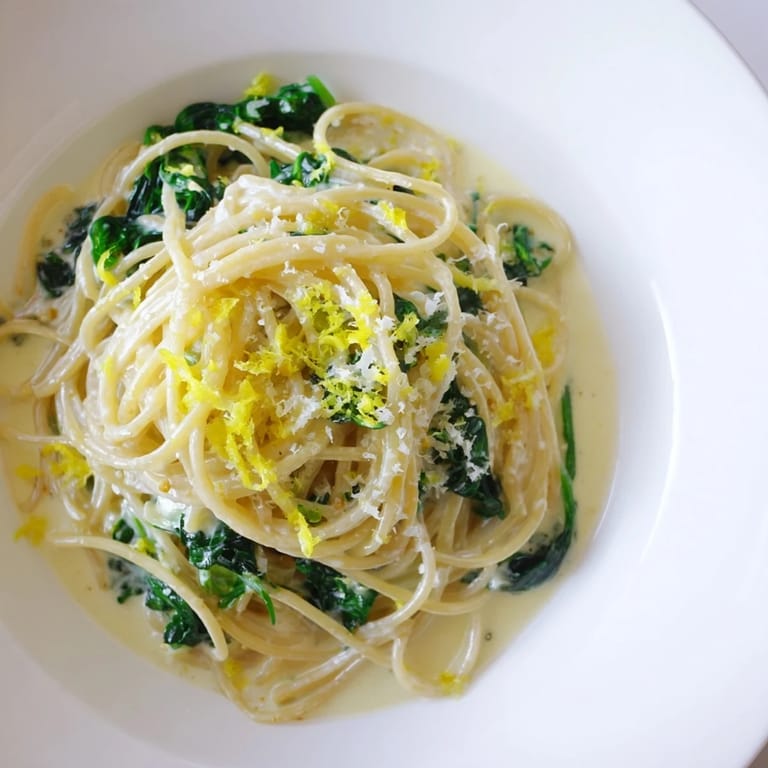
Pin There's something about twirling lemony pasta in a quiet kitchen with the windows open that feels like a small reset. It became my go-to after stressful days, the kind of meal that doesn't ask much but gives back plenty. I've made it alone, for friends, and once for a potluck where it disappeared before the main course, and every time it feels like a little gift.
Choosing Your Pasta
Thin spaghetti works best here because it twirls easily and the sauce clings without overwhelming the noodle. I've tried it with fettuccine and penne, and while both were fine, they didn't have the same delicate balance. If you're going gluten-free, pick a brand that holds up well, some turn to mush and ruin the texture.
Making It Your Own
I've tossed in leftover rotisserie chicken, sautéed shrimp, and even crispy chickpeas depending on what's around. A pinch of red pepper flakes adds a gentle kick that plays nicely with the lemon. You can also swap in kale or arugula if spinach isn't your thing, just adjust the cooking time slightly.
Storing and Reheating
Leftovers keep in the fridge for up to two days, though the sauce thickens as it sits. Reheat gently on the stovetop with a splash of cream or pasta water to bring it back to life. I don't recommend freezing this one, the cream and Parmesan don't bounce back well once thawed.
- Warm it low and slow to avoid breaking the sauce.
- Add a squeeze of fresh lemon juice before serving to wake up the flavors.
- If it's too thick, a little milk or broth will loosen it without losing richness.
 Pin
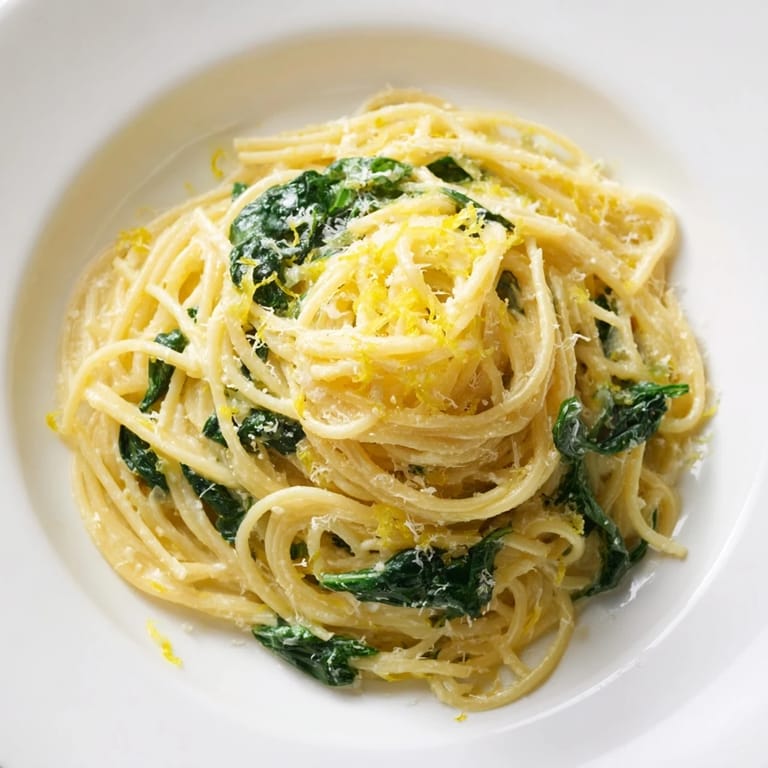
Pin This dish has become one of those recipes I make without thinking, the kind that feels like muscle memory now. I hope it finds a spot in your rotation too, because some nights you just need something bright, creamy, and effortlessly good.
Recipe Questions
- → Can I make this without heavy cream?
Yes, you can substitute with Greek yogurt, crème fraîche, or cashew cream for a lighter version. Stir in gently at the end to avoid curdling, and use pasta water to reach desired consistency.
- → What pasta works best for this dish?
Thin spaghetti is ideal as it coats evenly with the delicate cream sauce. Alternatively, use linguine or fettuccine for similar results. Whole wheat or gluten-free options work well too.
- → How do I keep the spinach from turning dark?
Sauté spinach just until wilted and add it to the cream sauce quickly. Avoid overcooking, as prolonged heat darkens the color. Fresh baby spinach wilts faster than mature leaves.
- → Can I add protein to this dish?
Absolutely. Grilled chicken, shrimp, or pan-seared salmon complement the lemon cream beautifully. Add cooked protein during the final tossing step or serve on top.
- → What wine pairs well with this?
Crisp white wines like Sauvignon Blanc or Pinot Grigio match the bright lemon notes perfectly. The acidity cuts through the cream and enhances the citrus flavor.
- → How do I prevent a broken sauce?
Maintain medium heat throughout and avoid boiling vigorously after adding cream. Add lemon juice slowly and stir gently. Reserve pasta water to adjust consistency smoothly.