 Pin
Pin I'll never forget the evening my friend Sarah arrived at my apartment with a pomegranate tucked under her arm, insisting we build something spectacular together. We'd spent months talking about hosting a dinner party, and that night, surrounded by a kitchen full of cheeses, fruits, and the shimmer of ruby-red pomegranate seeds catching the light, it finally happened. That board became the centerpiece of the evening, and watching our guests lean in with genuine delight as they discovered layers of flavor and texture made me realize that sometimes the most memorable meals aren't complicated—they're just thoughtfully arranged with love.
I remember standing back after arranging those first few pieces, suddenly understanding why my grandmother always said presentation was half the pleasure of eating. When those pomegranate seeds caught the late afternoon sun pouring through the kitchen window, I gasped—it was like jewelry scattered across a canvas. That moment taught me that food is as much about sight and anticipation as it is about taste, and this board embodies that philosophy completely.
Ingredients
- Brie cheese (150g/5 oz, chilled): This creamy, buttery cheese acts as your anchor—it's approachable enough for anyone hesitant about strong flavors, yet sophisticated enough to impress. Chill it before slicing so your wedges stay neat and intact.
- Manchego cheese (150g/5 oz, chilled): A firm, slightly nutty Spanish cheese that holds its shape beautifully and adds earthy depth. It's the cheese that makes people ask, "What is that? It's incredible."
- Blue cheese (100g/3.5 oz, chilled): A bold statement that shouldn't be apologized for. Its sharp, creamy nature contrasts perfectly with sweet fruits, and a little goes a long way in flavor impact.
- Goat cheese log (100g/3.5 oz, chilled): Tangy and smooth, this cheese slices into perfect coins and adds a subtle tartness that balances richer elements. I love how it practically melts on the tongue.
- Prosciutto (150g/5 oz, sliced): Paper-thin slices of this salty, delicate ham drape elegantly and add umami richness. Request pre-sliced from the deli counter to save yourself 15 minutes.
- Salami (150g/5 oz, sliced): A slightly more robust cured meat that stands up to bold cheeses and sweet fruits without disappearing. Its spiced complexity creates intrigue on every bite.
- Large pomegranate: The true star and namesake of this board. Those jewel-like seeds bring tartness, crunch, and an almost magical glimmer that transforms the entire presentation. Don't skip this ingredient—nothing else provides quite the same magic.
- Red grapes (1 cup/150g): Their natural sweetness and firm texture provide pockets of refreshment. Keep them in small clusters so guests know they can grab a handful without dismantling your design.
- Strawberries (1 cup/150g, hulled and halved): Fresh, fragrant berries that scream summer. Their bright red color complements pomegranate seeds perfectly, and they add juicy freshness between savory bites.
- Dried apricots (1/2 cup/75g): Chewy and naturally sweet, these create textural contrast and stay stable on the board without spoiling. They're the unsung hero of grazing boards.
- Dried figs (1/2 cup/75g, halved): Rich, honeyed, and sophisticated, figs bridge the gap between savory and sweet. When paired with blue cheese and prosciutto, they create flavor combinations that feel almost luxurious.
- Roasted almonds (1/2 cup/60g): Neutral enough to pair with anything, but toasty enough to add depth. Their mild crunch is always welcome.
- Pistachios (1/2 cup/60g, shelled): These bring a gentle earthiness and a beautiful green hue. They're a small luxury that guests always gravitate toward.
- Candied pecans (1/2 cup/60g): Sweet and crunchy, these are the addictive element that keeps people coming back. If you can't find them pre-candied, quickly toast raw pecans with a drizzle of honey and a pinch of salt.
- Assorted crackers (approx. 20 pieces): Choose a mix of textures—some crispy and delicate, others hearty and seeded. This variety keeps the experience interesting and prevents monotony.
- Baguette (1/2, thinly sliced and toasted): Toasting is non-negotiable. It preserves crispness and creates a vehicle sturdy enough to hold cheese and toppings without falling apart in your guests' hands.
- Honey (1/4 cup/60ml in a small dish): Golden honey in a dish alongside the board invites guests to customize their bites. It bridges sweet and savory in the most elegant way possible.
- Fig jam (1/4 cup/60ml in a small dish): A sophisticated sweet accent that pairs especially well with blue cheese and aged manchego. It's the final touch that makes people feel like they're dining somewhere special.
- Fresh mint leaves: A garnish that provides pops of green and a whisper of aroma. Don't underestimate how a few scattered mint leaves elevate the entire visual composition.
Tired of Takeout? 🥡
Get 10 meals you can make faster than delivery arrives. Seriously.
One email. No spam. Unsubscribe anytime.
Instructions
- Setting the Stage:
- Select your largest board or platter—you'll want at least 18 by 12 inches to give everything room to breathe and create that sense of abundance. If you have a long wooden board, rectangular marble, or even a large slate tile, this is the moment to use it. Lay down parchment or wax paper if you like, though it's entirely optional. I prefer the direct contact of food against wood or stone; it feels more natural. Take a moment to arrange your workspace so everything is within arm's reach. When you're placing dozens of items, the last thing you want is to be hunting for the next piece. Imagine you're conducting an orchestra, and everything needs to be within reach of your baton.
- Preparing the Cheeses:
- Remove all cheese from the refrigerator and let it sit at room temperature for 30 to 40 minutes. I know this seems counterintuitive when we just said to keep them chilled, but here's the secret: cold cheese is hard to slice cleanly, and it tastes muted. Room temperature cheese is creamy, expressive, and slices like butter. While the cheese warms, use a sharp knife to slice your brie and manchego into thin, elegant wedges—think of them like pieces of a pie, but thinner. Cut the blue cheese into small, rustic chunks that look intentional, not haphazard. Slice your goat cheese log into thin coins about 1/4-inch thick. You'll know everything is perfect when the cheese feels slightly soft to the touch but isn't actively melting.
- Releasing the Pomegranate's Treasures:
- This step requires a moment of ritual. Cut your pomegranate in half with a sharp knife, working over a bowl to catch the precious seeds and their juice. Hold each half cut-side down over the bowl and gently tap the back of the skin with a wooden spoon. The seeds will fall out like rubies, and the bowl will fill with a gorgeous crimson juice that you'll be tempted to drink straight. Truly, you can save this for a spritzer later. Pick through the seeds carefully to remove any white pith—this is the bitter part that nobody wants. The seeds should be plump, glistening, and deeply red. This is the moment where the magic begins to feel real.
- Preparing the Supporting Cast of Fruits:
- Wash and dry your strawberries thoroughly, then hull them and halve them lengthwise. This creates pretty flat surfaces that display beautifully on the board. Check each strawberry as you work, discarding any with soft spots or bruising—blemishes are magnified on a board this visible. For your red grapes, wash and dry them, then keep them in small clusters with stems attached. There's something about a little cluster that invites people to grab a handful. Take your dried figs and halve them carefully. These little gems should be bite-sized and uniform. Dried apricots stay whole, but take a moment to inspect them for any crystallization or hardness—if they seem stiff, soak them in warm water for five minutes to plump them up slightly.
- Creating the Diagonal Cascade:
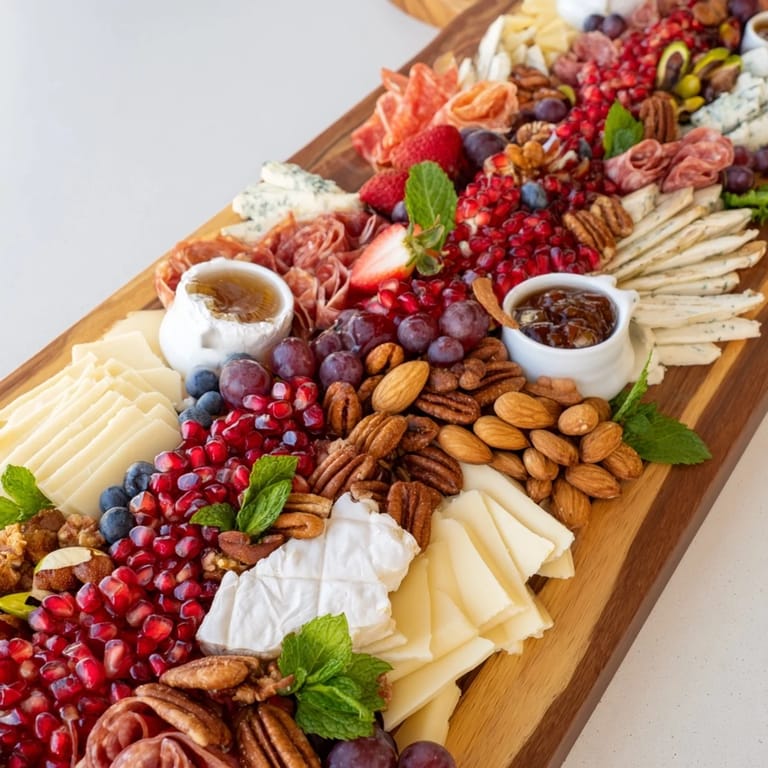
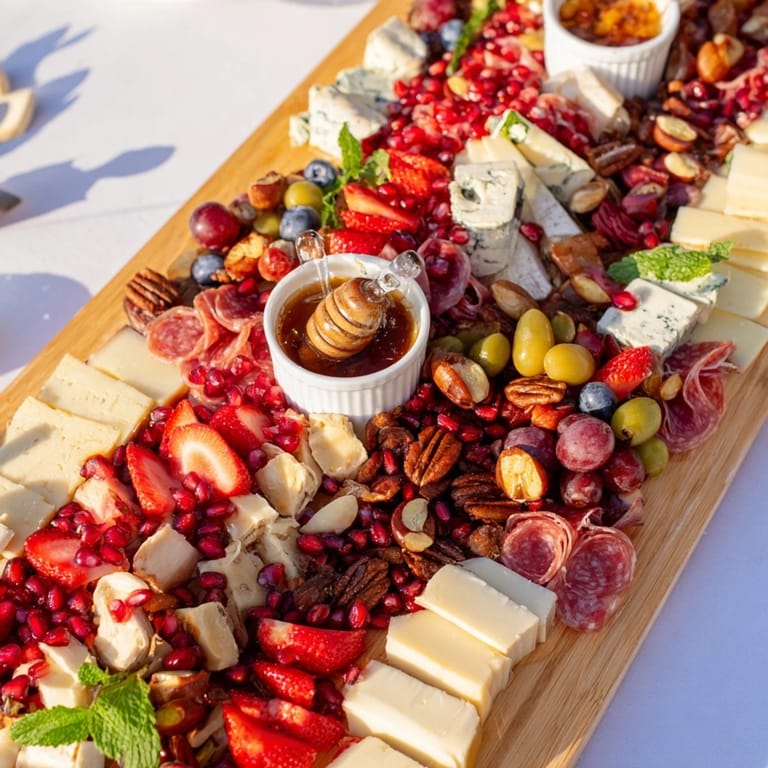
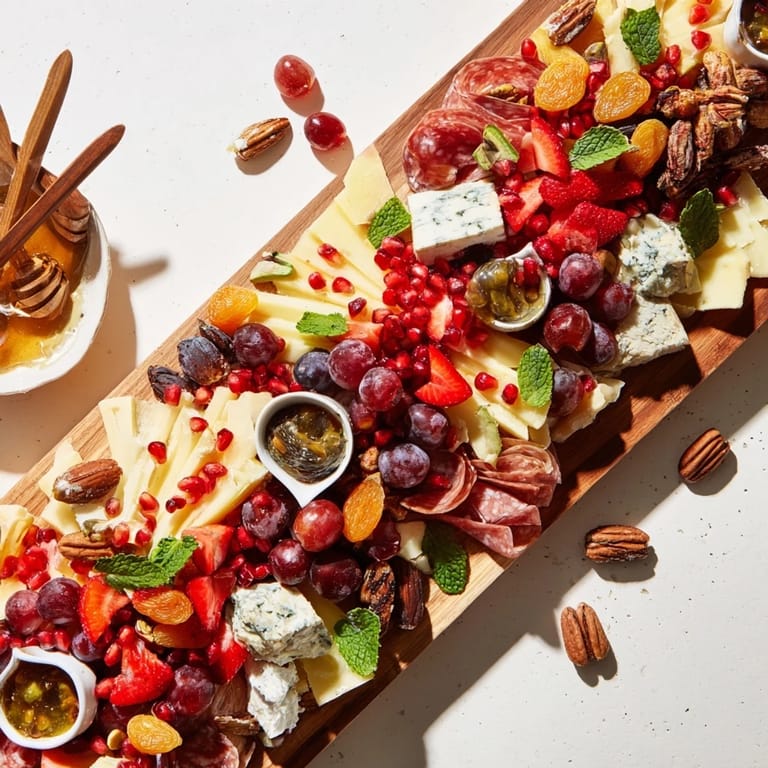
- Here's where your artistic eye comes into play. Imagine a diagonal line running from the top-left to the bottom-right of your board, or vice versa—whichever feels more natural to your space. This line is your guide, not a rule. Place your small bowls or ramekins of honey and fig jam somewhere along this path, but slightly offset so they don't dominate. Now, begin placing your cheeses and charcuterie along this diagonal, alternating between types and colors as you go. A wedge of brie, then some salami draped loosely, then manchego, then prosciutto folded into delicate ruffles. The goal isn't perfection; it's a sense of movement and intention. Step back frequently and look at your work from above, as your guests will see it. Does it feel like something is flowing, like energy moving across the board? That's what you're after.
- Layering in the Colors and Textures:
- Now the board begins to sing. Tuck clusters of red grapes into the spaces between cheese and meats. Arrange your strawberry halves in small groups, showing off their beautiful cut surfaces. Scatter the dried figs and apricots throughout, maintaining that diagonal flow. These fruits add pops of color and the promise of sweetness. Now add your nuts: almonds, pistachios, and candied pecans. Sprinkle them along the same path, using them to fill in the small gaps and add visual texture. The board should be starting to look abundant now, colorful and multi-dimensional. If you see any large blank spaces, they're intentional—breathing room is just as important as fullness.
- Positioning the Crackers and Bread:
- Fan your crackers and toasted baguette slices at the ends of your cascade, keeping them slightly apart so they don't overlap. The reason for this positioning is crucial: moisture from cheeses and juicy fruits can make crackers soggy if they're placed directly underneath. By keeping them at the periphery, your guests can grab them fresh and crisp whenever they want. The baguette slices should be golden brown and still slightly warm from the oven. Arrange them in an overlapping pattern that suggests abundance without looking chaotic.
- The Grand Finale—Pomegranate Jewels:
- This is the moment that transforms your board from nice to unforgettable. Generously scatter those pomegranate seeds across the entire cascade, clustering them like jewels in a crown. Don't be shy—these seeds are the signature of the dish, and they're what will make people lean in closer. Focus on the diagonal line especially, but let some scatter naturally across the board. They glisten, they add tartness to every bite, and they're visually magnificent. Tuck fresh mint leaves throughout the board, using them as little pops of green. The mint should be subtle but noticeable—a whisper of aroma when people lean in to eat.
- Final Presentation and Inspection:
- Step back and look at your work as if seeing it for the first time. Does the eye travel along the cascade? Are there pockets of color throughout, or are certain elements clustering too much? Is the board inviting and abundant, or does it feel sparse? Wipe any spills or smudges from the board's edges with a clean cloth—this final polish is what elevates a good board into a showstopper. If you want to add extra shine (and trust me, it's worth it), very lightly brush a few of the pomegranate seeds with a tiny bit of honey or neutral oil using a pastry brush. This catches the light and makes the entire board shimmer. Once you're satisfied, present it with the confidence of knowing you created something truly special.
 Pin
Pin I remember when my sister's three-year-old daughter picked a pomegranate seed off the board, popped it in her mouth, and declared it "the best part," her little face lighting up with pure joy. In that moment, I understood that this board isn't really about impressing people with your sophistication—it's about creating a moment where everyone, regardless of age or preference, finds something that makes them smile. That realization changed how I think about entertaining.
The Art of the Diagonal
When I first started arranging grazing boards, I thought the diagonal cascade was just a design choice. But after a few attempts, I realized it's actually functional genius. A diagonal line naturally leads the eye through the board, creating a sense of journey and discovery. It breaks up the monotony that comes from row after row of ingredients, and it creates natural pockets where you can tuck in special elements. The diagonal also ensures that every spot on the board feels intentional—there's no such thing as an "ignored corner." If you struggle to see the diagonal in your head, try using a piece of string or even a light pencil line on your parchment to mark the path first. Once you've done one board this way, your hands will remember the rhythm.
Why These Ingredients Work Together
The magic of a board like this lies in contrast. The sharp blue cheese needs the sweet dried figs to make sense. The salty prosciutto craves the refreshing bite of pomegranate seeds. The creamy brie wants the crunch of candied pecans. Every single ingredient exists in conversation with the others. This is why substitutions, while possible, require thought. If you swap in a different cheese, consider how it will interact with its neighbors. If you replace the candied pecans with something else, choose something that provides similar sweetness and crunch. The interplay of flavors is what keeps people coming back to the board again and again, trying different combinations, discovering new favorites.
Hosting Like You Know What You're Doing
Here's a truth nobody tells you about entertaining: your guests want you to relax and enjoy yourself. A board like this is one of the most forgiving appetizers you can offer because it requires no last-minute cooking, no timing coordination, and no hovering over a stove while your guests arrive. Assemble it early, tuck it in the fridge with a loose cover of plastic wrap, and then forget about it until it's time to serve. Those final touches—the pomegranate seeds and fresh herbs—take three minutes. In those minutes, you've shifted your role from chef to artist, and there's something deeply satisfying about that. Your guests will feel your ease and enjoy themselves more because of it.
- Keep your cheese board at room temperature for maximum flavor and creamy texture when served.
- If pomegranate isn't in season, feel free to add fresh raspberries or blackberries for tartness and jewel-like sparkle.
- This board serves 8–10 people as an appetizer, but if you're making it the main event of a grazing-style meal, plan for slightly more generous portions.
 Pin
Pin Creating a board like this is about more than arranging food—it's about creating a moment of connection. When your friends gather around it, they're not just eating; they're participating in something beautiful that you've made with intention and care. That feeling? That's what keeps people coming back to your table.
Recipe Questions
- → How do I properly prepare pomegranate seeds for the board?
Cut the pomegranate in half and hold it cut side down over a bowl. Tap firmly with a wooden spoon to release the seeds, then remove any white pith to avoid bitterness.
- → What cheeses work best for this style of board?
Soft brie and goat cheese, firm manchego, and blue cheese chunks offer a good balance of textures and flavors that complement the fruits and nuts.
- → How can I keep crackers crisp when assembling the board?
Place crackers and toasted bread at both ends of the cascade, away from moist ingredients like fruits and cheeses, to prevent sogginess.
- → Are there tips for arranging the cascade line effectively?
Arrange items diagonally from corner to corner, alternating textures and colors. Place small bowls of honey and fig jam slightly off-center along this line for visual interest.
- → Can I prepare this board ahead of time?
Yes, assemble up to 2 hours in advance, covering loosely and refrigerating. Add crackers, bread, and pomegranate seeds just before serving for best texture.