 Pin
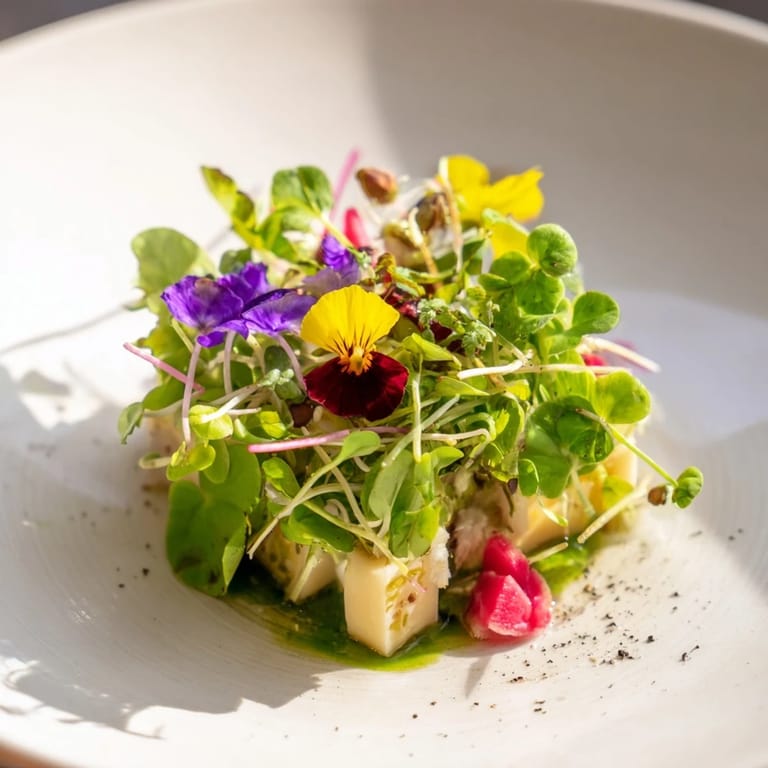
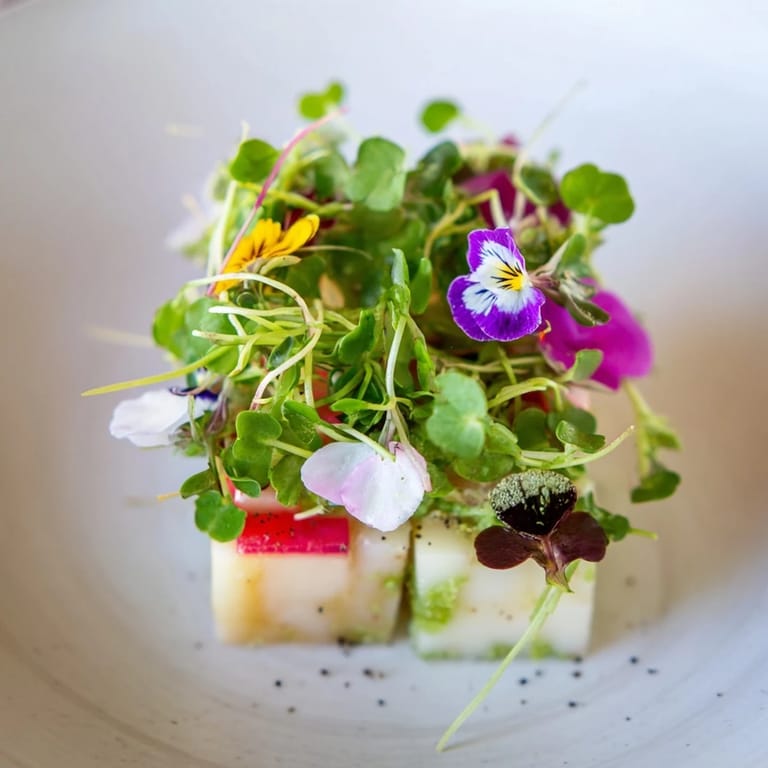
Pin I discovered this dish by accident at a farmer's market on a Saturday morning when a vendor casually handed me a nasturtium flower to taste. That peppery snap of the petal, the burst of color, made me think about how food could be playful and elegant at once. It struck me that cheese, something I'd always served conventionally, could hide beneath a blanket of greens and flowers, turning a simple board into an invitation to play. That's when I started arranging cheese cubes like hidden treasures and let guests uncover them themselves.
I'll never forget serving this for the first time at my sister's engagement dinner in her backyard. Someone's grandmother literally gasped when she bit into a pansy, then laughed like she'd just discovered something forbidden. That reaction—that blend of surprise and delight—is exactly why I keep making it. It turned out to be the dish people talked about long after the main course was cleared.
Ingredients
- Aged cheddar, cubed: The sharpness cuts through the delicate flowers and gives guests something substantial to bite down on; don't skip the aging, as mild cheddar won't hold up to the competition on the board.
- Goat cheese, cubed: Its tang and creamy texture create a lovely contrast with the earthiness of the greens, and it somehow tastes brighter when nestled under microgreens.
- Gruyère, cubed: This is the nutty, sophisticated one that makes people slow down and actually think about what they're tasting before reaching for the next bite.
- Microgreens: Pea shoots bring sweetness, radish greens add a gentle heat, and mixed micro herbs just make everything taste more intentional; they're also your camouflage layer.
- Edible flowers: Nasturtiums are peppery, pansies are mild and pretty, violets have an almost perfumy quality, borage tastes faintly of cucumber, and calendula petals are slightly spicy; buy them from growers you trust.
- Extra virgin olive oil: A drizzle adds richness and helps everything feel a bit more finished, though it's truly optional if you're in a rush.
- Flaky sea salt and freshly ground black pepper: These aren't just seasonings—they're the final whisper that ties the whole garden together.
Tired of Takeout? 🥡
Get 10 meals you can make faster than delivery arrives. Seriously.
One email. No spam. Unsubscribe anytime.
Instructions
- Cube and space your cheeses:
- Cut your three cheeses into rough bite-sized cubes and scatter them across your board with intention, leaving little pockets of negative space where flowers and greens can nestle. Think of it like setting a stage where everything has room to breathe.
- Create your green foundation:
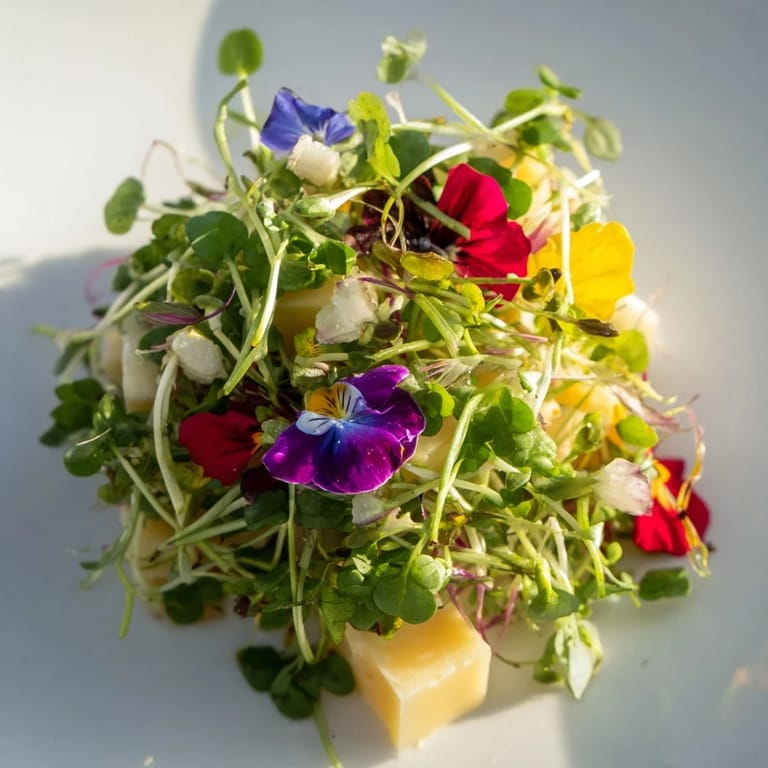
- Generously heap microgreens over and around the cheese cubes, layering them so some cheese peeks through but most is hidden. The goal is for guests to have no idea what's hiding until they dig.
- Tuck in the flowers:
- Position your edible flowers among the greens like you're arranging a tiny meadow, mixing colors and types so the board looks alive and intentional, not random. This is where it stops being a cheese board and becomes a garden.
- Optional oils and final seasoning:
- If you want, drizzle a little olive oil over the whole thing, then sprinkle salt and pepper across the top with a light hand. It sounds simple because it is, but that restraint is what keeps it elegant.
- Invite your guests to forage:
- Serve it immediately and watch people's faces as they discover what's hiding beneath the leaves.
 Pin
Pin What surprised me most about this dish is how it brought out the curious eater in everyone. Even people who usually rush through appetizers suddenly became thoughtful, pausing to identify each flower, commenting on unexpected flavors. It wasn't just food anymore; it was an experience that made the whole evening feel more intentional.
Sourcing Your Flowers and Greens
The quality of your flowers and microgreens will make or break this dish, so don't settle for grocery store options if you can help it. Visit a farmers' market early in the morning when vendors have just set up—that's when you'll find the freshest, most vibrant blooms and the perkiest greens. Ask the grower directly if they're edible and pesticide-free; a trustworthy vendor will have no problem answering this question because they know exactly where their products came from.
Playing with Cheese Combinations
You're not locked into aged cheddar, goat cheese, and Gruyère if those don't call to you. Manchego brings a buttery warmth that pairs beautifully with borage flowers, feta crumbles create interesting texture contrast, and even a creamy fresh mozzarella can work if you shape it into small balls instead of cubes. The real rule is balance: pick cheeses with different textures and flavor profiles so guests experience variety as they forage through your garden.
Timing and Presentation Secrets
The moment you finish arranging this board is the moment you should serve it, because the magic lives in the contrast between the tender, fresh greens and the firm cheese cubes waiting underneath. If it sits at room temperature for more than thirty minutes, the leaves will start to soften and lose their appeal. I've found that setting this board out just as guests arrive, while everyone is still settling in, creates the best impact—it becomes a talking point while people grab drinks and settle in.
- If you're worried about timing, prep everything in advance but don't assemble until ten minutes before guests arrive.
- Use a large board or platter so the arrangement feels generous and guests have easy access without crowding each other.
- A gentle light, whether natural sunlight or a soft lamp, makes the colors of the flowers really sing.
 Pin
Pin This dish reminds me that sometimes the most memorable meals aren't the ones with the longest ingredient lists or the most complicated techniques—they're the ones where people feel like they're discovering something together. Serve it, watch the wonder on their faces, and let them forage for their own perfect bite.
Recipe Questions
- → Which cheeses work best for this starter?
Aged cheddar, goat cheese, and Gruyère provide a balanced mix of sharp and creamy flavors that complement the fresh microgreens and edible flowers.
- → Can I substitute other greens or flowers?
Yes, pea shoots, radish greens, or mixed micro herbs are great options. Ensure flowers like nasturtiums, pansies, and violets are edible and pesticide-free.
- → Is olive oil necessary in this dish?
Olive oil is optional but can add a subtle richness when lightly drizzled over the greens and flowers.
- → How should I serve this starter?
Arrange the ingredients on a large serving board and serve immediately, allowing guests to forage and enjoy the colorful layers.
- → Are there any pairing suggestions?
This elegant dish pairs well with crisp white wine or sparkling rosé, enhancing its fresh and savory qualities.
- → Can I add texture to the dish?
Yes, thinly sliced radishes or cucumbers add a refreshing crunch without overpowering the delicate flavors.