 Pin
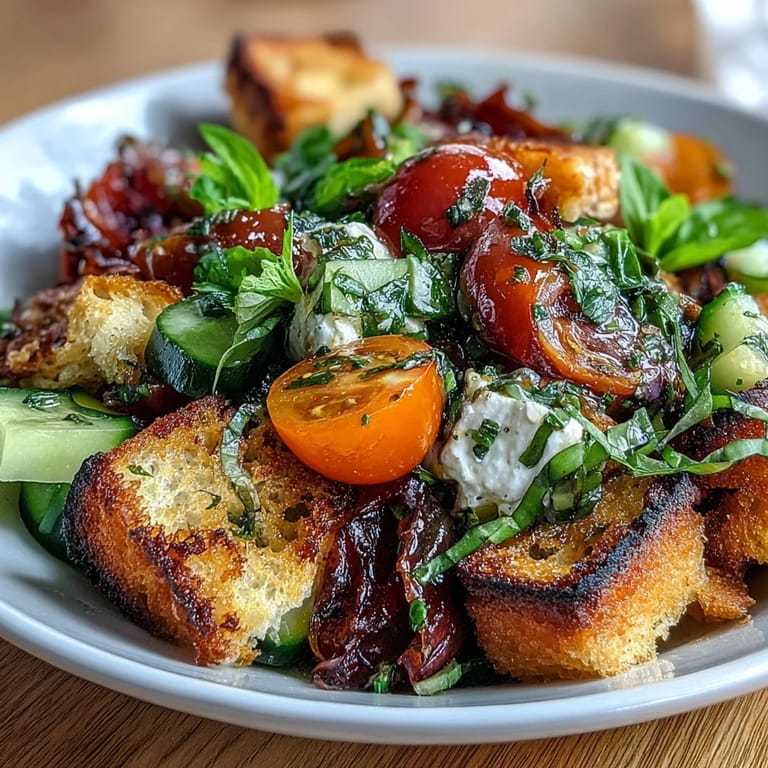
Pin Last summer, my neighbor brought over a basket of heirloom tomatoes from her garden—so many colors I felt like I was holding a sunset. I had some day-old sourdough sitting on the counter and suddenly remembered panzanella, that Tuscan salad my grandmother used to make when bread was too good to waste. That afternoon taught me something simple: the best dishes often come from paying attention to what's already in your kitchen and letting good ingredients speak for themselves.
I made this for a potluck one August evening when the weather was too hot to turn on the oven. Someone brought wine, someone brought cheese, and I arrived with this salad in a big ceramic bowl covered with a tea towel. By the time we ate, the bread had softened just enough, the basil had perfumed everything, and people kept coming back for more—not because it was fancy, but because it tasted like summer itself.
Ingredients
- Day-old sourdough bread, cut into 2 cm cubes: Day-old bread is essential here—fresh bread will turn to mush, but slightly stale sourdough crisps up beautifully in the oven and has enough structure to absorb the dressing without falling apart.
- Extra-virgin olive oil: Use a good quality oil you actually enjoy tasting, because it's a starring ingredient here, not just a supporting player.
- Sea salt: This is what makes the bread cubes taste like themselves and not just carbs.
- Heirloom tomatoes, assorted colors: Mix colors if you can find them—they add visual excitement and each variety brings slightly different flavor notes, from sweet to tangy.
- Cucumber, peeled and sliced: The cucumber adds crunch and freshness that keeps the salad from feeling heavy.
- Red onion, thinly sliced: Raw red onion seems harsh at first, but as it sits in the vinaigrette, it mellows out and adds a gentle sharpness that balances the sweetness of ripe tomatoes.
- Fresh basil leaves: Basil is the soul of this dressing—don't skip it or substitute dried basil, which tastes like straw by comparison.
- Red wine vinegar: This gives the dressing its backbone without being too aggressive.
- Dijon mustard: Just a small amount acts as an emulsifier and adds complexity to the vinaigrette.
- Honey: A touch of honey balances the acidity and brings out the natural sweetness of the tomatoes.
- Fresh mozzarella or burrata: The creamy cheese adds richness and creates little pockets of softness against the crisp croutons—optional, but it elevates the whole thing.
Tired of Takeout? 🥡
Get 10 meals you can make faster than delivery arrives. Seriously.
One email. No spam. Unsubscribe anytime.
Instructions
- Get your oven ready and prep the bread:
- Heat your oven to 180°C (350°F). While it's warming, cut your day-old sourdough into roughly 2 cm cubes—these should be substantial enough to hold up to tossing but not so big they feel like you're eating hunks of bread.
- Toast the croutons until they're golden and crisp:
- Toss your bread cubes with 2 tablespoons of olive oil and sea salt, then spread them on a baking sheet in a single layer. Toast for 10 to 15 minutes, stirring once halfway through, until they're golden brown and you can hear them crackle when you move them around. This is when your kitchen will smell absolutely incredible—let them cool while you move on.
- Make the basil vinaigrette:
- Combine fresh basil, ¼ cup olive oil, red wine vinegar, Dijon mustard, honey, minced garlic, and a pinch of salt and pepper in a blender or food processor. Blend until the mixture is smooth and bright green, then taste it—if it's too sharp, add a touch more honey; if it's too mellow, squeeze in a tiny bit more vinegar.
- Assemble the salad base:
- In a large bowl, combine your tomato wedges, sliced cucumber, and thinly sliced red onion. Add the cooled sourdough croutons and give everything a gentle toss.
- Bring it all together:
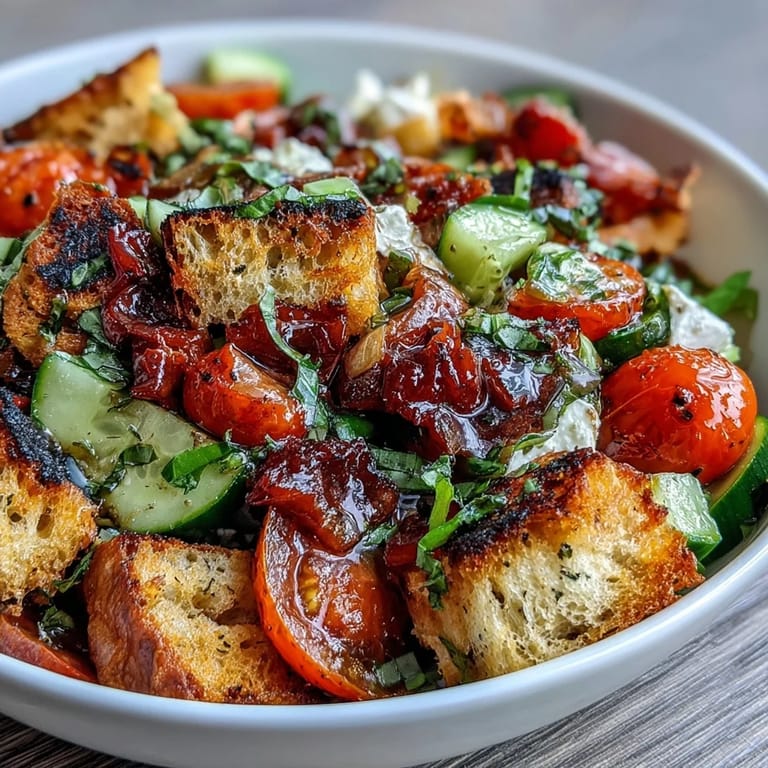
- Drizzle the basil vinaigrette over the salad and toss gently so everything is coated. Now comes the patience part—let it sit for about 10 minutes so the bread absorbs the dressing and all the flavors get to know each other.
- Finish and serve:
- Transfer everything to a serving platter, tear over some fresh mozzarella or burrata if you're using it, scatter a few more basil leaves on top, and serve right away while the croutons still have some crunch.
 Pin
Pin There was this moment at that potluck when someone bit into a crouton and their eyes went wide—they hadn't expected bread to taste like that, crispy on the outside but having soaked up all that basil and vinegar. That's when I realized panzanella isn't just a way to use up old bread; it's a reminder that transformation happens when you give ingredients time and attention.
The Story Behind Panzanella
Panzanella comes from Tuscany, where nothing was ever wasted, especially not bread. In the summer when tomatoes were exploding off the vine and the kitchen was already too hot, cooks would tear up yesterday's loaf, toss it with whatever vegetables were at hand, and dress it simply with oil and vinegar. It's a salad born from practicality but elevated by respect for ingredients. Making it now, I feel connected to all those Italian kitchens from centuries past, where the same principle applies: good bread, ripe tomatoes, and time make magic.
Timing and Make-Ahead Magic
One of the best things about this salad is that it actually gets better as it sits. The bread continues to absorb the vinaigrette, the flavors deepen, and the whole thing melds into something more delicious than when you first tossed it together. You can assemble it an hour or two before serving, cover it with a kitchen towel, and let it hang out on the counter. Just add the cheese and fresh basil right before serving so they don't get soggy. This is the perfect solution for summer entertaining when you want to spend time with guests instead of fussing in the kitchen.
How to Adapt This for Your Pantry and Season
While this recipe shines with heirloom tomatoes at peak ripeness, I've made delicious versions with regular tomatoes, cherry tomatoes, and even a winter version with roasted cherry tomatoes that brings a slightly deeper flavor. If you don't have fresh basil, you can use parsley or a mix of fresh herbs—it won't be traditional panzanella, but it will still be delicious. The beauty of this salad is its flexibility; it's a template more than a rigid recipe.
- Swap the bread for ciabatta, focaccia, or any sturdy rustic loaf you have on hand.
- Add capers, olives, or diced bell peppers if you want more texture and briny notes.
- For a protein boost, crumble in some white beans or top with a soft-boiled egg.
 Pin
Pin This salad taught me that summer cooking doesn't need to be complicated—it just needs to start with attention to what's good and ripe and in front of you. Serve it with cold wine and good company, and you've already won the evening.
Recipe Questions
- → Can I use other bread instead of sourdough?
Yes, any rustic bread works well when toasted to add crunch and absorb the vinaigrette flavors.
- → How long should the salad rest before serving?
Allowing it to rest for about 10 minutes helps the bread soak up the dressing and enhances the flavor.
- → What variations can be added to this salad?
Capers or olives add extra briny notes, and fresh mozzarella or burrata provides creamy texture.
- → Is this salad suitable for vegetarians?
Yes, it contains no meat and uses fresh vegetables and cheese; for vegan options, omit or substitute cheese.
- → How should I store leftovers?
Keep refrigerated in an airtight container and consume within 1-2 days for best freshness.
- → What wine pairs well with this dish?
A chilled Pinot Grigio complements the fresh and tangy flavors nicely.