 Pin
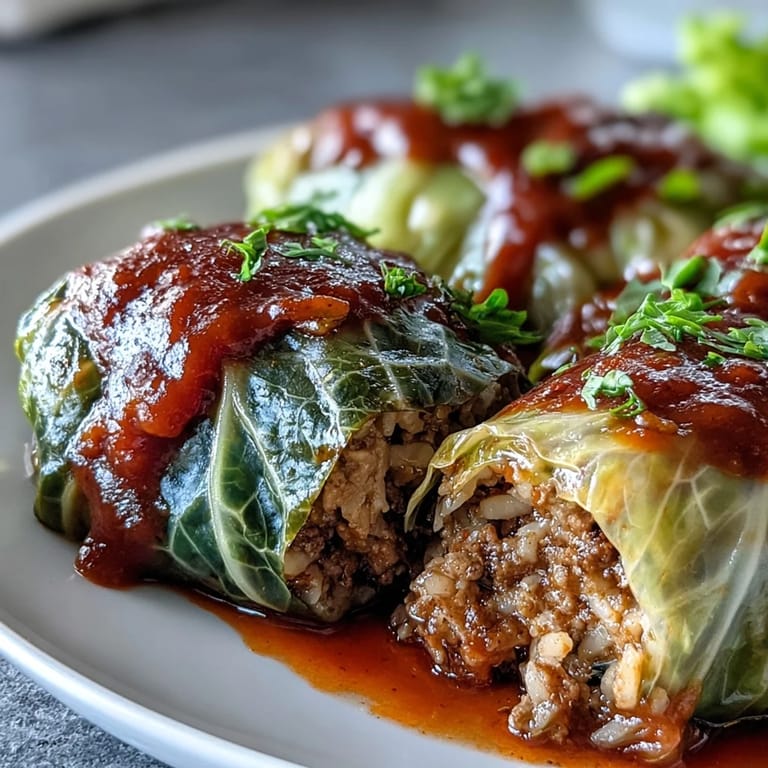
Pin My grandmother's kitchen always smelled like tomato and earth on the day she made cabbage rolls, and I'd watch her methodically fold each leaf like she was wrapping up a precious secret. Years later, standing in my own kitchen with steam rising from a pot of boiling cabbage, I understood what she was actually doing—creating comfort in a form you could hold in your hands. There's something deeply satisfying about the ritual of it all, the way the filling hugs the leaf, the gentle sizzle when you arrange them in the baking dish. This Eastern European classic has become my go-to when I want to feel both accomplished and nourished at the end of the day.
I made these for my partner on a gray November evening when we both needed something that tasted like home, even though we'd never actually eaten them together before. Something about the warmth of the baking dish in my hands as I carried it to the table, the way the sauce had thickened and darkened to deep burgundy, made the whole apartment feel less empty and cold. We ate them with crusty bread and sour cream, and he went quiet for a moment—the good kind of quiet that means real comfort is happening. That's when I realized these weren't just cabbage rolls; they were a love language I could speak in my kitchen.
Ingredients
- 1 large head of green cabbage: Choose a head that's firm and heavy for its size; the outer leaves tend to be thicker and more forgiving when you're learning to roll them.
- 500 g (1.1 lbs) ground beef (or pork, or a mix): A blend of beef and pork gives you better flavor and a slightly lighter texture, though pure beef works beautifully too.
- 120 g (2/3 cup) uncooked long-grain white rice: Don't skip the par-cooking step—it ensures your rice finishes perfectly in the oven instead of staying crunchy or turning to mush.
- 1 medium onion, finely chopped: The onion breaks down into the filling and adds sweetness that balances the savory meat and umami from the sauce.
- 2 cloves garlic, minced: Fresh garlic is non-negotiable here; powdered versions won't give you that bright, living quality.
- 1 large egg: This binds everything together and keeps the filling moist throughout the baking process.
- 2 tbsp fresh parsley, chopped: It's a small amount but adds a green, herbaceous note that lifts the whole dish.
- 1 tsp salt and 1/2 tsp black pepper: Taste your filling before rolling; you might find you want slightly more seasoning since the sauce will mellow things out.
- 700 ml (3 cups) tomato passata or crushed tomatoes: Passata gives you a smoother sauce, but crushed tomatoes work if that's what you have—just blend them if you prefer something silkier.
- 2 tbsp tomato paste: This concentrates the tomato flavor and gives the sauce depth and body.
- 1 tbsp sugar: It tempers acidity and adds a subtle sweetness that makes the sauce taste more complex.
- 1 tsp dried thyme: This is the flavor signature of the dish; if you have fresh thyme, use about 1 tbsp and add it at the end.
- 1 tbsp vegetable oil: For sautéing the onions and garlic without overpowering the other flavors.
Tired of Takeout? 🥡
Get 10 meals you can make faster than delivery arrives. Seriously.
One email. No spam. Unsubscribe anytime.
Instructions
- Get your oven ready and prep the cabbage:
- Preheat to 180°C (350°F). Bring a large pot of salted water to a rolling boil—you want it vigorously bubbling. Cut out the core of the cabbage with a sharp knife, then lower the whole head into the water and let it bob there for 8–10 minutes until the outer leaves just start to soften and peel away easily. With tongs or a slotted spoon, gently coax off the leaves one by one, setting aside the 12–14 largest ones on paper towels to cool and dry slightly.
- Build the tomato sauce while rice cooks:
- In a saucepan, warm oil and sauté the onion and garlic for the sauce until they're soft and fragrant, about 3 minutes. Stir in tomato paste and let it caramelize slightly for 1 minute. Add the tomato passata, sugar, thyme, salt, and pepper, then simmer gently for 10 minutes—you're developing flavor here, not rushing it. Meanwhile, in a small pot, bring water to boil and add the rice; cook for just 5 minutes so it's still somewhat firm.
- Make the filling come together:
- Drain the rice and let it cool for a minute or two. In a large bowl, combine the ground meat, par-cooked rice, chopped onion, garlic, egg, parsley, salt, and pepper with your hands until everything is evenly mixed—don't overwork it, just make sure the egg is distributed so the filling stays moist. Taste a tiny piece if you'd like and adjust seasoning.
- Roll each one like you mean it:
- Lay a cabbage leaf flat and place 2–3 tablespoons of filling near the thicker stem end. Fold the sides over the filling first, then roll away from you tightly but not so hard that you tear the leaf. The seam should end up on the bottom when you place it in the dish.
- Layer and sauce them:
- Spread a thin layer of tomato sauce across the bottom of a large ovenproof dish. Arrange your rolls seam-side down in a single layer—they should fit snugly without squishing. Pour the remaining sauce evenly over the top, making sure each roll gets some coverage.
- Bake low and slow:
- Cover tightly with foil or a lid and slide into the oven for 1 hour. In the last 15 minutes, if you want a thicker, more caramelized sauce, remove the foil and let it finish uncovered. The rolls are done when you can see the meat filling is cooked through and the sauce has darkened slightly.
- Rest and serve:
- Let them sit for a few minutes out of the oven so they firm up slightly and won't fall apart on the plate. Serve warm with a dollop of sour cream and crusty bread.
 Pin
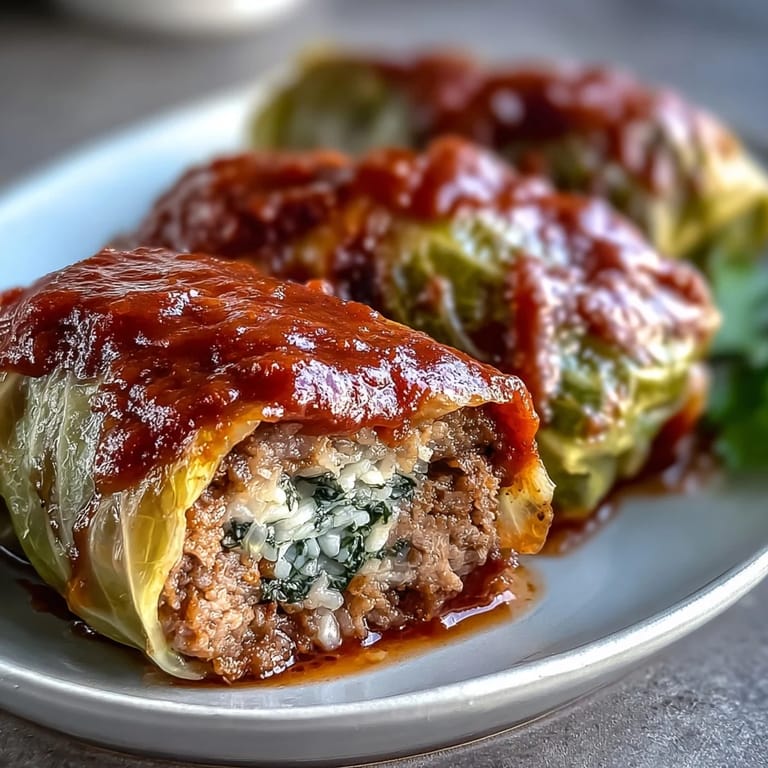
Pin I once made these for a dinner party and accidentally overcooked the cabbage leaves so much that they fell apart as I was rolling them, and I thought the evening was ruined. Instead, I shredded what was left, mixed it into the filling, and piled it all into the baking dish in layers—it looked nothing like cabbage rolls, more like a deconstructed cabbage roll situation. But when we ate it, it was somehow even better, softer and more sauce-saturated, and now I sometimes make it that way on purpose just because it's less fussy and equally delicious. That night taught me that this dish has enough built-in comfort that it's almost impossible to ruin.
The Magic of Blanching
The first time I blanched cabbage, I was afraid I'd either cook it into mush or not cook it enough, so I hovered over the pot like a nervous parent. What I learned is that the leaves loosen up exactly when they need to—there's a window where they're perfectly pliable and still have enough structure to hold filling without tearing. Now I use that moment as a kind of meditation checkpoint in the kitchen, a place where I can slow down and watch something transform with just heat and time.
Why the Filling Needs an Egg
An egg in the filling does two critical things: it binds the meat and rice together so nothing unravels during cooking, and it adds moisture that keeps everything tender instead of dense or dry. I learned this the hard way when I tried making the filling without an egg once, thinking I could skip it, and ended up with crumbly, disappointing rolls. Now I see that egg as a silent partner doing essential work in the background, the way the best things in a recipe often do.
Serving and Storing for Maximum Comfort
These rolls genuinely taste better on day two, when the flavors have had time to mingle and deepen in the refrigerator. The sauce gets thicker and more concentrated, and the rolls absorb all that tomatoey, herbaceous goodness like they're finally at home in themselves. Reheat gently in a low oven or on the stovetop with a splash of water so they don't dry out, and they'll be as good as the first time you made them, maybe even better.
- Store leftovers in an airtight container for up to 4 days, or freeze them for up to 3 months before thawing overnight in the fridge.
- If you want to make them ahead, assemble the whole dish, cover it, and refrigerate it overnight before baking—just add 10–15 minutes to the cooking time since you're starting from cold.
- Sour cream is traditional for a reason; it cools the richness of the meat and sauce and adds a bright tang that makes you want another forkful.
 Pin
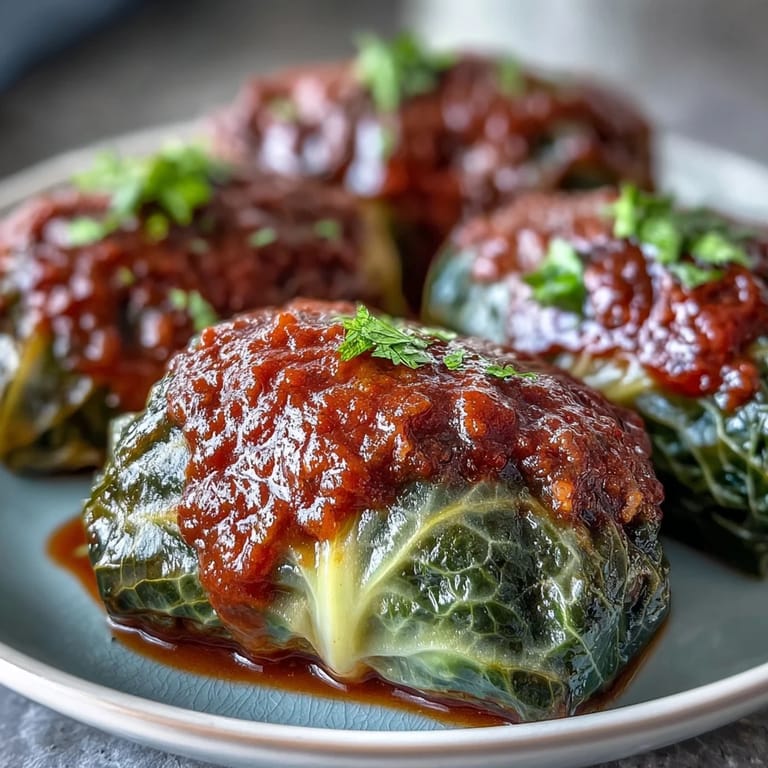
Pin There's something deeply grounding about making these, about taking time with each roll and knowing that what you're doing will feed someone you care about. That slowness, that intentionality—it's the real magic here, not anything complicated or tricky.
Recipe Questions
- → Can I prepare cabbage rolls ahead of time?
Yes, you can assemble the rolls up to 24 hours in advance. Store them covered in the refrigerator with the sauce, then bake when ready to serve. You may need to add 10-15 minutes to the cooking time if baking from cold.
- → What type of cabbage works best for this dish?
Green cabbage is traditional and works perfectly. Choose a large head with flexible outer leaves. Savoy cabbage also works well due to its tender, pliable leaves that roll easily without tearing.
- → Can I freeze cabbage rolls?
Absolutely. Freeze them either before or after baking. If freezing unbaked, arrange in a freezer-safe dish with sauce and freeze up to 3 months. Thaw in the refrigerator overnight before baking. Cooked rolls can be frozen for up to 2 months.
- → How do I prevent the cabbage leaves from tearing?
Boil the cabbage until the leaves are pliable but not overcooked. Remove leaves carefully as they soften. If a leaf tears, overlap two smaller leaves or use the torn leaf as part of the sauce layer on the bottom of your baking dish.
- → What can I serve alongside cabbage rolls?
Traditional accompaniments include sour cream, crusty bread, mashed potatoes, or a simple cucumber salad. A dollop of sour cream on top adds richness and balances the tangy tomato sauce beautifully.
- → Why is my filling too wet or dry?
The egg binds the mixture, while the rice absorbs moisture during cooking. Make sure to partially cook the rice beforehand and drain it well. If the mixture seems too wet, add breadcrumbs. If too dry, add a tablespoon of water or tomato sauce.