 Pin
Pin My first bowl of Tom Kha arrived on a sweltering Bangkok afternoon, and I remember sitting in a cramped shophouse kitchen watching the vendor stir a massive pot of creamy broth that seemed to glow under the fluorescent lights. The aroma hit me before the spoon touched my lips—lemongrass, lime, and something warm and earthy I couldn't name. Years later, I finally understood that unnamed note was galangal, and once I learned to build that fragrant base myself, the soup became a weeknight staple that tastes like comfort and tastes like travel at the same time.
I made this for my sister on a Tuesday when she was stressed about work, and watching her shoulders drop after that first spoonful reminded me why certain dishes transcend recipes—they're little acts of care in a bowl. She asked for the lime wedges to squeeze in herself, which is exactly how I've learned to serve it now, letting people adjust the brightness to match their mood.
Ingredients
- Boneless, skinless chicken breast or thighs: Thighs stay more forgiving and juicier than breast meat, but slice whichever you choose thinly so it cooks in minutes.
- Coconut cream: This is the soul of the soup—use the full-fat canned version and don't skim it, because those rich globules are what make each spoonful luxurious.
- Chicken stock: A gentle, unseasoned broth works best so the aromatics shine; homemade is wonderful but good quality store-bought won't betray you.
- Lemongrass: Trim the woody bottom third and bruise the stalks by pressing them with the flat of your knife so they release their oils into the pot.
- Fresh galangal: It's milder and floral compared to ginger, but if your market doesn't carry it, fresh ginger works in a pinch, though the flavor profile shifts.
- Kaffir lime leaves: These torn leaves are pure perfume—if you can't find them fresh, frozen leaves from Asian markets will do the job faithfully.
- Button mushrooms: Slice them thin and they'll soak up all that creamy broth; cremini or shiitake offer earthier notes if you want to experiment.
- Shallots and garlic: Bruise the garlic and slice the shallots thin so they soften into the broth without overwhelming it.
- Thai bird's eye chilies: These are not forgiving—start with one smashed chili and taste as you go, because heat builds differently in hot liquid than you'd expect.
- Fish sauce: Just a couple tablespoons becomes the invisible backbone that makes people ask what your secret ingredient is.
- Lime juice: Fresh is non-negotiable here; the acidity brightens everything and completes the flavor balance at the very end.
- Sugar: A small measure balances the heat and acidity without announcing itself.
Tired of Takeout? 🥡
Get 10 meals you can make faster than delivery arrives. Seriously.
One email. No spam. Unsubscribe anytime.
Instructions
- Build Your Fragrant Base:
- Pour coconut cream and chicken stock into a large saucepan, then add lemongrass, galangal, kaffir lime leaves, shallots, garlic, and chilies. Bring everything to a gentle simmer over medium heat, watching for small bubbles that break the surface rather than a rolling boil. You want the aromatics to slowly perfume the liquid, not get hammered by aggressive heat.
- Infuse and Wait:
- Let the pot simmer undisturbed for 10 minutes—this is when the magic happens and the broth transforms from simple liquid into something aromatic and alive. The kitchen will smell so good you'll understand why this soup is worth making again and again.
- Introduce the Protein and Vegetables:
- Slip the sliced chicken and mushrooms into the simmering broth and let them cook gently for 8 to 10 minutes until the chicken is no longer pink inside and mushrooms have softened. Stir occasionally so everything cooks evenly, and resist the urge to crank up the heat—gentle and patient wins this round.
- Strain Out the Solids:
- Lift out the lemongrass stalks, galangal slices, and lime leaves with a spoon or small strainer and discard them. These have given their flavor generously and have no further role to play.
- Season to Your Taste:
- Stir in fish sauce, lime juice, sugar, and a pinch of salt, then taste and adjust as needed. This final seasoning layer is where the soup becomes yours—add more lime if you want brightness, more fish sauce if it needs depth, more sugar if heat or acidity is too bold.
- Serve with Intention:
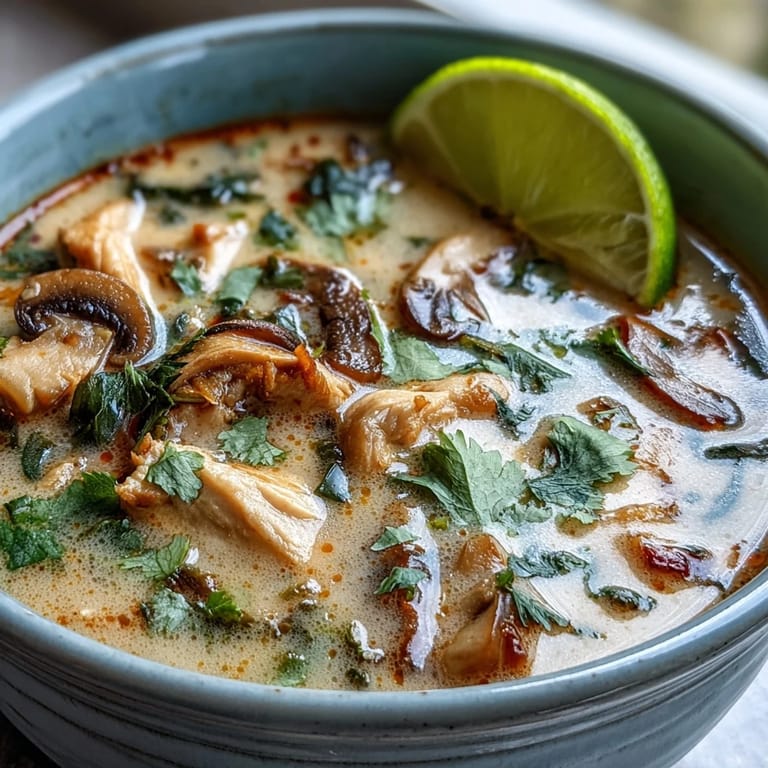
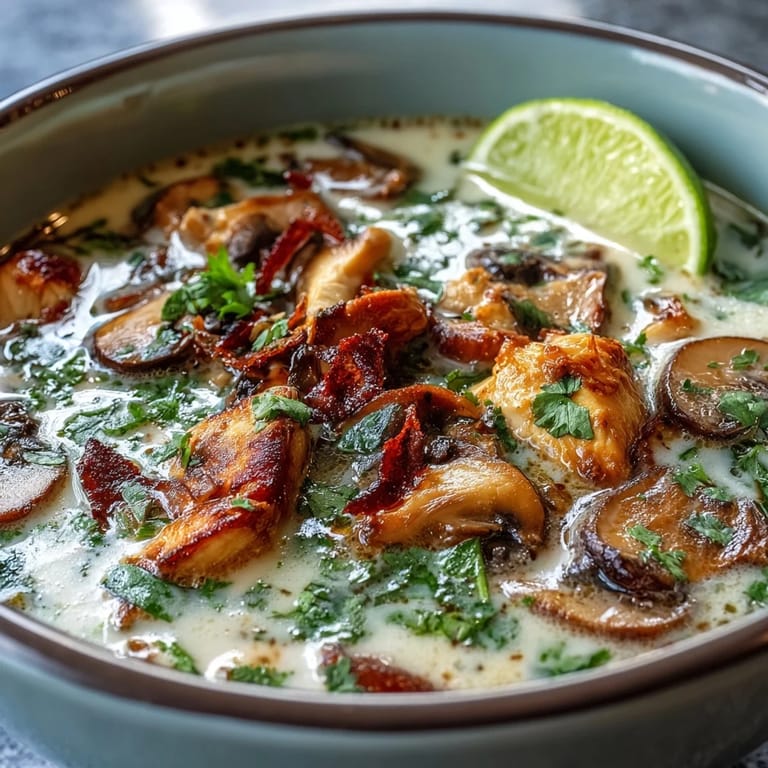
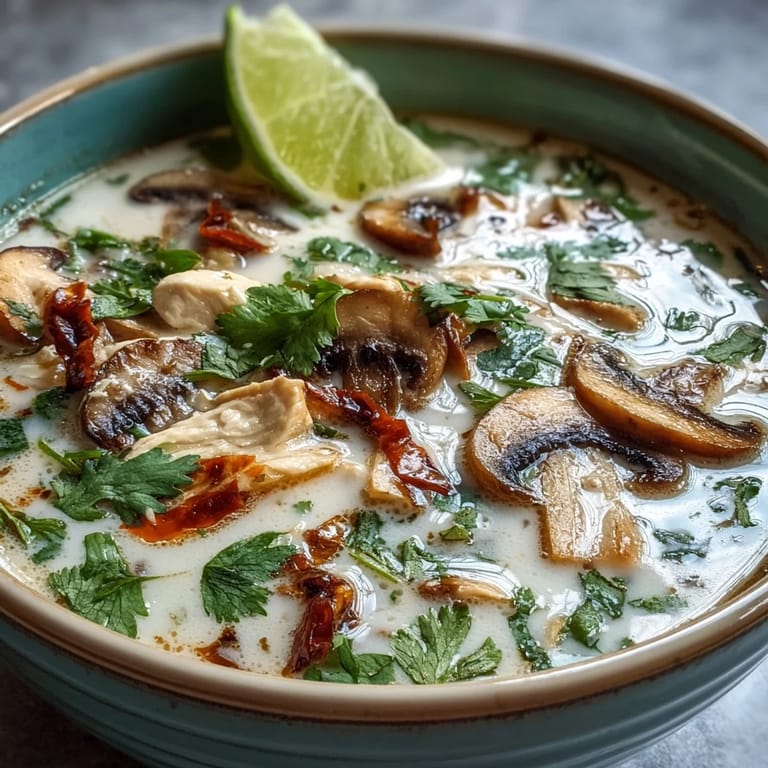
- Ladle the soup into bowls and finish each one with a handful of fresh cilantro leaves and lime wedges on the side. Let people squeeze in their own lime so they control the final flavor journey from their very first spoonful.
 Pin
Pin There's a moment when a spoonful of this soup hits your tongue and you understand why people order it three times in a row at restaurants—it's simultaneously delicate and bold, creamy and bright, exotic and deeply comforting. That moment is what I chase every time I make it, and it never disappoints.
The Lemongrass Lesson
The first time I made this soup at home, I used lemongrass that had been languishing in my crisper drawer for two weeks, and the broth tasted flat and sad instead of alive. Fresh lemongrass makes all the difference—it should smell bright and citrussy when you crush it, not dried out or musty. If you can't find fresh stalks, it's better to skip the recipe that day and wait for better luck at the market, because the lemongrass is truly the voice of this dish.
When Coconut Cream Separates
Canned coconut cream often arrives with thick cream at the top and watery liquid below, and this is actually perfect—you want both parts in your pot so the broth achieves that velvety texture without becoming greasy. Stir it well before pouring, or if you prefer an even richer version, scoop out the cream and let it cook in the broth first, then add the liquid halfway through. The soup will taste luxurious either way, but understanding this separation gives you control over richness.
Variations Worth Trying
This soup is more forgiving than it looks, which is part of why I make it so often without thinking twice about substitutions. Tofu crumbled into the pot replaces chicken beautifully if you switch to soy sauce for the fish sauce, and the cooking time stays exactly the same. Some nights I add a handful of spinach or bok choy at the very end, and other times I swap the mushrooms for baby corn or zucchini depending on what's in my vegetable drawer and what my body is craving.
- Coconut milk can replace coconut cream if you prefer a lighter, less rich version that still tastes authentic and comforting.
- A few torn Thai basil leaves stirred in at the end add a peppery, anise-like note that some people find irresistible.
- Extra lime juice and a touch of sugar can balance the heat if your chilies were more aggressive than expected.
 Pin
Pin This soup has taught me that cooking doesn't need to be complicated to be profound—sometimes the most meaningful meals come from respecting a few quality ingredients and giving them time to become something greater than themselves. Make it when you want to feel close to someone, or make it when you need to feel close to yourself.
Recipe Questions
- → What makes Tom Kha different from Tom Yum?
Tom Kha features coconut cream for a rich, velvety texture, while Tom Yum is a clear, tangy broth. The coconut adds sweetness and creaminess that balances the sharp citrus and spicy notes.
- → Can I make this vegetarian?
Yes, replace chicken with firm tofu and substitute fish sauce with soy sauce or a vegetarian fish sauce alternative. Use vegetable stock instead of chicken stock for full vegetarian compliance.
- → What can I use instead of galangal?
Fresh ginger works as a substitute, though the flavor profile will change slightly. Galangal has a piney, citrusy note that ginger lacks. Use about 1 tablespoon of sliced ginger for every 4 slices of galangal.
- → How spicy is this soup?
The heat level is adjustable with Thai bird's eye chilies. Two chilies provide a moderate kick, while omitting them creates a mild version. Always add chilies to taste and remove seeds for less heat.
- → How long does this keep in the refrigerator?
Stored in an airtight container, the soup keeps for 3-4 days. Reheat gently over low heat to prevent separating the coconut cream. Avoid boiling, as this can cause the coconut to curdle.
- → What should I serve with Tom Kha?
Fragrant jasmine rice is the classic accompaniment, helping to balance the rich, tangy broth. You can also serve with rice noodles or enjoy it as a light starter on its own.