 Pin
Pin Bangkok heat had me standing in a market at dawn, surrounded by vendors shouting prices in Thai while I clutched a crumpled recipe written on the back of a napkin. My friend Niran had whispered the secret to real tom yum the night before: bruise everything first, taste as you go, and never rush the infusion. That morning, watching her hands move through the ingredients with such casual precision, I understood this wasn't just a soup—it was a conversation between heat, citrus, and memory.
I made this soup for my roommate on a rainy Tuesday when she came home sniffling, and watched her face transform from miserable to radiant after the first spoonful. The steam rose up and softened her expression, and suddenly the kitchen smelled like every good thing I remembered about Southeast Asia. She asked for the recipe before she'd even finished the bowl, which told me everything I needed to know about whether I'd gotten it right.
Ingredients
- Boneless, skinless chicken thighs or breasts (400 g): Thighs stay tender and forgiving, but breasts work beautifully if you slice them thin and don't overcook—I learned this the hard way after one too many rubbery experiments.
- Chicken stock (1.2 liters): Use homemade if you have it, but good quality store-bought works just fine and saves you hours of simmering bones.
- Lemongrass (2 stalks): The pale inner core is where the magic lives; discard the tough outer layers and smash what's left to wake up the oils.
- Fresh galangal (4 slices) or dried galangal (2 tsp): This root has a peppery, almost medicinal warmth that defines tom yum; fresh is noticeably better but dried won't let you down.
- Makrut lime leaves (5): These tear so easily and release such bright fragrance that handling them feels like a small ritual.
- Birds eye chilies (4): Lightly crush them to release heat without breaking them into pieces that'll hide in your spoon.
- Mushrooms (150 g): Oyster mushrooms have a silky texture, but button or cremini work beautifully too.
- Tomatoes (2 medium): Cut into wedges so they hold their shape and add bursts of sweetness and acidity.
- Onion (1 small) and garlic (3 cloves): Both get smashed or sliced to release their essence into the broth.
- Fish sauce (3 tbsp): This is non-negotiable; it's the backbone of authentic flavor, though start with 2.5 tbsp and taste before adding more.
- Lime juice (2 tbsp): Fresh squeezed only—bottled just doesn't have the same brightness.
- Sugar (1 tsp) and salt (½ tsp): These balance the heat and acid, so taste constantly and trust your palate.
- Fresh cilantro and spring onions for garnish: These add freshness and color right at the end, so don't skip them.
Tired of Takeout? 🥡
Get 10 meals you can make faster than delivery arrives. Seriously.
One email. No spam. Unsubscribe anytime.
Instructions
- Bruise your aromatics:
- Take the lemongrass, galangal, and makrut lime leaves and give them a firm whack with the back of your knife blade. You'll hear a subtle crack and suddenly the kitchen smells like a Thai market—that's how you know the oils are waking up.
- Build the infused broth:
- Bring your chicken stock to a rolling boil in a large pot, then add the bruised lemongrass, galangal, makrut leaves, crushed chilies, and smashed garlic. Simmer uncovered for 5 minutes, resisting the urge to rush—this is where the flavor magic happens.
- Cook the chicken and onion:
- Add your thinly sliced chicken and onion to the pot and let them simmer for 8 to 10 minutes, gently skimming away any foam that rises to the surface. The chicken will go from translucent to opaque, and you'll know it's nearly done when you can't see through it anymore.
- Add vegetables and finish cooking:
- Toss in your mushroom slices and tomato wedges and give everything another 5 to 7 minutes so they soften without turning to mush. The vegetables will still have a little resistance when you bite them, which is exactly what you want.
- Season to taste:
- Pour in the fish sauce, lime juice, sugar, and salt, then taste and adjust like you're tuning an instrument. This is the moment where tom yum becomes yours—maybe you like it spicier, maybe more sour, maybe saltier.
- Finish and serve:
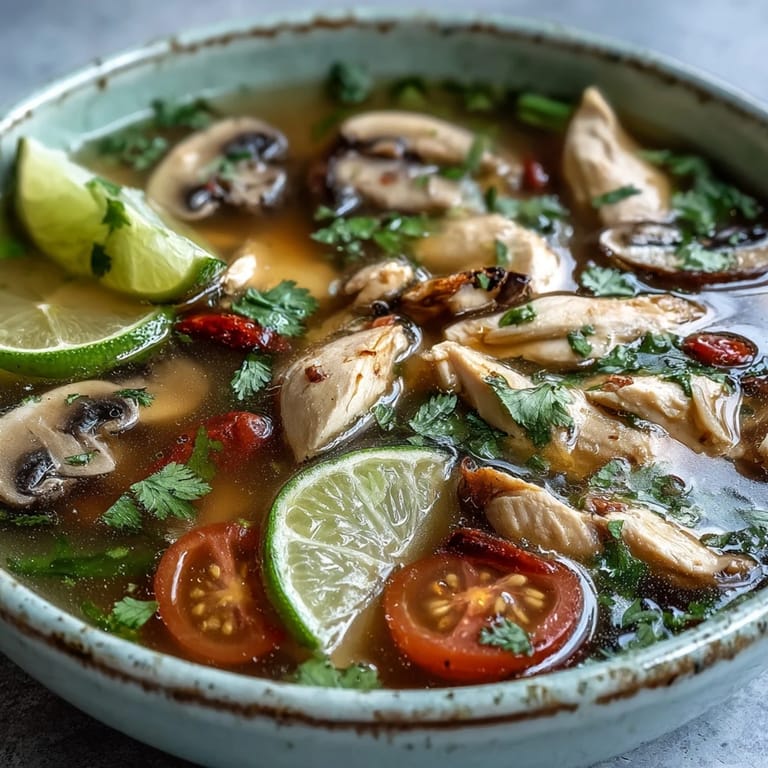
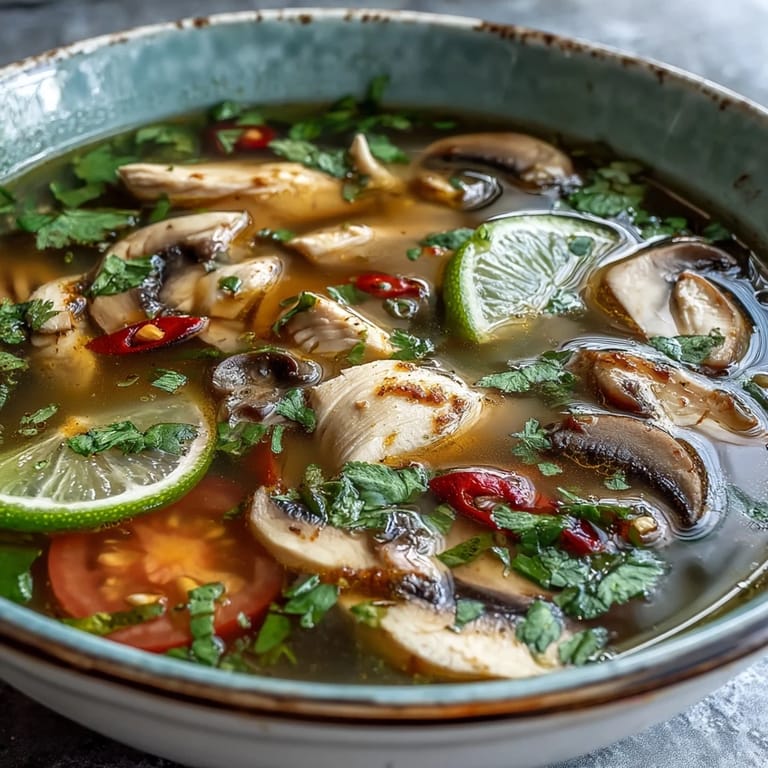
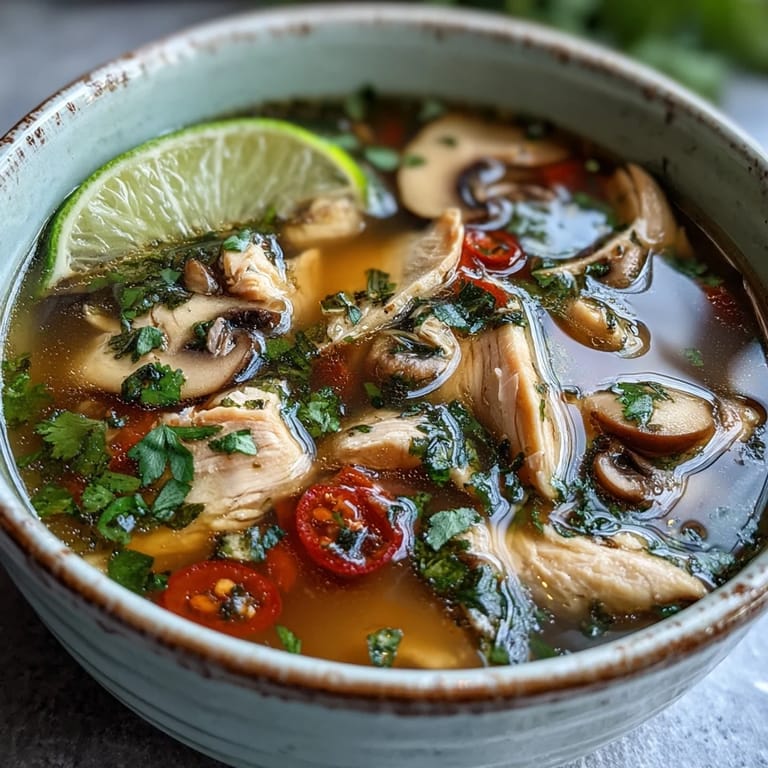
- Remove from heat and, if you prefer, fish out the lemongrass stalks, galangal slices, and lime leaf pieces with a slotted spoon. Ladle the soup into bowls and crown each one with fresh cilantro, spring onions, and a lime wedge on the side.
 Pin
Pin There's a moment in every pot of tom yum when the broth shifts from being just seasoned water to becoming a living thing, when you taste it and suddenly understand why people crave this soup in the middle of winter, on sad days, when they're sick or celebrating or just need to feel something warm. That moment is worth every bruise and every lime squeeze.
The Art of Adjusting Flavor
Tom yum lives in a delicate triangle of sour, salty, and spicy, and the beauty of making it at home is that you get to own that balance completely. I've learned that some days I want it more citrusy and less fiery, other days the opposite is true, and the only way to know is to taste after each addition and listen to what your mouth is telling you. The recipe gives you ratios, but your preferences write the final chapter.
Variations and Substitutions
Swap the chicken for shrimp and you've got tom yum goong, which cooks in half the time and has a completely different sweetness. If you want richness without heavy cream, a splash of coconut milk stirred in at the very end creates a creamy version that still feels bright and authentic. Even the vegetables are flexible—bell peppers, baby corn, or snap peas all work beautifully if you adjust cooking time so nothing turns to mush.
Serving and Storage Tips
Serve this soup piping hot in warmed bowls, with jasmine rice on the side for soaking up every drop of broth. Leftover tom yum actually tastes better the next day after the flavors have had time to deepen and marry together, though the vegetables will soften further so add fresh herbs before serving again. If you're making it ahead, store the broth separately from any leftover cooked chicken and vegetables, then combine and reheat gently to preserve the aromatics.
- Squeeze fresh lime right into your bowl just before eating for maximum brightness.
- Keep extra chili oil or fresh chilies at the table so everyone can customize their heat level.
- This soup is best eaten immediately after finishing, while the steam is still rising and the flavors are in perfect harmony.
 Pin
Pin There's comfort in a bowl that tastes like somewhere else, like a memory of heat and brightness, like someone who knows you made it exactly the way you needed it that day. That's tom yum—come hungry, leave satisfied.
Recipe Questions
- → What makes tom yum taste authentic?
Authentic tom yum relies on three key aromatics: fresh lemongrass, galangal (Thai ginger), and makrut lime leaves. Bruising these ingredients before simmering releases their essential oils. The balance comes from combining fish sauce for saltiness, fresh lime juice for sourness, and chilies for heat.
- → Can I use dried herbs instead of fresh?
Fresh lemongrass and galangal provide superior flavor, but you can substitute dried galangal powder (about 2 teaspoons) in a pinch. Dried lemongrass works, though fresh stalks yield more aromatic results. Always use fresh lime juice—bottled juice lacks the bright acidity needed.
- → How do I adjust the spice level?
Start with 2-3 crushed chilies for moderate heat. Birds eye chilies pack significant punch, so taste the broth after simmering and add more gradually. For less heat, remove the chilies after 5 minutes of simmering, or use milder chilies like serranos.
- → What's the difference between clear and creamy tom yum?
Clear tom yum (tom yum nam sai) has a broth-based consistency. Creamy tom yum (tom yum nam khon) adds evaporated milk or coconut milk for richness. To make the creamy version, stir in 60ml of either milk just before removing from heat.
- → Can I substitute the chicken?
Shrimp creates tom yum goong, the other classic variation. Add shrimp during the last 2-3 minutes to prevent overcooking. For vegetarian versions, use vegetable stock and substitute fish sauce with soy sauce or tamari, adding extra mushrooms for substance.
- → Should I remove the aromatics before serving?
It's traditional to leave lemongrass, galangal, and lime leaves in the bowl for continued infusion while eating, though diners typically push them aside. For easier eating, strain them out before ladling into bowls, especially for those unfamiliar with Thai ingredients.