 Pin
Pin The first time I tasted Tom Yum Gai was in a cramped Bangkok alley where an elderly woman stirred an enormous pot over charcoal, the steam rising so thick I could barely see her face. She worked with such certainty, barely measuring anything, just tasting and adjusting as she went. Years later, standing in my own kitchen, I realized that soup wasn't just food—it was confidence in a bowl, a balance of heat and brightness that somehow felt both foreign and immediately familiar.
I made this for my roommate once when she was feeling under the weather, and watching her face light up on that first spoonful made me understand why people in Southeast Asia reach for Tom Yum when they need comfort. The heat cleared her sinuses, the sourness woke her up, and somehow the warmth of the broth made everything feel manageable again.
Ingredients
- Chicken: Thighs hold more flavor than breast, but breast cooks faster if you're in a hurry—slice everything thin so it poaches through in minutes rather than toughening up.
- Chicken stock: Use a good quality broth because it's your foundation; homemade is best, but a reliable store-bought will carry you.
- Lemongrass: This is where the magic starts—smash those stalks to release their essential oils before they hit the pot, and don't skip removing the tough outer leaves or you'll get stringy bits that catch in your teeth.
- Kaffir lime leaves: These dried leaves pack a citrus punch that lime juice alone can't replicate; tear them to release flavor as they steep.
- Galangal: It's ginger's peppery cousin and honestly worth seeking out, but fresh ginger works when you're stuck—use a bit less since it's milder.
- Thai bird's eye chiles: These little peppers mean business; smash them whole to distribute heat evenly, and adjust the amount based on your heat tolerance and who you're feeding.
- Mushrooms: Oyster mushrooms soak up broth like sponges, but button mushrooms work just fine and give you a different texture.
- Tomatoes: Wedges are your friend here because they hold their shape and add brightness without dissolving into the broth.
- Nam prik pao: This roasted chili paste is the secret weapon that adds depth and fermented complexity—it's not just heat, it's character.
- Fish sauce: Two tablespoons might sound aggressive, but trust it; it deepens all the flavors and makes the broth taste less one-dimensional.
- Lime juice: Fresh is essential—bottled juice tastes flat and defeats the point of this whole exercise, so squeeze it at the end for maximum brightness.
Tired of Takeout? 🥡
Get 10 meals you can make faster than delivery arrives. Seriously.
One email. No spam. Unsubscribe anytime.
Instructions
- Build your aromatic foundation:
- Pour the stock into your pot and let it come to a gentle boil—aggressive rolling boils cloud the broth and make it taste muddy. Toss in the lemongrass, kaffir lime leaves, galangal, and smashed chiles, then let them swim for 5 minutes so the broth transforms into something that smells like a Thai kitchen.
- Cook the chicken through:
- Slide the chicken slices into the simmering broth and watch them carefully—they'll cook in 3 to 4 minutes and turn from pink to opaque. Skim any foam that rises because that's where impurities hang out, and you want a clean, clear broth.
- Add the vegetables:
- Drop in the mushrooms, tomato wedges, and onion, then let everything simmer for another 3 to 4 minutes until tender but still with a bit of bite. The timing matters because overcooked vegetables turn into mush and lose their character.
- Season with confidence:
- Stir in the nam prik pao, fish sauce, sugar, and salt, then give it 2 more minutes to marry the flavors together. Taste as you go because every pot of broth is slightly different and needs its own adjustments.
- Finish with acid:
- Kill the heat and stir in the lime juice right before serving—this is when the soup suddenly wakes up and all the flavors snap into focus. Taste one more time and adjust the sourness or salt because lime is your last chance to balance everything.
- Serve with intention:
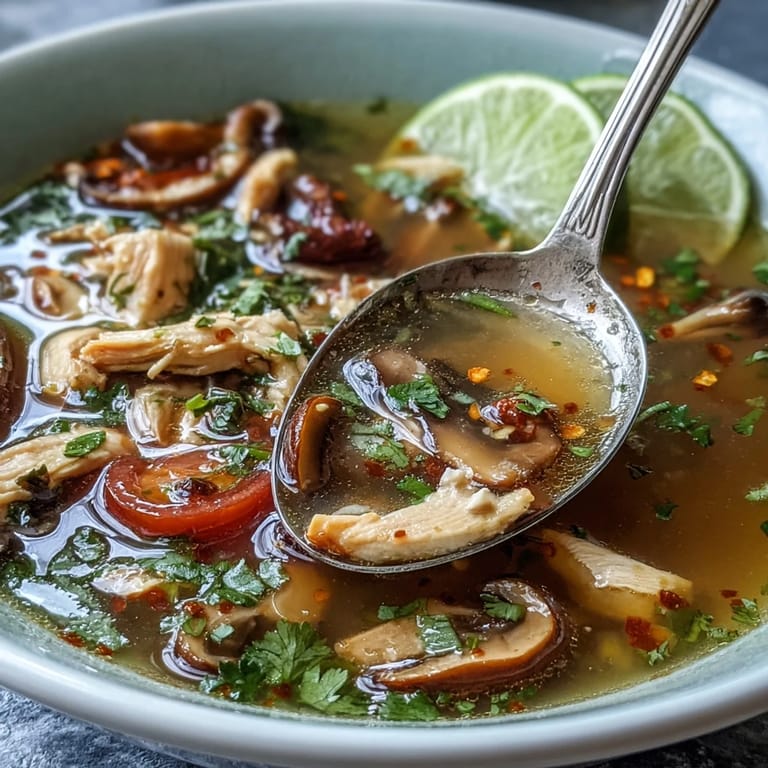
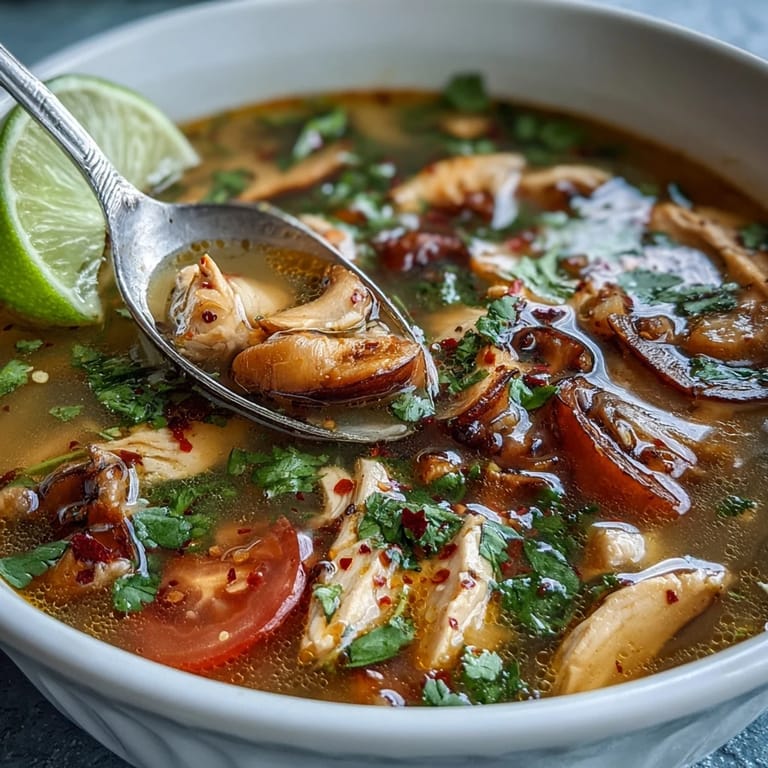
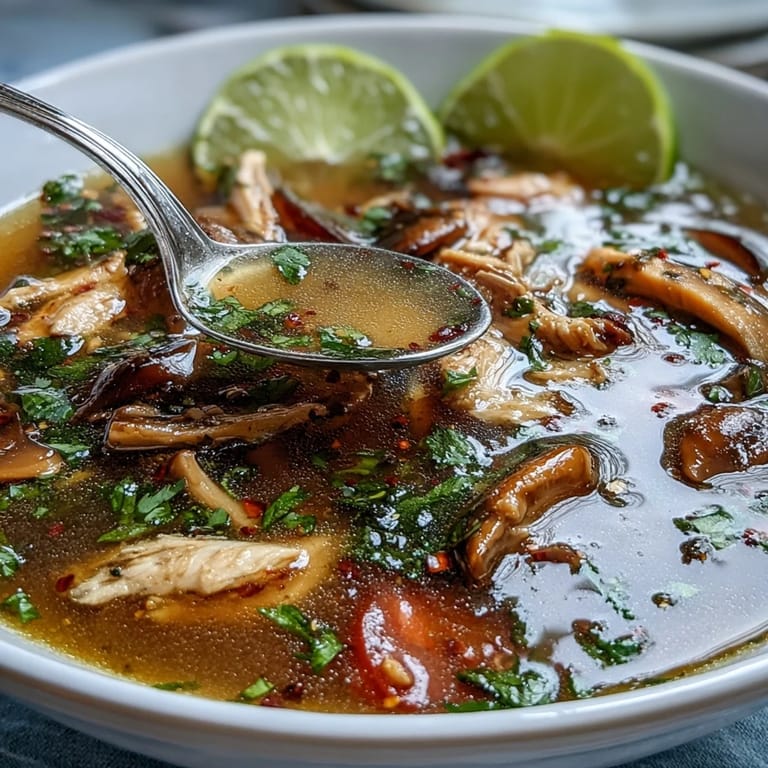
- Ladle into bowls while everything is steaming hot, scatter cilantro and extra chiles on top, and set lime wedges on the side so people can adjust their own sourness. Serve right away because Tom Yum is a soup that demands to be eaten immediately.
 Pin
Pin The thing nobody tells you about Tom Yum is that it's a soup built on contrasts—hot, sour, salty, sweet all fighting and balancing at once. Once you understand that tension, you realize it's not just a recipe to follow but a conversation you're having with your own palate.
The Ingredient Swap Game
Shrimp swaps in seamlessly if chicken isn't your thing, and the soup actually cooks faster because shrimp needs just 2 minutes instead of 4. I've also added a splash of coconut milk on desperate nights when the broth felt too austere, and while purists might balk, that creamy richness turns it into a different animal altogether—softer, rounder, almost luxurious.
Heat Control That Actually Works
The spice level in Tom Yum isn't something to fear or apologize for—it's something to own by understanding where it comes from. The chiles in the broth create background heat that builds slowly, while the fresh chiles on top give you immediate fire that guests can avoid if they need to.
Timing and Temperature Secrets
This soup comes together in about 35 minutes from start to finish, which sounds fast until you realize most of that is just letting the broth infuse and simmer. Rushing the early steps means you lose the aromatic depth, so patience here pays off in flavor that tastes like it simmered for hours.
- Always taste the broth before you add any of the major seasonings, because good stock might already have salt and you don't want to overdo it.
- If you're cooking for people with low spice tolerance, make the base broth mild and let everyone doctor their own bowl with the extra chiles and fish sauce.
- Leftover Tom Yum keeps for 3 days in the fridge, but the fresh brightness fades, so this is really a soup to make and eat the same day.
 Pin
Pin Tom Yum Gai reminds me that the best food doesn't need to be complicated, just intentional and well-balanced. Make this when you want to feel like you've traveled somewhere without leaving your kitchen.
Recipe Questions
- → What makes Tom Yum Gai different from other Thai soups?
Tom Yum Gai features the signature spicy-sour flavor profile from fresh chiles, lime juice, and aromatic herbs like lemongrass and galangal. The nam prik pao (roasted chili paste) adds depth and richness that sets it apart from clear soups.
- → Can I adjust the spiciness level?
Absolutely. Start with fewer chiles and taste as you go. You can add more Thai birds eye chiles for extra heat or reduce them for a milder version. Removing the seeds from chiles also helps control spice levels.
- → What vegetables work best in Tom Yum?
Oyster or button mushrooms are traditional choices, but shiitake mushrooms add great depth. Tomatoes provide sweetness and acidity to balance the sour notes. Onions or shallots work beautifully for aromatic undertones.
- → Is there a substitute for galangal?
Fresh ginger can replace galangal in a pinch, though the flavor profile will be slightly different. Ginger provides similar warmth and aromatic qualities but lacks galangal's distinct pine-like citrus notes.
- → How do I store leftover Tom Yum Gai?
Store in an airtight container in the refrigerator for up to 3 days. The flavors actually improve overnight. Reheat gently on the stovetop, adding fresh lime juice and garnishes before serving to brighten the taste.
- → Can I make this soup ahead of time?
You can prepare the broth base in advance and refrigerate for up to 2 days. Add the chicken and vegetables when reheating to prevent them from becoming overcooked. Finish with fresh lime juice just before serving.