 Pin
Pin The first time I tasted authentic Tom Yum, I was sitting at a small wooden table in Bangkok, watching a vendor stir her massive pot with practiced sweeps of a wooden spoon. The steam rising up carried this intoxicating blend of lemongrass and lime that made my eyes water in the best way. I went back three times that week, and eventually she just laughed and started making it before I even sat down. Years later, I realized I could recreate that exact sensation at home, and now this soup has become my answer to almost everything: a long day, missing Thailand, wanting something that tastes alive.
I made this for my friend Marcus on a gray February afternoon when he was going through it, and watching him take that first spoonful, eyes widening, shoulders relaxing slightly—that's when I understood that food really does move through people beyond just hunger. He asked for the recipe immediately, then asked me to make it again the following week. Now it's become our ritual on the harder Mondays.
Ingredients
- Chicken or vegetable stock (4 cups): This is your canvas, so use something you'd actually taste on its own—the aromatics will build on it, not replace it.
- Lemongrass (2 stalks, trimmed and smashed): The outer layers are woody, so peel them away and crush what's inside to release that grassy, citrusy oil that defines the whole soup.
- Kaffir lime leaves (4, torn): These aren't lime juice; they're something entirely different—floral, complex, irreplaceable if you can find them.
- Galangal (3 slices, or ginger as a substitute): Galangal is sharper and more peppery than ginger, but ginger works in a pinch and won't derail everything.
- Thai birds eye chiles (2, sliced): Start with one if you're unsure; you can always add heat, but you can't take it back.
- Mushrooms (200 g, sliced): Any variety works, though I love the earthiness of cremini or the delicate bite of oyster mushrooms.
- Tomatoes (2 medium, cut into wedges): Fresh and seasonal ones matter here because they're not hiding behind anything; they're part of the flavor structure.
- Onion (1 small, sliced): This becomes almost invisible but adds sweetness and depth as it softens.
- Garlic (3 cloves, smashed): Smashing instead of mincing keeps the pieces chunky enough to feel like you're eating real ingredients.
- Shrimp (300 g, peeled and deveined): Fresh is better, but frozen thawed works; the key is not cooking it past the point where it turns from translucent to solid pink.
- Fish sauce (3 tbsp): Yes, it smells funky in the bottle, but trust it—this is what makes Thai soup taste like Thai soup.
- Fresh lime juice (2 tbsp): Use actual limes squeezed by your hands, not the bottled version.
- Sugar (1 tsp): Just a touch to round out the sourness and let all the other flavors breathe.
- Chili paste (1 tsp nam prik pao, optional): This adds a deeper, toasted chili flavor that's different from fresh chile heat.
- Fresh cilantro and green onions for garnish: Don't skip this; the fresh herbs are what make your last spoonful feel as vibrant as your first.
- Lime wedges to serve: Let people add more sourness if they want; everyone's balance is different.
Tired of Takeout? 🥡
Get 10 meals you can make faster than delivery arrives. Seriously.
One email. No spam. Unsubscribe anytime.
Instructions
- Build your aromatic foundation:
- Pour the stock into your pot and turn up the heat until you see small bubbles breaking at the surface. Add the smashed lemongrass, torn kaffir lime leaves, sliced galangal, cracked chiles, smashed garlic, and sliced onion all at once—listen for that gentle sizzle as the cold vegetables hit warm liquid. Let this simmer together for 10 minutes, and your kitchen will smell like a Thai market in the best way.
- Welcome the vegetables:
- Slide in your sliced mushrooms and tomato wedges, stirring gently so they don't break apart. These need about 5 minutes to soften and start releasing their own flavors into the broth.
- Time your protein with precision:
- Add your shrimp or tofu now, and watch carefully because this part happens fast. Shrimp goes from translucent to a rosy pink in maybe 2 to 3 minutes, and overcooked shrimp becomes rubbery and sad—we don't want that.
- Season to your truth:
- Pour in the fish sauce, fresh lime juice, sugar, and chili paste if you're using it. Stir it all together, then taste. This is your moment to adjust—more sour? More salt? More heat? The soup meets you where you are.
- Finish and serve:
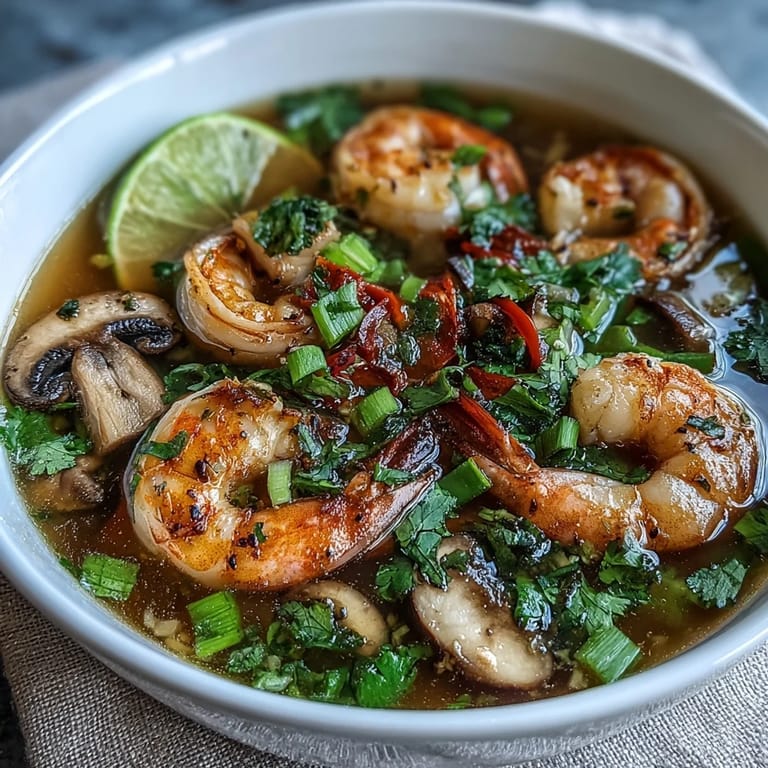
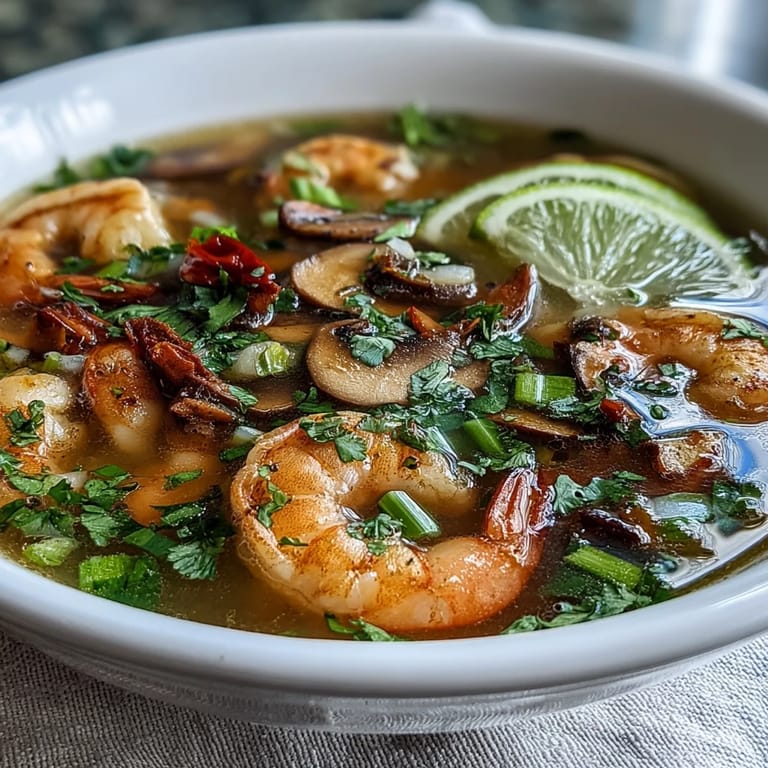
- Kill the heat and ladle the soup into bowls while it's still steaming. Scatter cilantro and green onions over the top, and place a lime wedge on the rim for anyone who wants to push it even further sour.
 Pin
Pin There's something about Tom Yum that feels ceremonial, even when you're making it alone on a Wednesday night. The way the steam rises, the way your palate wakes up with that first spoonful, the way you automatically reach for that lime wedge and squeeze it again because one squeeze was never enough. It stopped being just dinner and became a small ritual I return to.
Getting the Flavor Balance Right
Tom Yum lives on the knife's edge between four tastes, and understanding this changes everything. Sour from the lime and tamarind (though we're using lime here), heat from the chiles, salt from the fish sauce, and savory depth from the aromatics all need to exist in conversation with each other, not screaming over one another. I learned this the hard way by over-liming a batch and having to start over, but now I know that adding these elements at the end—not during—lets you taste as you go. Start with less than you think you need, taste, then adjust. Your palate is the real guide here.
Ingredient Sourcing and Substitutions
If your grocery store doesn't carry kaffir lime leaves or galangal, most Asian markets will, and they're usually inexpensive. I keep extras in my freezer because they keep forever and I've learned I'd rather have them than not. If you genuinely can't find kaffir lime leaves, use a strip of lime zest instead; if galangal stays elusive, ginger works but tastes noticeably different. Neither substitution ruins the soup—they just shift the flavor profile slightly toward something still delicious but not entirely the same.
Variations and Extensions
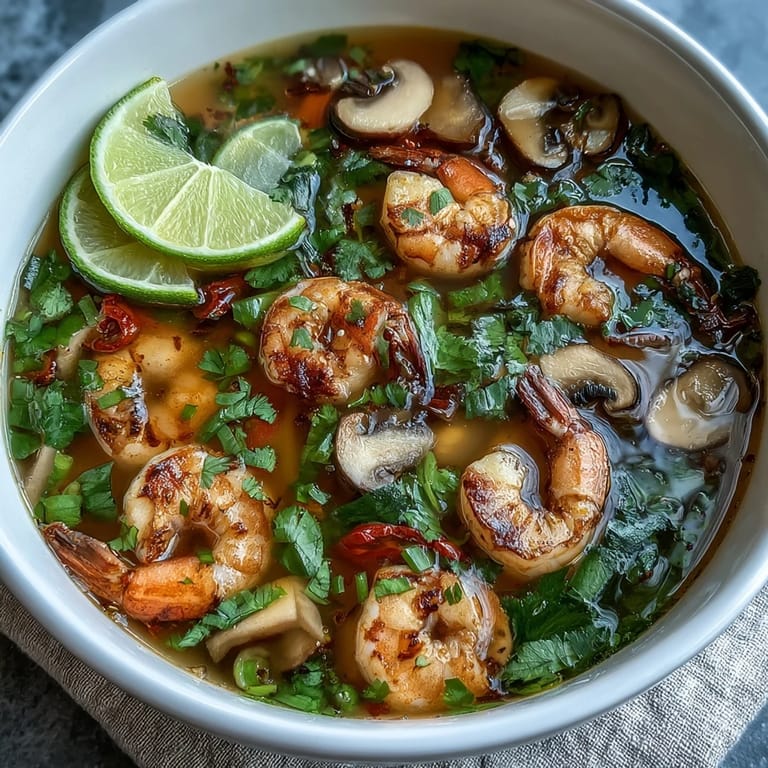
This base is forgiving enough to play with, so I've learned to treat it like a template. Sometimes I add straw mushrooms instead of cremini for a more delicate texture, or baby corn for sweetness and crunch. A vegetarian version swaps tofu for shrimp and soy sauce for fish sauce, and honestly, it's equally stunning—I make it both ways depending on who's at my table. Pair it with jasmine rice to turn soup into a full meal, or serve it as a bold standalone course if you want something lighter.
- Straw mushrooms give you a silkier mouthfeel than regular mushrooms.
- Baby corn adds sweetness and a gentle crunch that contrasts beautifully with the tender shrimp.
- Tofu versions are equally satisfying and often preferred by people who already eat vegetarian or pescatarian.
 Pin
Pin This soup reminds me that some of the best food doesn't come from complicated techniques but from understanding how to let good ingredients speak for themselves. Make it once, make it twice, and by the third time you'll stop looking at the recipe and start trusting your instincts.
Recipe Questions
- → What makes Tom Yum special?
The unique combination of lemongrass, kaffir lime leaves, galangal, and fresh chiles creates an aromatic base that's distinctly Thai. The balance of sour, spicy, salty, and sweet flavors defines this beloved soup.
- → Can I make it vegetarian?
Absolutely. Substitute vegetable stock for chicken stock, use tofu instead of shrimp, and replace fish sauce with soy sauce. The aromatic base remains just as flavorful.
- → How spicy is it?
Two birds eye chiles provide moderate heat. Reduce to one chile for milder flavor or increase to three for extra spice. Always adjust to your preference.
- → What if I can't find galangal?
Fresh ginger makes a suitable substitute. While galangal has a distinct piney, citrusy note, ginger provides similar warmth and aromatic qualities to the broth.
- → Can I add other ingredients?
Straw mushrooms and baby corn are traditional additions. You can also add bell peppers, baby bok choy, or rice noodles for a more substantial meal.