 Pin
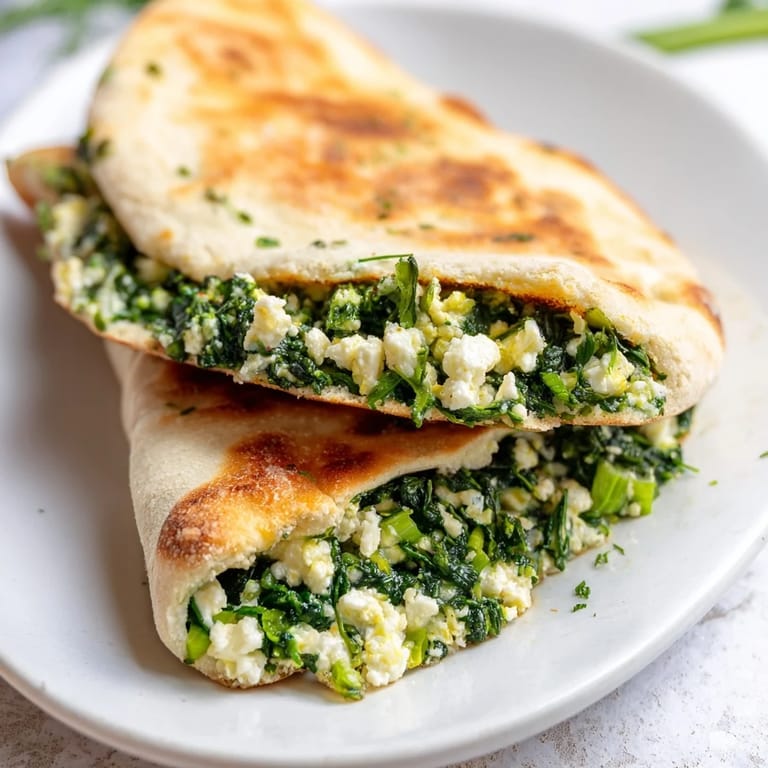
Pin There's something about the smell of spinach wilting in a hot pan that always takes me back to a dusty market corner in Istanbul, where a vendor was folding these golden half-moons with the speed and precision of someone who'd done it ten thousand times. I was captivated—not just by the technique, but by how casual she made it look, how the filling never leaked, how golden they turned in what seemed like seconds. Years later, I finally figured out the trick myself, and now these Turkish-style flatbreads have become my go-to when I want something that feels both impressive and deeply comforting.
I made these for a small dinner party last spring, and my friend Sarah—who usually picks at appetizers—went back for thirds, unapologetically. She just kept saying, 'What even is this?' with her mouth full, and when I told her it was spinach and feta in flatbread, she looked genuinely shocked that something so simple could be that satisfying. That's when I knew these had moved from 'nice recipe' to 'keeper for life.'
Ingredients
- All-purpose flour: The foundation—use the good stuff if you have it, because it makes a real difference in how silky the dough becomes.
- Olive oil: Both in the dough and for the filling; it's what gives these flatbreads their tender crumb and golden exterior.
- Warm water: Not hot, just pleasantly warm—think bathwater temperature, never too aggressive.
- Fresh spinach: The fresher the better, and don't skip the chopping; smaller pieces distribute more evenly in the dough.
- Feta cheese: Crumble it by hand rather than using pre-crumbled; the texture is creamier and the flavor brighter.
- Fresh dill and parsley: These herbs are non-negotiable—they're what make this Turkish, not just generic.
- Garlic and onion: Cook them low and slow until they're golden and sweet, never rushed or burnt.
Tired of Takeout? 🥡
Get 10 meals you can make faster than delivery arrives. Seriously.
One email. No spam. Unsubscribe anytime.
Instructions
- Make the dough foundation:
- Combine flour and salt in a bowl, then add olive oil and warm water, mixing until a shaggy mass forms. Knead for 5–6 minutes until the dough is smooth and springs back when you poke it—you're building elasticity that will let you stretch it thin later without tearing.
- Let it rest and relax:
- Cover the dough and step away for 20 minutes; this isn't wasted time, it's the dough becoming easier to work with. While you wait, you can prep everything else without feeling rushed.
- Prepare the filling:
- Heat oil in a skillet and cook the onion until it just starts to turn golden at the edges—about 3 minutes. Add garlic and spinach together, stirring until all the spinach's liquid evaporates, which takes another 3–4 minutes; this is crucial because wet filling makes the dough soggy.
- Season and combine:
- Let the spinach cool slightly, then fold in the feta, dill, parsley, and black pepper; taste it and adjust the seasoning. The filling should taste bold and bright, because it's going to be the star of the show.
- Shape the flatbreads:
- Divide the dough into 4 pieces and roll each on a lightly floured surface into a thin oval about 8 inches long—thin enough that you can almost see through it, but not so thin it tears. Spoon filling onto half of each oval, leaving a border, then fold and pinch the edges tightly to seal.
- Pan-bake to golden perfection:
- Place a sealed flatbread in a dry, medium-heat skillet and cook for 3–4 minutes per side until the exterior is crispy and speckled with golden brown. The dough will puff slightly and turn tender inside while staying crispy outside—that contrast is everything.
- Serve while warm:
- Slice each flatbread in half and serve immediately, still steaming if possible. They're best eaten right away, but leftovers reheat beautifully in a dry pan for a minute or two on each side.
 Pin
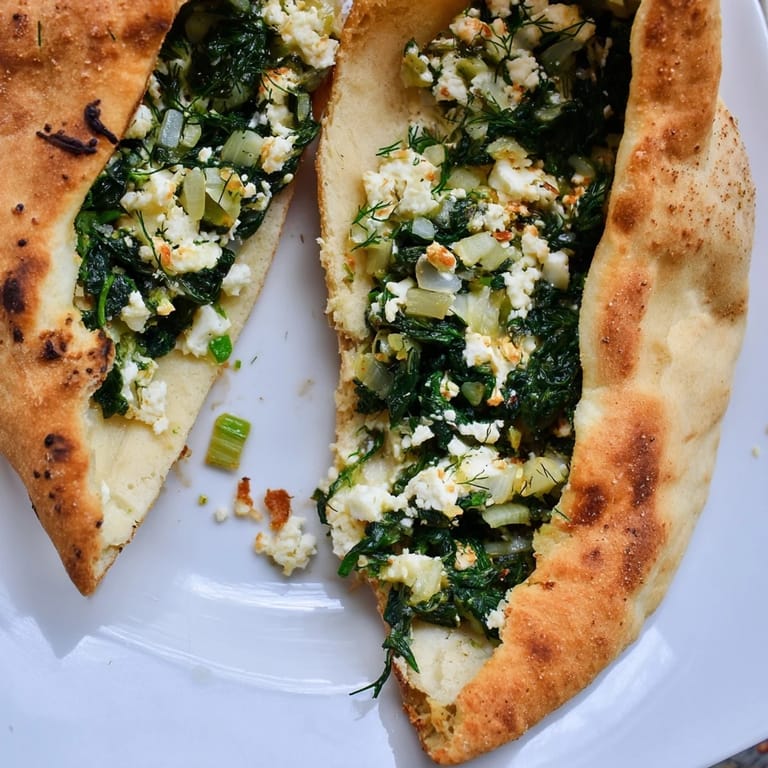
Pin There's a quiet pleasure in peeling a hot flatbread out of the skillet and watching the steam rise off it, golden and puffed. For a moment, the kitchen feels like that Istanbul market stall, and you're standing at the edge of something timeless and real.
The Art of the Perfect Seal
The half-moon shape is more than just pretty—it's functional. When you fold the dough, you're creating a pocket that traps the filling and creates a slight pressure that actually helps the flatbread cook more evenly. I learned this by accident when one of my early attempts had a loose seal and the filling leaked out into the pan; now I pinch the edges with real intention, pressing the dough together so firmly that nothing can escape. It's become oddly meditative, this simple act of sealing.
Spinach: Fresh vs. Frozen vs. Baby
Fresh spinach is ideal—it has a mineral sweetness that frozen spinach can't quite match, and it looks vibrant in the filling. But honestly, frozen spinach works beautifully too, as long as you thaw it completely and squeeze every bit of water out; I once used it directly from the bag without thawing and ended up with a wet, broken filling that ruined an otherwise perfect afternoon. Baby spinach is another option if you want something milder and less earthy; the choice depends on your mood and what's in your crisper drawer.
Make It Your Own
This recipe is sturdy enough to handle variations without losing its soul. I've added crumbled walnuts for texture, swapped parsley for mint, even used a mix of feta and tangy white cheddar on days when I wanted something sharper. The herbs and cheese are what make this Turkish, but the filling's base—the spinach, the onion, the garlic—is your canvas.
- Brush the warm flatbreads with melted butter or extra virgin olive oil right after cooking for an extra layer of richness.
- Serve alongside yogurt, a tomato salad, or even a squeeze of fresh lemon to cut the richness.
- Make the dough ahead and refrigerate it for up to 8 hours; pull it out 30 minutes before shaping.
 Pin
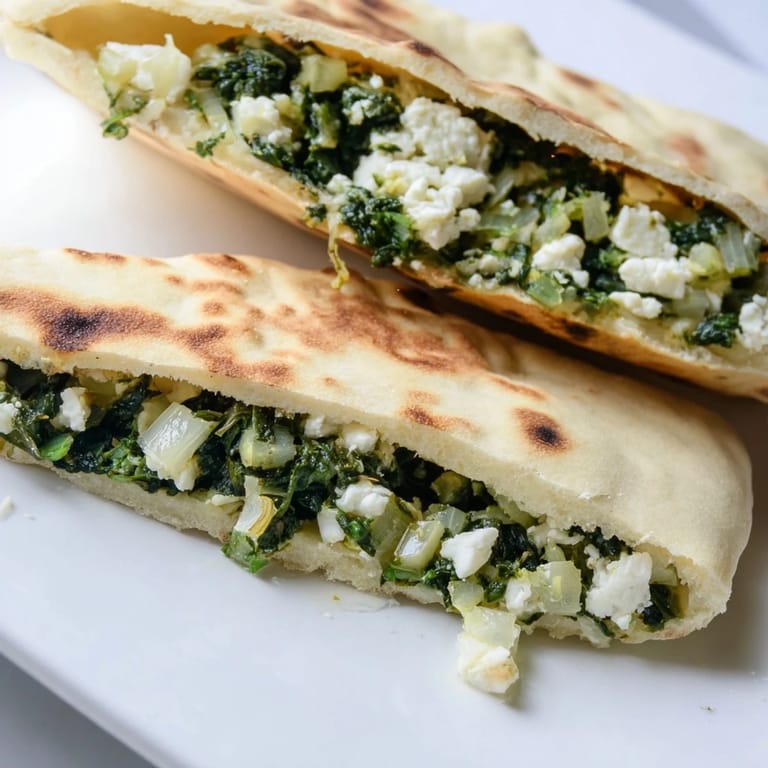
Pin These flatbreads are proof that some of the best meals don't need much time or fuss—just good ingredients, a little patience with the dough, and the willingness to fold something simple with care. Make a batch, watch them puff in the pan, and remember: this is the kind of food that brings people back to the table.
Recipe Questions
- → What type of cheese pairs well with spinach in this dish?
Feta cheese is ideal due to its salty, tangy flavor, complementing the mildness of spinach and herbs beautifully.
- → Can I use frozen spinach instead of fresh?
Yes, thaw and thoroughly drain frozen spinach to remove excess moisture before mixing to maintain the right filling consistency.
- → How is the dough prepared for these flatbreads?
The dough is made by mixing all-purpose flour with salt, olive oil, and warm water, then kneaded until smooth and rested for 20 minutes to improve texture.
- → What cooking method creates the golden exterior?
Cooking the filled flatbreads on a dry nonstick skillet or griddle over medium heat ensures a golden, slightly crisp surface on both sides.
- → Are there any suggested toppings or accompaniments?
Brushing cooked flatbreads with melted butter or olive oil adds richness; serving with yogurt or a fresh tomato salad enhances freshness.