 Pin
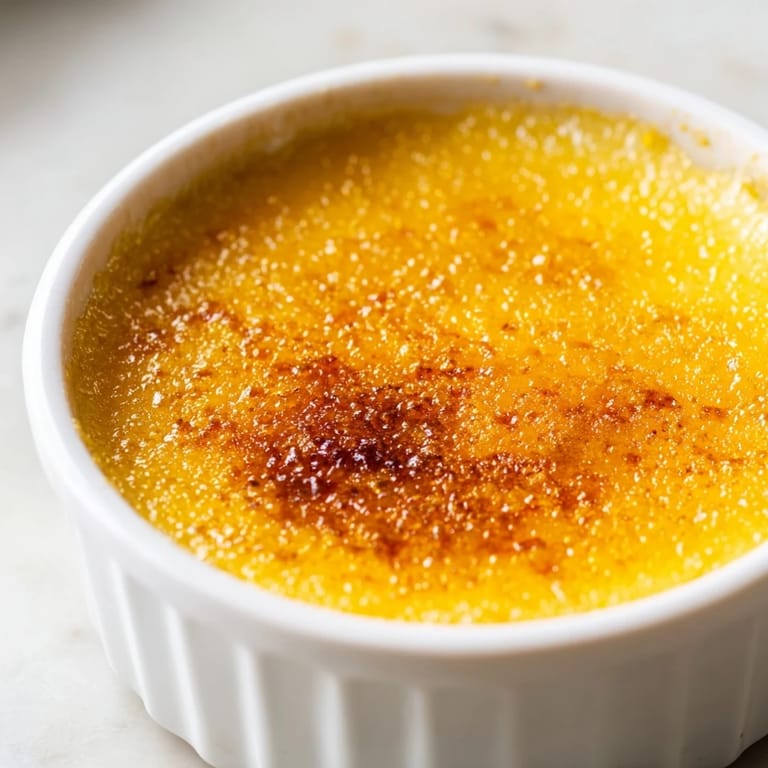
Pin The first time I made crème brûlée, I was convinced I'd need some secret technique passed down through generations of French pastry chefs. Standing in my kitchen with just cream, eggs, and sugar, I realized the magic wasn't in complexity—it was in restraint. That moment of cracking through the caramelized sugar crust and watching the spoon sink into the silky custard beneath felt like discovering something precious I'd been missing all along.
I'll never forget bringing these to my friend's birthday dinner, watching everyone go silent when they hit that caramelized shell with their spoons. Someone asked if I'd trained as a pastry chef, and I laughed—these ramekins had done most of the heavy lifting while I sat in the living room reading. That's when I understood: sometimes the most impressive things we make are the ones that barely keep us in the kitchen.
Ingredients
- Heavy cream (2 cups): This is your custard's soul—use the best quality you can find, and don't skip the step of heating it gently; cold cream mixed with egg yolks will always feel like a risk, but warm cream whisks in like butter melting into silk.
- Egg yolks (4 large): The whole eggs, then separated, taught me that yolks are where the richness lives; pale and thick whisking is your signal that they're ready to meet the cream without curdling into scrambled disappointment.
- Granulated sugar (1/2 cup for custard, plus 4 tablespoons for topping): One portion sweetens the custard with restraint, while the second becomes that crackling crown; I've learned that measuring matters here more than in most desserts because balance is the entire point.
Tired of Takeout? 🥡
Get 10 meals you can make faster than delivery arrives. Seriously.
One email. No spam. Unsubscribe anytime.
Instructions
- Heat the cream gently:
- Pour the cream into a saucepan and watch it over medium heat until wisps of steam rise from the surface—you'll hear the subtle shift from silence to a quiet sizzle, but never let it actually boil. This patience prevents the eggs from scrambling when they meet the heat.
- Whisk yolks and sugar into submission:
- In your mixing bowl, combine egg yolks and sugar, whisking until they pale from golden to almost white and become noticeably thicker; this takes a few minutes of actual effort, but it's worth every stroke because it protects the yolks from curdling.
- Marry cream and eggs slowly:
- Pour the warm cream into the yolk mixture in a thin stream, whisking constantly as you go—think of it as introducing two nervous guests who need a gentle hand to become friends. Rushing this step is how custard turns grainy and bitter.
- Strain for silk:
- Push the mixture through a fine sieve into a measuring cup, using the back of a spoon to coax it through; this catches any bits of cooked egg and leaves you with something that tastes as smooth as it looks.
- Divide and prepare for the bath:
- Pour the custard evenly into four ramekins and set them in a deep baking dish, then add hot water until it reaches halfway up the sides; this water bath is your insurance policy against overcooking, keeping the edges from setting before the center is done.
- Bake with patience:
- Slide the dish into a 325°F oven and set a timer for 30 to 35 minutes; you're looking for custards that jiggle just slightly in the very center when you give the ramekin a gentle shake. That tiny wobble means creamy, not overcooked.
- Cool and chill:
- Let the ramekins sit at room temperature for a while, then move them to the refrigerator for at least an hour (or up to two days); cold custard holds its structure better when you torch the sugar, and the waiting builds anticipation.
- Torch the crown:
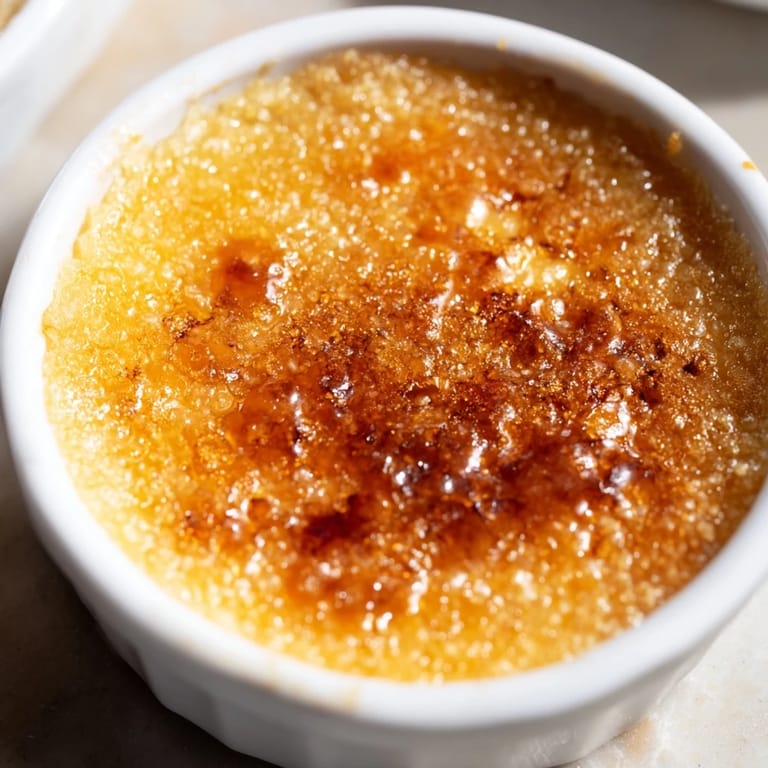
- Just before serving, sprinkle one tablespoon of sugar evenly over each custard, then use a kitchen torch in slow, steady passes until the sugar turns deep amber and crackles when you tap it. Let it sit for a minute so the caramel sets into that satisfying shell.
 Pin
Pin There's a moment right after you hear that caramelized sugar crack under your spoon where everything about the dish makes sense—the restraint, the precision, the simple mathematics of cream, yolks, and heat. It's not about impressing anyone; it's about the quiet satisfaction of making something that feels both effortless and sophisticated at the same time.
The Art of Caramelization
Torching sugar is meditative once you get over the fear of the flame; I used to hover nervously, but now I know that steady, even passes create that perfect golden-amber finish without burning. The broiler works too if you don't have a torch—just watch it like a hawk and have your mitts ready the second it turns color, because sugar goes from perfect to bitter in the blink of an eye.
Why This Dessert Never Fails
There's something beautiful about a recipe this straightforward; there are no exotic ingredients to hunt down, no complicated techniques that take years to master, just the fundamentals of how cream and eggs transform into something luxurious. I've made these for weeknight dinners when I wanted something special but didn't want to spend the whole day cooking, and somehow they always feel like I've accomplished something.
Variations and Flavor Twists
While the three-ingredient version is elegant in its purity, I've played with infusions that keep the spirit of simplicity alive; a split vanilla bean simmered in the cream adds whispers of flavor without turning the recipe into something complicated, and citrus zest stirred in at the end brings brightness that cuts through the richness. These aren't departures from the original—they're gentle conversations with it, reminders that even simple things have room for personal touches.
- Vanilla bean or extract transforms the custard into something that tastes like a French pastry shop without adding bulk or fuss.
- Fresh berries or a sprig of mint on the side echo the flavors without muddying the custard itself.
- A touch of Cognac or Grand Marnier whispered into the cream creates an adults-only version that still stays true to the recipe's elegant simplicity.
 Pin
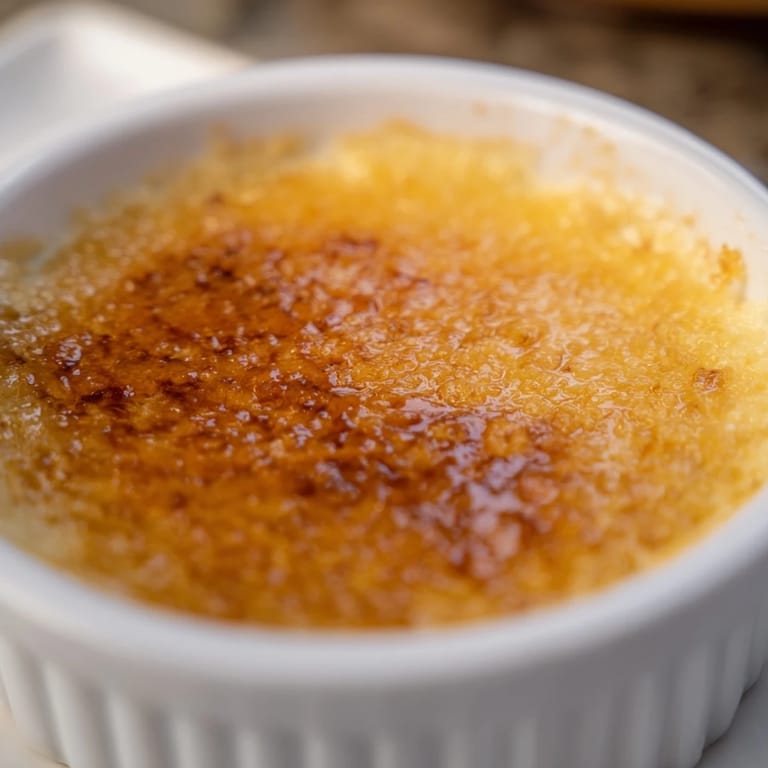
Pin These little ramekins have become my go-to proof that fancy doesn't require complicated. Every time I make them, I'm struck by how a handful of pantry staples and a little patience create something that feels like a gift.
Recipe Questions
- → What is the key to a smooth custard?
Slowly combining warm cream with whisked egg yolks while stirring constantly prevents curdling and ensures a silky texture.
- → How do you achieve a crisp caramelized topping?
Sprinkle sugar evenly over the custard surface and caramelize it using a kitchen torch or under a broiler until golden and crisp.
- → Why use a water bath during baking?
The water bath provides gentle, even heat that helps the custard set slowly and prevents cracking.
- → Can this dessert be made ahead of time?
Yes, it can be refrigerated for up to two days before caramelizing the sugar topping.
- → Are there any flavor variations recommended?
Infusing the cream with vanilla bean or citrus zest before baking adds subtle aromatic notes.