 Pin
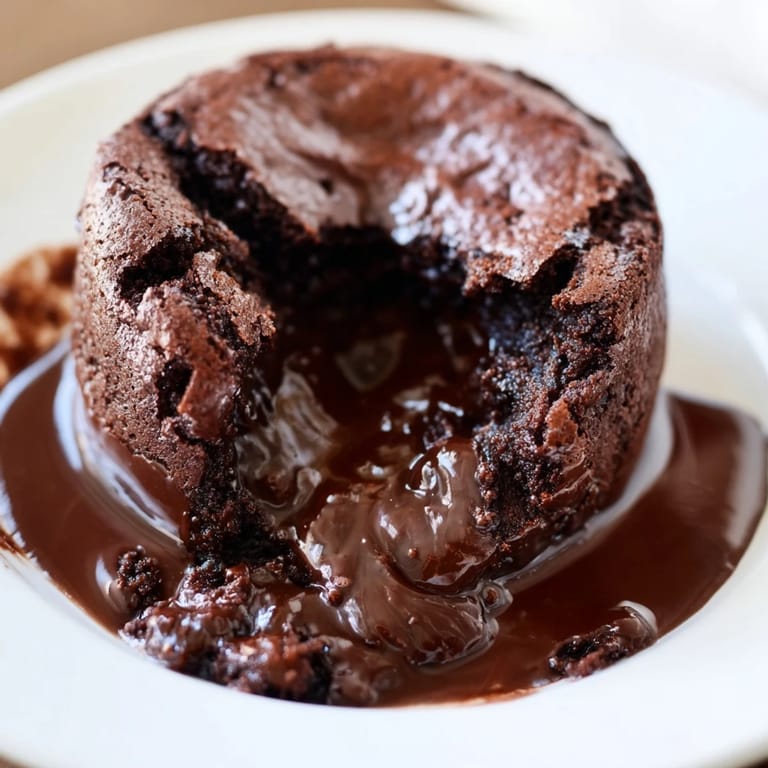
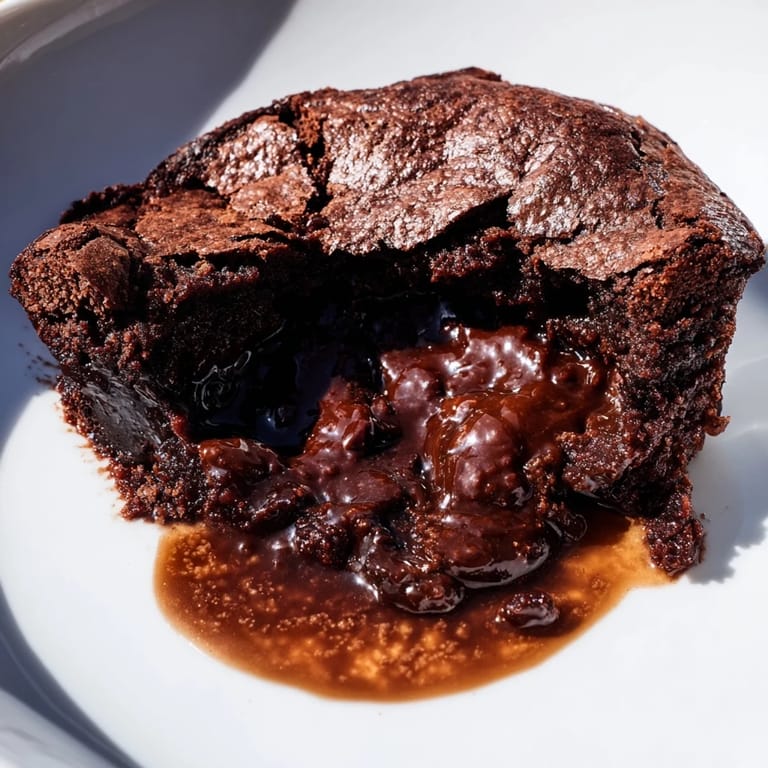
Pin My neighbor brought this over one winter evening when I was nursing a cold, and I watched the magic happen through her kitchen window as she pulled it from the oven—the top was shatteringly crisp while steam rose from the center. That first spoonful, warm and molten, changed how I thought about chocolate desserts entirely. I've made it dozens of times since, always with that same sense of wonder at how the physics of it actually works. There's something about a dessert that's technically two textures in one that feels like you're getting away with something delicious.
I made this for my book club once and served it still warm in small bowls with a scoop of vanilla ice cream melting on top, and the conversation just stopped for a moment. That's when I knew it wasn't just good; it was the kind of thing people remember. Now whenever someone mentions they want to impress without spending hours in the kitchen, this is what I tell them to make.
Ingredients
- Unsalted butter and semisweet chocolate: Room temperature matters less here since you're melting them together, but using good chocolate makes a real difference—taste a piece before you melt it.
- Eggs at room temperature: They whip up faster and incorporate more air, which creates that essential light, ribbony texture.
- Granulated sugar: The long beating time dissolves the sugar completely, which is why you don't get any grittiness.
- All-purpose flour and cocoa powder: Sift these together before folding—it prevents lumps and keeps the crumb tender.
- Vanilla extract and kosher salt: The salt enhances chocolate flavor in a way people can't quite identify but definitely notice.
- Vanilla ice cream or whipped cream: Optional but highly encouraged; the cold against the warm pudding is where the real magic lives.
Tired of Takeout? 🥡
Get 10 meals you can make faster than delivery arrives. Seriously.
One email. No spam. Unsubscribe anytime.
Instructions
- Set up your water bath:
- Preheat the oven to 325°F and butter your baking dish generously. You'll be nestling this dish into a larger roasting pan with hot water, which keeps the edges from cooking too fast while the center stays soft.
- Melt chocolate gently:
- Place your chopped chocolate and butter in a heatproof bowl over simmering (not boiling) water, stirring until completely smooth. If the water gets too hot, the chocolate can seize up and become grainy.
- Whip eggs and sugar to ribbon stage:
- In your stand mixer, beat eggs and sugar on medium-high for 5 to 10 minutes until the mixture is thick, pale, and falls in ribbons when you lift the beaters. This step is important—rushing it changes the texture of the final pudding.
- Combine wet and dry:
- Reduce mixer speed to low, add vanilla and salt, then pour in the cooled chocolate mixture and mix just until combined. Add your sifted flour and cocoa powder and fold gently with a spatula until no streaks remain.
- Pour and create the water bath:
- Pour batter into your prepared dish, then place that dish into a larger roasting pan. Pour hot tap water into the roasting pan until it reaches halfway up the sides of your baking dish—this gentle heat keeps everything moist.
- Bake to perfect pudding:
- Bake for exactly 1 hour, until the top looks set and crackly but the center still jiggles slightly when you gently shake the pan. The pudding forms as it cools, so don't overbake worrying that it looks too soft.
- Rest and serve:
- Let it cool for at least 15 minutes before serving so the pudding center can set slightly while staying warm. Serve with vanilla ice cream or whipped cream.
 Pin
Pin One night I made this for a friend who'd just gone through a rough breakup, and she ate two spoonfuls in silence before looking up and asking if I could teach her. We stood in my kitchen at ten o'clock at night, and I walked her through it while she took notes, and somehow a dessert became a kind of promise that things would taste better soon.
The Science of the Pudding Center
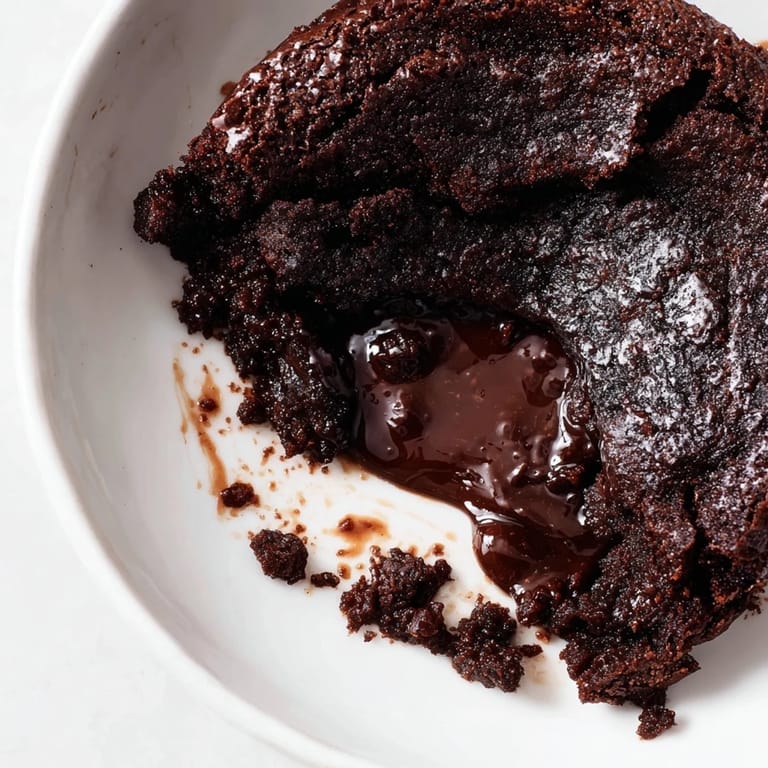
The magic here is that your batter is actually denser and richer than a typical cake batter because of all those whipped eggs and the high ratio of chocolate. As it bakes, the edges set firmly while the heat hasn't quite penetrated to the very center, creating that molten pudding layer. It's not undercooked—it's intentional. If you use an instant-read thermometer, the center should read around 160°F, which is past the safe temperature for eggs since they've been whisked and heated.
Chocolate Depth and Customization
I've made this with everything from milk chocolate to nearly-black bittersweet, and each one tastes distinctly different. Ina's recipe works beautifully with semisweet because it's a balanced sweetness, but if you love dark chocolate, swap half or all of it for bittersweet. I once added a teaspoon of espresso powder to the melted chocolate, and it deepened the flavor in a way that made people wonder what the secret ingredient was.
Scaling and Storage
The recipe scales down gracefully if you're serving fewer people—I've halved it many times in a smaller baking dish with good results. Bake a half recipe for about 45 minutes instead of the full hour. It's best served warm on the day you make it, though if you have leftovers, you can gently reheat a portion in a low oven or even microwave it for 15 seconds to return it to that warm, pudding-like state.
- A 2-quart baking dish is key—too small and it overbakes, too large and it spreads thin.
- If your water bath is too shallow, the pudding center may cook through, so fill it generously.
- Once cooled completely, you can cover and refrigerate leftovers for a day, though the texture won't be quite as luxurious cold.
 Pin
Pin This dessert has taught me that sometimes the most impressive things are the ones where you stop overthinking and just trust the method. Serve it warm, watch people's faces light up, and know that you've made something memorable.
Recipe Questions
- → What creates the crackly top on this dessert?
The crackly top forms from the caramelization of sugar and the slightly firm surface achieved during baking, contrasting the soft center beneath.
- → Why is a water bath used during baking?
The water bath provides gentle, even heat around the baking dish, preventing the edges from overcooking while allowing the center to stay molten and soft.
- → Can I substitute semisweet chocolate with other types?
Yes, bittersweet chocolate can be used for a deeper flavor, and adding a pinch of espresso powder can also enhance the chocolate notes.
- → How do I know when the dessert is perfectly baked?
The top should be set and crackly, while the center remains soft and slightly wobbly, indicating a molten pudding texture without overbaking.
- → What are ideal serving options to accompany this dessert?
Vanilla ice cream or lightly sweetened whipped cream complement the rich chocolate flavors and add a creamy contrast.
- → Is it necessary to whip the eggs and sugar for long?
Yes, beating the eggs and sugar until thick and pale creates a ribbon-like texture that contributes to the dessert’s lightness and structure.