 Pin
Pin There's a particular hum that fills the kitchen when you're committed to laminating dough—the rhythmic sound of the rolling pin, the whisper of butter between layers, the quiet anticipation of what's coming. My first attempt at sourdough croissants happened on a grey Tuesday when I had more time than sense, armed with a jar of starter that had been living in my fridge for months. What started as curiosity became an obsession, especially once I realized that tangy sourdough and dark chocolate were meant to find each other.
I made these for my neighbor who had just moved in, and watching her face when she bit through that shatter of crust and into the chocolate—that's when I knew I'd nailed something special. She came back the next day asking if I could teach her, and now our Sunday mornings have become a ritual of butter, flour, and long conversations while dough rests between folds.
Ingredients
- Bread flour (500 g): Use bread flour specifically—it has enough protein to develop structure that can handle the lamination without tearing, and it gives you those delicate, thousand-layer sheets you're after.
- Active sourdough starter (100 g): This is your flavor secret, so make sure it's bubbly and alive; if it hasn't doubled in 4–8 hours after feeding, give it more time before using.
- Cold whole milk (220 ml): Cold milk keeps the dough temperature manageable during mixing, which matters when you're about to work butter through it.
- Granulated sugar (60 g): Just enough to feed the fermentation and add a whisper of sweetness without overpowering the sourdough tang.
- Fine sea salt (10 g): Don't skip this—salt strengthens gluten and heightens all the flavors you're building.
- Unsalted butter (30 g softened for dough, plus 250 g cold for laminating): European-style butter has a higher fat content and gives you those shattered, crispy layers; regular butter works but won't be quite as spectacular.
- Large egg (1): Mixed with water for the egg wash, which creates that deep amber shine and helps the croissants brown evenly.
- Dark chocolate (120 g, at least 60% cocoa): Cut into 12 batons or sticks so they nestle into the triangle's wide end; choose chocolate you actually want to eat because there's nowhere to hide poor quality here.
Tired of Takeout? 🥡
Get 10 meals you can make faster than delivery arrives. Seriously.
One email. No spam. Unsubscribe anytime.
Instructions
- Mix your dough base:
- Combine flour, sourdough starter, cold milk, sugar, salt, and softened butter in a bowl or stand mixer. Mix until shaggy, then knead for 4–5 minutes until the dough becomes smooth and slightly elastic—you're looking for it to come together but not be completely tight. Let it rest at room temperature for 30 minutes; this helps everything relax before the real work begins.
- Bulk fermentation:
- Place the dough in a lightly oiled bowl, cover it, and let it sit at room temperature for 2–3 hours. You'll perform two stretch-and-folds at 1-hour intervals—this is where you wet your hand, grab one side of the dough, stretch it up and fold it over the middle, then rotate the bowl and repeat. It's meditative, and you'll feel the dough getting stronger with each fold.
- Prepare your butter block:
- Place cold European butter between two sheets of parchment paper and pound it gently with a rolling pin until it's malleable, then roll it into a 20 x 20 cm square. Keep it cold—this is essential because warm butter will smear into the dough instead of creating distinct layers.
- Laminate the dough:
- After overnight refrigeration, flour your work surface lightly and roll the dough into a 30 x 30 cm square. Place your butter block in the center, then fold all four corners of dough over it to encase the butter completely (this is called the envelope). Roll the whole thing out to a 60 x 20 cm rectangle, fold it into thirds like a letter, and chill for 30 minutes—this is your first turn. Repeat this rolling, folding, and chilling process two more times, always folding in the same direction (a letter fold, never a book fold).
- Shape the croissants:
- Roll the final dough to about 60 x 30 cm and roughly 4 mm thick, then cut it into 12 long triangles with a base of about 10 cm. Place a chocolate baton at the wide end of each triangle, roll toward the tip gently but firmly, and place tip-side down on parchment paper—this keeps the croissant from unraveling as it proofs.
- Final proof:
- Cover loosely with plastic wrap or a kitchen towel and let them proof at room temperature for 4–5 hours until they're doubled and visibly puffy—they should feel airy when you gently touch them. If your kitchen is chilly, find a slightly warm, draft-free spot like an oven with the light on or a proofing box.
- Bake until golden:
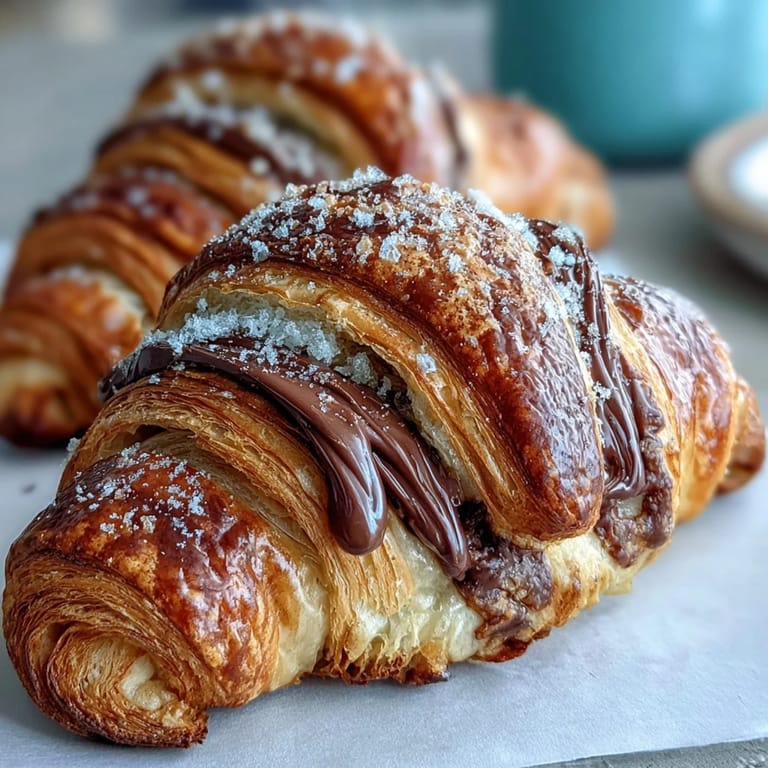
- Heat your oven to 200°C, beat an egg with 1 tablespoon of water, and gently brush each croissant to give it shine. Bake for 18–22 minutes until deep golden brown and crisp—the chocolate will have melted inside, creating little pools of richness in every bite.
- Cool and serve:
- Transfer to a wire rack and resist the urge to bite in immediately (I know, it's hard). Let them cool at least 15 minutes so the chocolate sets enough to not pour everywhere.
 Pin
Pin I gave a batch to my baker friend expecting critique, and instead she got quiet for a moment, then said they were better than hers—and that's when I understood I'd stumbled onto something worth defending. The sourdough tang, the chocolate, the impossible flakiness, all of it together felt less like I was following a recipe and more like I was speaking a language I'd somehow always known.
Why Lamination Matters
The whole point of lamination is creating hundreds of thin, buttery layers that steam-separate during baking, giving you that shattered exterior and tender interior that feels almost luxurious. On my third attempt, I finally understood why the folds had to be precise and the chilling non-negotiable—it's not fussy for fussiness's sake, it's the mechanics of pastry physics working in your favor. Every fold you make, every time you chill, you're setting yourself up to succeed.
Chocolate Selection and Placement
The chocolate you choose becomes the soul of this croissant, so pick something you genuinely love eating—70% cocoa is my sweet spot, but 60% works if you prefer less intensity. Cutting it into batons rather than chips means you get distinct pockets of melted chocolate instead of scattered bits, and placing each one at the wide end of the triangle ensures it stays there during rolling. I learned this by accidentally using chocolate chips that migrated everywhere, and while it still tasted good, those contained pockets of chocolate are the dream.
Storage, Reheating, and Flavor Variations
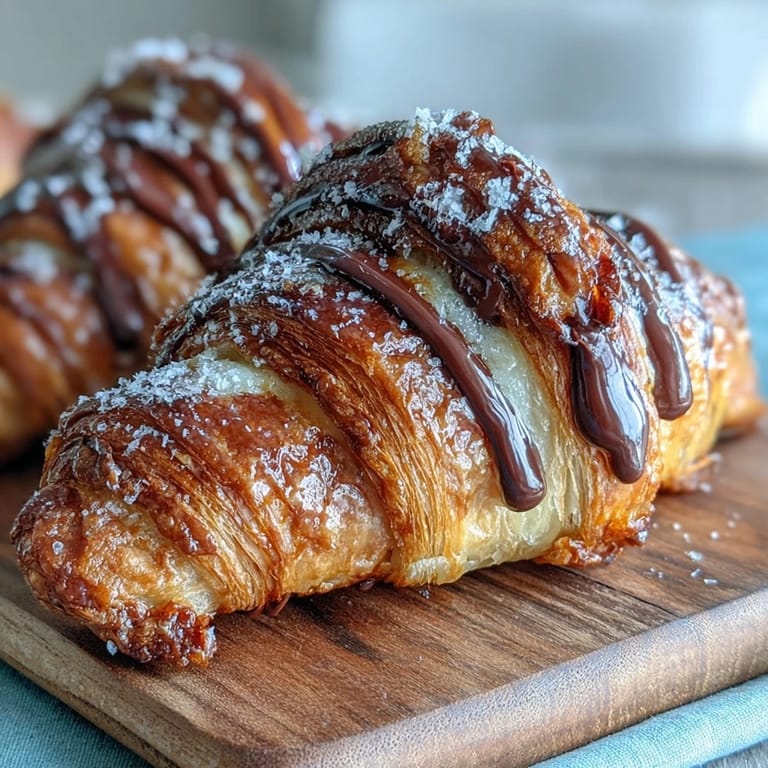
These are genuinely best the same day they're baked, when the contrast between crispy exterior and tender crumb is most dramatic, but they'll keep in an airtight container for a day or two. Gently reheat them in a 160°C oven for 5–8 minutes to restore some crispness, though the texture will be slightly softer the second time around. For subtle flavor layers, add the zest of one orange to the dough, or brush the tops with a very light coating of dark chocolate after baking for extra indulgence.
- A pinch of fleur de sel sprinkled right after egg wash adds a salted-chocolate vibe that feels unexpectedly sophisticated.
- If you want to make these ahead, you can freeze them after shaping (before the final proof) and thaw overnight in the fridge, then proof and bake as usual.
- The smell alone while they're baking will make your entire home feel like a French patisserie, so plan accordingly if you have guests.
 Pin
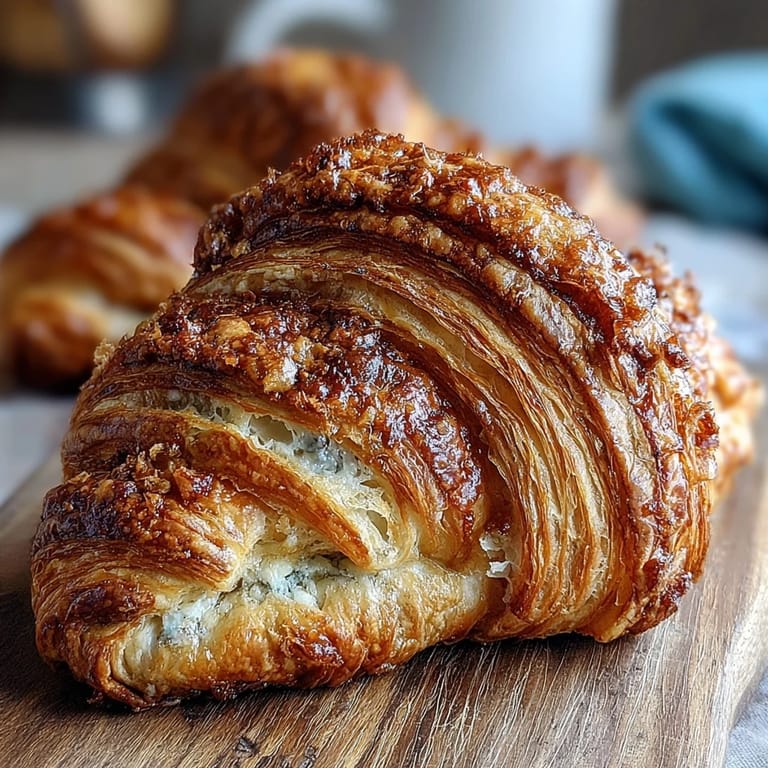
Pin These croissants transformed the way I think about patience in baking—they taught me that rushing ruins beauty, but time and attention turn simple ingredients into something people remember. There's real magic in biting through that crust and finding dark chocolate melting into sourdough warmth.
Recipe Questions
- → What is the purpose of laminating the dough?
Laminating creates thin layers of butter within the dough, producing the croissant's signature flaky, tender texture after baking.
- → How does sourdough starter affect the flavor?
The starter provides a mild tanginess and depth, enhancing the buttery richness with subtle acidity.
- → Can I use a different type of chocolate filling?
Yes, bittersweet or milk chocolate can be used, but high-quality dark chocolate offers balanced sweetness and richness.
- → Why is chilling important during the process?
Chilling firms the butter and relaxes gluten, making rolling and folding easier and preserving distinct layers to ensure flakiness.
- → How should croissants be stored after baking?
Store at room temperature in a paper bag for up to one day; gently reheat in an oven to refresh the crispiness.