 Pin
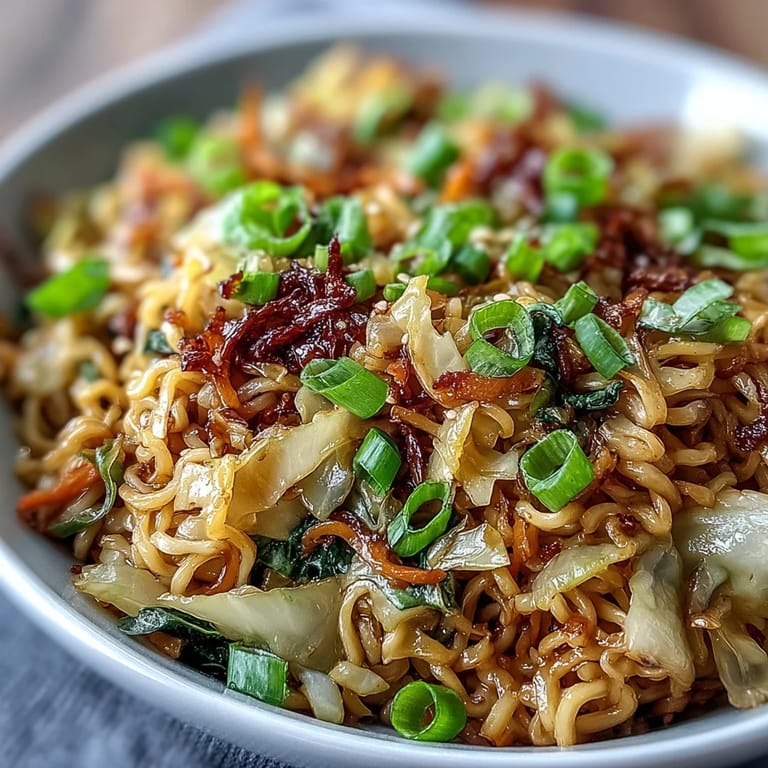
Pin One Tuesday evening, I was staring at a half-head of cabbage and two packs of ramen noodles, wondering if desperation could somehow turn into dinner. What emerged from that skillet was something I've made at least twice a week since—a dish so satisfying that my roommate now just asks me to make it without pretending she has other options. The magic isn't complicated: it's the contrast between crispy, caramelized cabbage and chewy noodles clinging to a sauce that tastes like it took hours but arrives in minutes.
I made this for my friend Maya on a rainy Thursday, and she ate directly from the skillet while standing at my kitchen counter, not even bothering with a plate. She kept saying, 'This tastes like a real restaurant dish,' which is the kind of compliment that makes you feel like you've cracked some code. Since then, it's become the meal I pull out when someone needs feeding and I need them to know I was thinking about what they'd actually want to eat.
Ingredients
- Green cabbage, thinly sliced (3 cups, about 200 g): This is your textural anchor—the thin slices let it caramelize quickly while keeping that satisfying crunch in the middle of each piece.
- Carrot, julienned (1 medium): The sweetness balances the savory sauce, and thin cutting ensures it cooks in the same timeframe as everything else.
- Scallions, sliced with greens and whites separated (2): The white parts go in early for flavor depth, the greens finish the dish bright and fresh.
- Garlic, minced (2 cloves): Mince it fine so it disperses into the oil and coats everything with its sharp, warming presence.
- Fresh ginger, grated (1 tablespoon): Grating instead of mincing releases more juice and makes it blend seamlessly into the sauce.
- Instant ramen noodles (2 packs, about 160 g total): Throw away those seasoning packets—you're building your own flavor here, and those packets would only muddy it.
- Soy sauce (2 tablespoons): This is your backbone; it's what makes people stop mid-bite and ask what you did.
- Oyster sauce (1 tablespoon): It adds umami depth that soy sauce alone can't quite reach, though mushroom sauce works beautifully if you're going vegan.
- Toasted sesame oil (1 tablespoon): Never skip this—it's what transforms good into unforgettable, that warm nuttiness that whispers through every bite.
- Rice vinegar (1 teaspoon): A touch of acid that keeps everything tasting bright and prevents the sauce from feeling heavy.
- Sugar (1 teaspoon): This rounds out the vinegar's sharpness and deepens the caramelization of the cabbage.
- Chili flakes (1/2 teaspoon, optional): Add these if you want warmth without overwhelming heat, or leave them out if you're cooking for people who think spice is a threat.
- Vegetable oil (2 tablespoons): Use something neutral like canola or sunflower—olive oil will taste wrong here, trust me on this one.
Tired of Takeout? 🥡
Get 10 meals you can make faster than delivery arrives. Seriously.
One email. No spam. Unsubscribe anytime.
Instructions
- Boil the noodles:
- Bring water to a rolling boil and cook your ramen according to package directions—usually about 3 minutes. Drain well and set them aside; they'll finish cooking slightly when they hit the hot skillet later, so don't overdo them.
- Mix your sauce:
- Whisk everything together in a small bowl—soy sauce, oyster sauce, sesame oil, rice vinegar, sugar, and chili flakes if you're using them. Taste it straight from the bowl; it should taste bold and a little sharp, because it's about to coat everything.
- Build your aromatics:
- Heat your oil in a large skillet or wok over medium-high heat until it shimmers, then add garlic, ginger, and the white parts of your scallions. Let them sizzle for exactly one minute—you want fragrant, not burnt—and the kitchen will smell suddenly alive.
- Fry the cabbage:
- Add your sliced cabbage and julienned carrot, stirring constantly. You're looking for the edges to turn golden and crispy while the inside stays tender, which takes about 4 to 5 minutes. This is where the magic happens; the cabbage should be starting to brown in patches.
- Bring it together:
- Add your cooked noodles and pour in the sauce, then toss everything until the noodles are completely coated and nothing sticks to the bottom of the pan. Two or three minutes of tossing and you're done.
- Finish and serve:
- Remove from heat immediately—overcooked noodles get mushy—scatter the green scallion parts over everything, and eat while it's still steaming hot.
 Pin
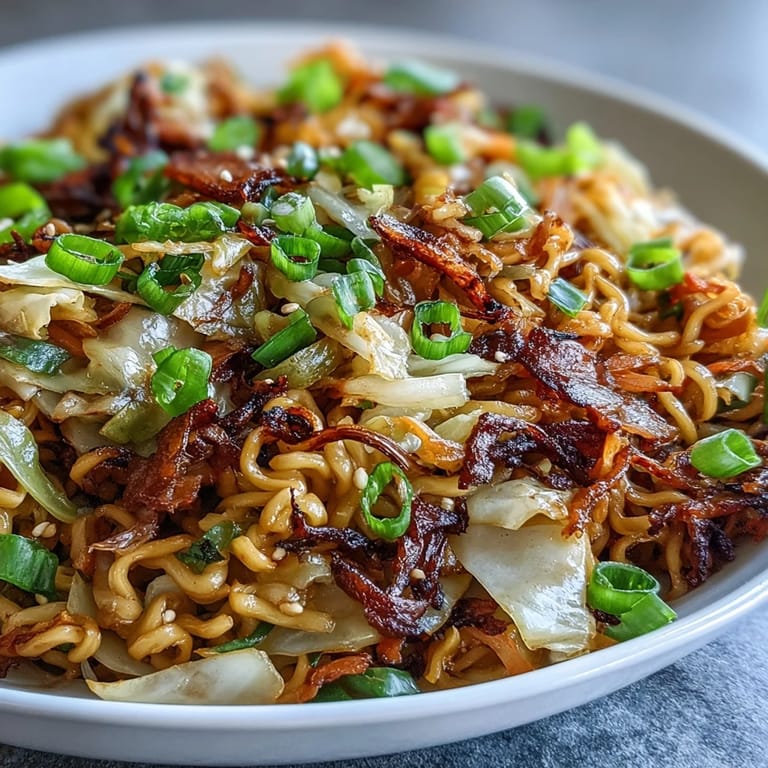
Pin There's a moment that happens every time I make this—usually around the second or third bite—where whoever's eating it stops and just sits with it for a second, fully present. That's when you know you've made something that tastes like care, even though you rushed through the cooking.
Why This Works Better Than You'd Expect
Ramen noodles get dismissed as sad desk food, but they're actually perfect for this. Their chewiness against crispy cabbage creates this textural conversation that's genuinely exciting. The thin noodles also grab the sauce better than thicker pastas would, so every bite tastes intentional. I realized this one night when I tried it with leftover thick noodles and felt like I was eating something completely different—less dynamic, less fun.
The Sauce Is Everything
I made this once without the sesame oil to save time and immediately regretted it—the dish tasted flat and earnest instead of alive. That sesame oil isn't an optional flourish; it's the thing that makes people wonder if you added some secret ingredient. The combination of soy and oyster sauce gives you umami depth, the vinegar and sugar balance it all out, and the sesame oil delivers that final note of warmth that lingers on your tongue.
Customizing Without Losing the Soul
I've made this about fifteen different ways now, and the beautiful thing is it stays recognizable no matter what you do to it. The structure is forgiving enough to handle additions without falling apart. You can load it with whatever vegetables are in your fridge, top it with a fried egg or crispy tofu, add cashews or peanuts for crunch, or even throw in some cooked mushrooms if you want more earthiness.
- If you want protein without eggs, a handful of crispy baked tofu cubes or some cooked chickpeas will make it more substantial.
- Bell peppers, snap peas, or mushrooms cook in the same timeframe as cabbage, so add whatever you're craving.
- A squeeze of lime at the end brightens everything up without requiring you to change the base recipe at all.
 Pin
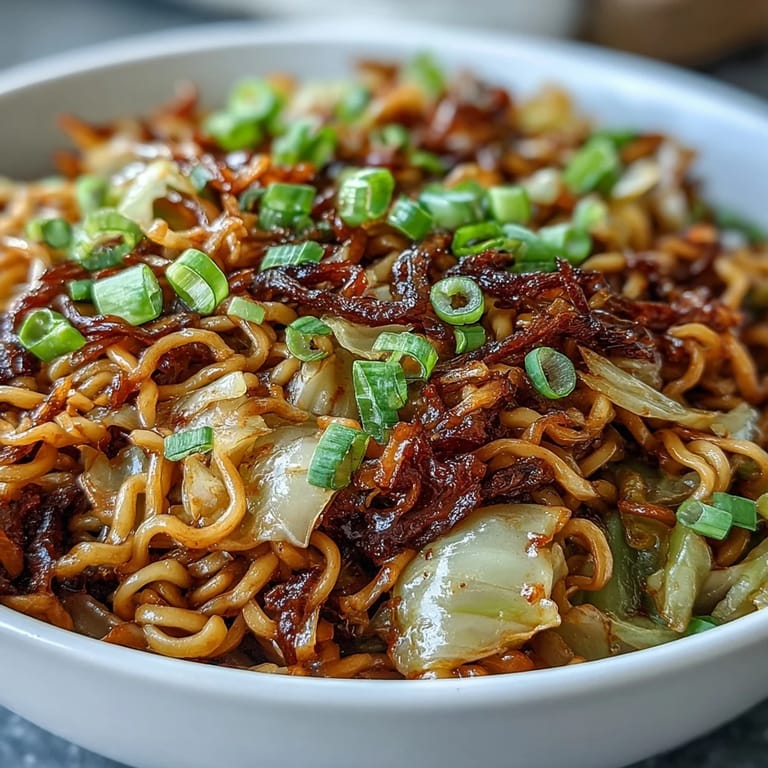
Pin This is the kind of recipe that becomes part of your regular rotation without you planning for it to happen. It's reliable enough for weeknight survival and good enough that you'll want to make it even when you have more time.
Recipe Questions
- → Can I use regular noodles instead of ramen?
Yes, you can substitute with any Asian-style noodles like udon, soba, or rice noodles. Adjust cooking time according to package instructions.
- → How do I make this dish vegan?
Replace oyster sauce with mushroom sauce or hoisin sauce, and ensure all other ingredients are plant-based. The dish is already egg-free.
- → Can I prepare this ahead of time?
It's best enjoyed fresh, but you can prep vegetables and sauce in advance. Stir-fry just before serving for optimal texture and flavor.
- → What other vegetables work well in this dish?
Bell peppers, snap peas, mushrooms, bok choy, and bean sprouts all complement the cabbage and add variety to the stir-fry.
- → How can I add more protein?
Top with a fried or poached egg, add cubed tofu, tempeh, or stir in edamame. For non-vegetarians, shrimp or chicken work well.
- → Is this dish spicy?
The chili flakes are optional, so you control the heat level. Omit them for a mild version or add more for extra kick.