 Pin
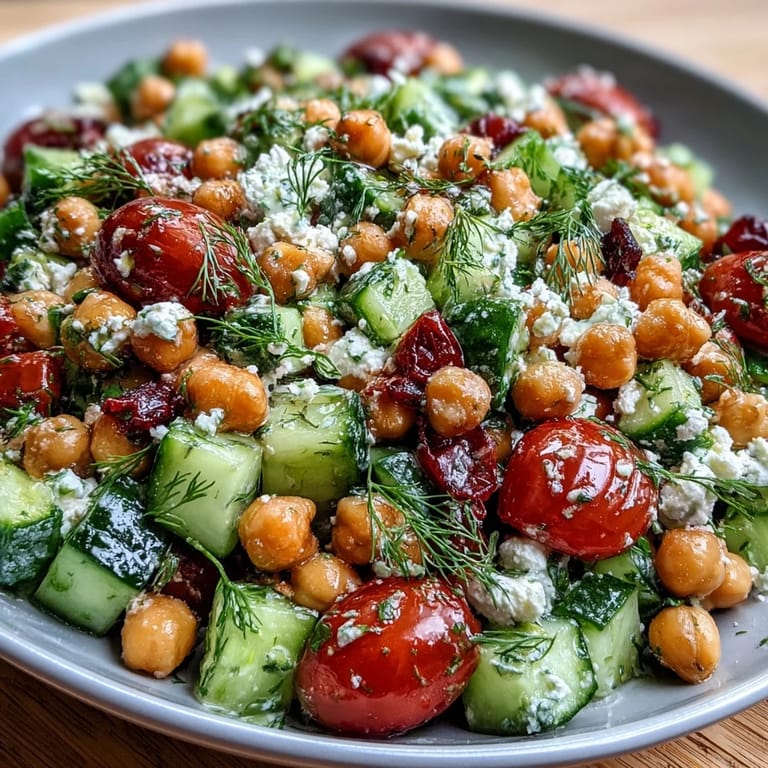
Pin There's something about the smell of fresh lemon and dill that instantly transports me to a sun-soaked kitchen table, even on the greyest Tuesday afternoon. I discovered this salad years ago when I needed something quick but substantial to bring to a potluck, and I've been making it ever since—it's become my go-to when life gets busy. The beauty is in its simplicity: chickpeas do the heavy lifting nutritionally, while the vegetables stay crisp and the feta adds that creamy, salty contrast that makes you want another forkful. What I love most is watching people realize they're eating something genuinely nourishing without feeling like they're depriving themselves of flavor.
I made this for my friend Sarah one summer when she was going through a phase of trying to eat lighter after a big work project wrapped up. She was skeptical at first—I remember her asking if chickpeas in a salad would actually be filling—but she had seconds and asked for the recipe right there at the table. Now she tells me she makes it every Sunday for the week ahead, and it's become this quiet little ritual for her. That's when I realized the best recipes aren't the complicated ones; they're the ones that fit seamlessly into someone's life.
Ingredients
- Chickpeas (1 can, 15 oz, rinsed and drained): These are your protein foundation—rinsing them removes excess sodium and starch, making them lighter and fresher tasting than pouring straight from the can.
- Cherry tomatoes (1 cup, halved or quartered): Choose the sweetest ones you can find; they should smell fragrant at the stem and give slightly when squeezed, a sign they're at their peak.
- Persian cucumbers (4, diced) or English cucumber (1): Persian cucumbers stay crisper longer and have thinner skins, so there's no need to peel them—dice them just before assembly to keep them from weeping into the dressing.
- Red onion (¼ cup, finely diced): The raw bite mellows over time, so don't skip this; it adds complexity that makes the whole salad sing.
- Fresh parsley and dill (¼ cup and 2 tablespoons respectively): Buy these fresh and chop them right before serving—dried herbs lack the brightness that makes this salad memorable.
- Feta cheese (½ cup, crumbled): Block feta crumbles into irregular, creamy pieces that distribute better than pre-crumbled versions, which tend to be drier and more densely packed.
- Extra virgin olive oil (1 tablespoon): This is your flavor anchor, so splurge on a good bottle you actually enjoy tasting.
- White wine vinegar or apple cider vinegar (2 tablespoons): The acidity brightens everything; use whichever you have, though white wine vinegar feels more delicate.
- Lemon juice (juice of 1 lemon, about 2–3 tablespoons): Bottled lemon juice will work in a pinch, but fresh-squeezed makes a noticeable difference in how vibrant the finished salad tastes.
- Garlic powder, salt, and black pepper: These are your seasoning base; taste as you go because different fetas have different salt levels.
Tired of Takeout? 🥡
Get 10 meals you can make faster than delivery arrives. Seriously.
One email. No spam. Unsubscribe anytime.
Instructions
- Gather and prep your vegetables:
- Dice your cucumbers, halve or quarter the cherry tomatoes depending on their size, finely dice the red onion, and chop the parsley and dill—I do all this on one cutting board and transfer to my salad bowl as I go, which saves cleanup later. The key is prepping everything before you start tossing, so you're not fumbling around once things are mixed.
- Combine the base ingredients:
- Add the rinsed chickpeas, cucumbers, tomatoes, red onion, parsley, and dill to your large salad bowl and give it a gentle toss to distribute everything evenly. You're not dressing it yet, just bringing the components together.
- Whisk together your dressing:
- In a small bowl or measuring cup, combine the olive oil, vinegar, lemon juice, garlic powder, salt, and black pepper, then whisk until the ingredients emulsify slightly and the salt dissolves. This only takes about 30 seconds, and you'll see it come together.
- Dress and toss with care:
- Pour the dressing over your salad ingredients and toss gently—this isn't a vigorous mixing moment, just a quiet folding together of flavors. You want everything coated but not bruised.
- Finish with feta and taste:
- Scatter the crumbled feta over the top and toss gently one more time, letting the creamy cheese distribute throughout. Taste a forkful and adjust seasoning with more salt, pepper, or lemon juice if it needs it—trust your palate here.
 Pin
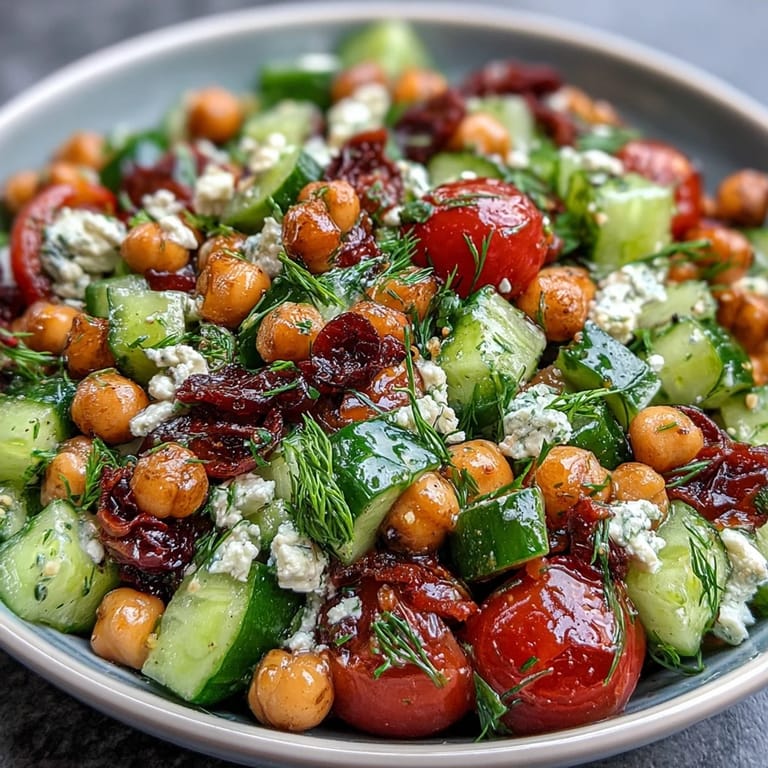
Pin There's a moment, always the same one, when I'm eating this salad and thinking about something completely unrelated—work emails, whether I watered the plants, some conversation I can't stop replaying—and then I taste the combination of cool cucumber, tangy feta, and bright lemon all at once, and my brain just stops. It's grounding in a way that other foods aren't.
Why This Salad Works as Meal Prep
I started making this in bulk on Sunday evenings because I realized something: unlike leafy green salads that wilt into sadness by Wednesday, this salad actually develops deeper flavor as it sits. The chickpeas absorb the dressing, the red onion's sharpness softens into something sweeter, and the feta gets creamier. It's one of the rare things you can make once and eat confidently all week without feeling bored.
Variations Worth Trying
Once you've made this salad a few times, you'll notice opportunities to play. I've stirred in Kalamata olives when I had them on hand, added diced avocado for richness (add this right before serving to keep it from browning), tossed in roasted red peppers for sweetness, or scattered pine nuts on top for crunch. The base is so solid that you can riff on it without losing what makes it work. My friend who loves this salad adds a splash of red wine vinegar for extra tang, and I never would have thought of it, but now I do it too.
Serving Ideas and Storage Tips
This salad is infinitely flexible—I've served it as a light main course with crusty bread, tucked it into pita pockets for portable lunches, and arranged it on a platter as part of a casual gathering where people could graze throughout the evening. It's held up in the fridge for nearly a week, though the vegetables start to soften after day four. If you find yourself with leftover salad that's getting a little soft, don't throw it out; crumble some more feta over it and serve it as a warm grain bowl by heating it gently with some cooked rice or couscous.
- Store it in an airtight container: This keeps it fresh and prevents it from picking up odors from other foods in the fridge.
- Keep the extra dressing separate if you're making it days ahead: The vegetables will stay crisper if you dress them fresh each day rather than all at once.
- If you're adding avocado, do it the morning you plan to eat it: Avocado oxidizes quickly, so waiting until the last moment keeps it bright green and creamy.
 Pin
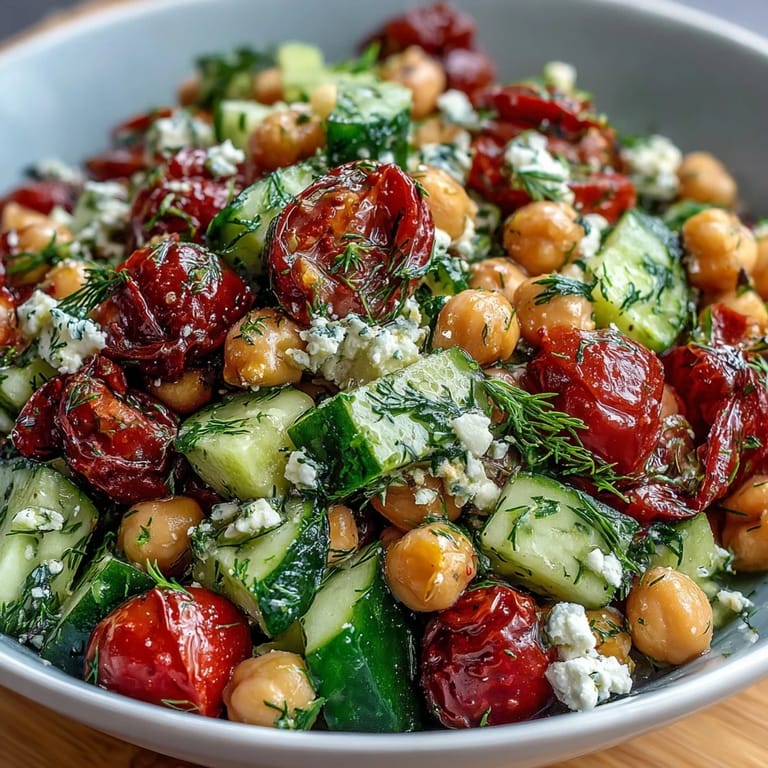
Pin There's comfort in knowing exactly what you're eating, and this salad delivers that kind of clarity—wholesome, honest, and ready whenever you are. Make it once and it'll become one of those recipes you return to without thinking, the kind of food that feels like taking care of yourself.
Recipe Questions
- → Can I prepare this salad ahead of time?
Yes, this salad keeps well refrigerated for 3–4 days, making it ideal for meal prep.
- → What type of vinegar works best in the dressing?
White wine vinegar or apple cider vinegar both add a bright, tangy flavor that complements the salad ingredients.
- → Is it possible to substitute the feta cheese?
Feta provides a creamy, salty contrast, but you can use other crumbly cheeses or omit it for a dairy-free option.
- → How should the cucumbers be prepared for this salad?
Dice Persian or English cucumbers into bite-sized pieces to keep a crunchy texture and fresh taste.
- → Can I add other Mediterranean ingredients?
Yes, Kalamata olives or diced avocado can enhance flavor and add richness to the salad.