 Pin
Pin The first time I made this salad was on a lazy Saturday when I had friends coming over and absolutely nothing prepared. I found myself standing in my kitchen, staring at a half-empty fridge, when I spotted a box of quinoa I'd been meaning to try. Twenty minutes later, after tossing together what felt like random ingredients, I served it to my guests—and watched their faces light up. Someone asked for the recipe before they'd even finished eating, and that's when I realized this wasn't just a thrown-together meal. It was something special.
I made this for a potluck during one of those awkward early-autumn moments when it's too warm for hot food but nobody wants salad either. Somehow this one changed people's minds. The vibrant colors seemed to catch the evening light as I set it on the table, and I watched someone take a second helping almost immediately. What surprised me most wasn't that it disappeared, but that two people texted me the next day asking how I'd made it taste so fresh and bright.
Ingredients
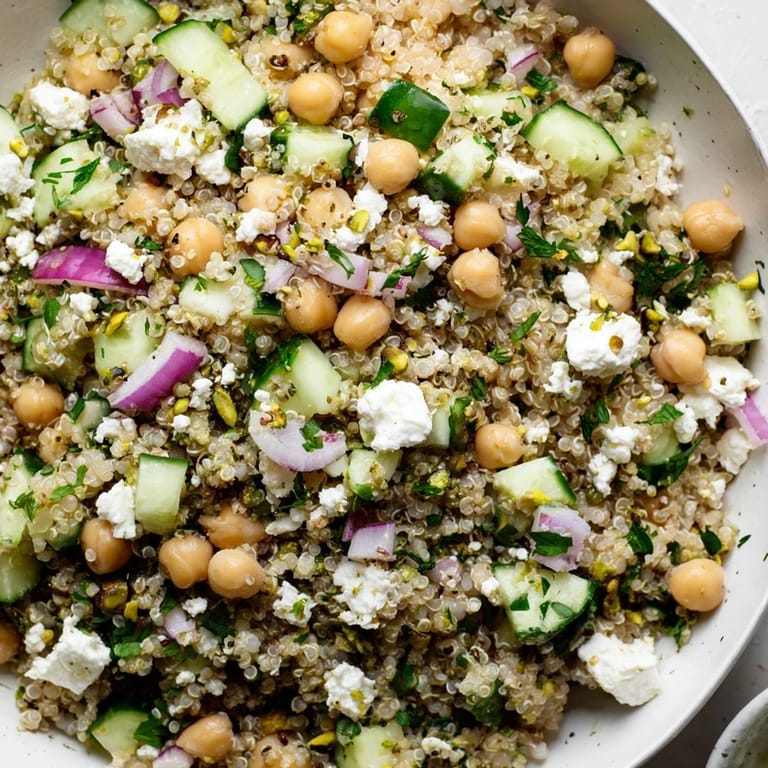
- Quinoa or bulgur (1 cup uncooked): These grains form the hearty base that makes this feel like a complete meal rather than just a side dish. Quinoa is fluffy and nutty, while bulgur has a slightly chewy texture—pick whichever you keep on hand or feel like eating that day.
- Chickpeas (one 15 oz can, drained and rinsed): They add protein and a subtle earthiness that anchors all the bright flavors around them. I always rinse them thoroughly under cold water to remove that tinny canned taste.
- Cucumber (1 large, diced): This is where the salad gets its refreshing crunch and that just-picked feeling. Cut it into small, even pieces so it doesn't overwhelm each bite.
- Red onion (1/2 small, finely chopped): Use your sharpest knife and chop it small—the bite mellows as it sits in the dressing, adding complexity without overpowering.
- Feta cheese (3/4 cup crumbled): This is the salty, creamy element that ties everything together. Don't skip it or substitute it unless you have to, because it really is the star that makes this work.
- Fresh parsley and mint (1/2 cup and 1/4 cup respectively, chopped): These herbs are what give the salad its brightness and make you feel like you're eating something alive and fresh. Chop them just before you assemble everything so they don't wilt or bruise.
- Pistachios or almonds (1/3 cup, toasted and chopped): Toast them yourself if you can—the smell alone will make you excited to eat this salad, and they'll taste a thousand times better than raw nuts.
- Extra virgin olive oil (3 tbsp): Don't use cooking oil here; this is where the dressing gets its soul. A good olive oil makes all the difference.
- Lemon juice (2 tbsp, freshly squeezed): Fresh lemon is non-negotiable. Bottled juice tastes flat by comparison, and the acid is what makes all the flavors pop.
- Garlic (1 clove, minced): Just one clove keeps the dressing bold without being aggressive. Mince it small so it distributes evenly throughout.
- Sea salt and black pepper (1/2 tsp and 1/4 tsp respectively): Taste as you go—you might need more salt depending on the salinity of your feta and the quality of your olive oil.
Tired of Takeout? 🥡
Get 10 meals you can make faster than delivery arrives. Seriously.
One email. No spam. Unsubscribe anytime.
Instructions
- Cook your grain with care:
- Rinse the quinoa or bulgur under cold water until the water runs clear, then combine it with 2 cups of fresh water in a medium saucepan and bring it to a boil. Once the water boils, reduce the heat to a gentle simmer, cover with a lid, and let it cook undisturbed for about 12 minutes if using quinoa or 15 if using bulgur. When it's done, you'll see the liquid absorbed and the grains will be tender but still have a bit of bite to them. Fluff it gently with a fork and spread it on a plate to cool—warm grain will wilt your fresh herbs.
- Assemble the salad foundation:
- Pour your cooled grains into a large bowl and add the drained chickpeas, diced cucumber, chopped red onion, crumbled feta, herbs, and your toasted nuts. Don't dress it yet—just get everything in the bowl so you can see how beautiful it looks all together.
- Make the dressing:
- In a small bowl, whisk together the olive oil, fresh lemon juice, minced garlic, salt, and pepper until the flavors are evenly distributed. Taste it on a piece of the cucumber or a chickpea to make sure it's bright and balanced.
- Bring it all together gently:
- Pour the dressing over the salad and toss everything with a light hand, being careful not to crush the chickpeas or break up the feta too much. You want the pieces to stay intact and distinct, with the dressing just coating everything evenly.
- Taste and adjust:
- Take a bite and trust your instincts—if it needs more salt, lemon, or pepper, add it now. Every ingredient has slightly different flavors, so season to suit your palate.
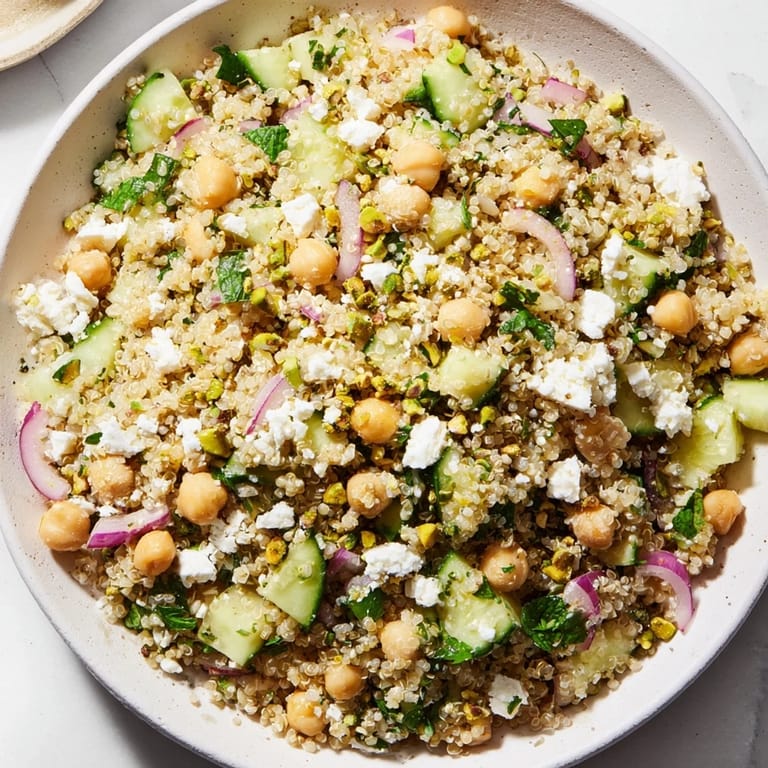 Pin
Pin My neighbor brought this to a dinner party and said it was the easiest thing she'd ever made, then watched as someone asked for thirds and another friend called me for the recipe later that week. Watching food bring people together like that, where something this simple makes such a genuine impact—that's when you know you've got a winner on your hands.
Why This Salad Works
This salad works because it's built on contrast. You've got soft, fluffy grains next to crunchy vegetables, creamy feta against toasted nuts, and fresh herbs that brighten everything without being precious about it. The dressing is simple enough that every ingredient shines through, but balanced enough that nothing gets lost. It doesn't try to be complicated, and that's exactly why it succeeds.
Making It Your Own
The beautiful thing about this salad is that it's flexible without ever feeling like you're cheating. Add roasted beets or sun-dried tomatoes if you want color and sweetness. Throw in some avocado if you want extra richness. Toss on some grilled chicken or flaked fish if you want it to be more of a main. The base is strong enough to handle additions without falling apart.
Serving and Storage Tips
Serve this at room temperature for the best flavor, though it's lovely chilled on a hot day too. If you're bringing it somewhere, keep the dressing in a separate container and shake it in just before serving—the grains have a tendency to soak up all the liquid overnight. Leftovers last about two days in the fridge, but honestly, this rarely sits around long enough to find out.
- Toast your nuts the day before if you're prepping ahead, and store them in an airtight container so they stay crispy.
- Chop your herbs as late as possible—they bruise quickly and lose their brightness if they sit around.
- If you're feeding a crowd, this recipe doubles beautifully and actually gets better when made ahead for a few hours.
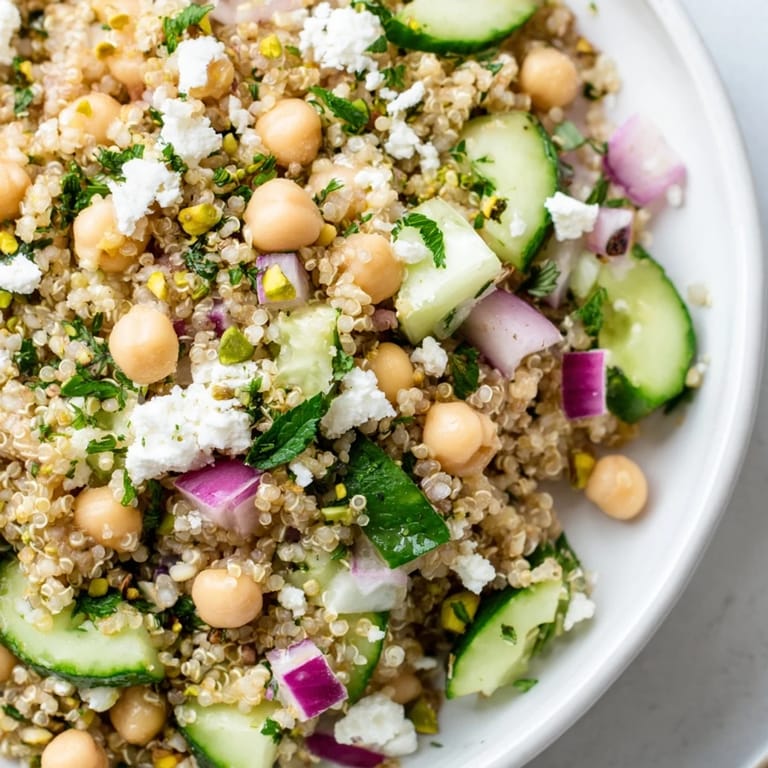 Pin
Pin This is the kind of salad that shows up in your life when you need it most—when you want to feed people something that tastes thoughtful without spending your whole evening cooking. Make it once, and you'll find yourself making it again and again.
Recipe Questions
- → Can I substitute bulgur for quinoa?
Yes, bulgur can be used instead of quinoa and is cooked similarly, offering a slightly nuttier flavor and chewy texture.
- → How do I toast nuts for the salad?
Toast pistachios or almonds in a dry skillet over medium heat for 3-5 minutes until fragrant, stirring frequently to avoid burning.
- → What dressing is recommended for this salad?
A simple mixture of extra virgin olive oil, fresh lemon juice, minced garlic, sea salt, and black pepper is whisked to create a bright, tangy dressing.
- → Can this salad be made vegan?
Omit the feta or substitute with a plant-based cheese to keep the creamy element while maintaining a vegan-friendly dish.
- → How to store leftovers properly?
Keep the salad covered in the refrigerator for up to 2 days; add dressing just before serving to maintain freshness.