 Pin
Pin I discovered mason jar meals on a hectic Tuesday when I'd packed my lunch but forgotten it on the kitchen counter. That afternoon, desperate and hungry, I grabbed four mason jars from the cabinet and started layering noodles, vegetables, and sauce—thinking I'd at least have something ready for the rest of the week. What started as a kitchen hack became my favorite way to eat, because everything stayed fresh, the flavors deepened as they sat together, and I could grab lunch without a second thought.
My roommate came home one evening to find me lined up at the counter with four open jars, chopsticks in hand, taste-testing each one like I was judging a competition. She laughed and asked why I wasn't just eating them normally, but there was something satisfying about the ritual of it—checking that the layers were balanced, that the sauce had the right ratio of heat and sweetness, that I'd actually made something worth repeating.
Ingredients
- Dried ramen or rice noodles (200 g): These hold their texture when layered and absorb the sauce beautifully, though you can use any pasta shape you prefer.
- Cooked chicken breast, tofu, or shrimp (200 g, diced): Cook it ahead and dice it into bite-sized pieces so it distributes evenly throughout the jar.
- Shredded carrots (1 cup): Their natural sweetness balances the umami sauce, and they stay crunchy even after four days in the fridge.
- Thinly sliced bell peppers (1 cup, red or yellow): Choose sweet varieties, and slice thin so they soften slightly from the sauce without becoming mushy.
- Baby spinach or kale (1 cup): Spinach wilts gently when hot water hits the jar, while kale holds more structure if you prefer a firmer bite.
- Thinly sliced scallions (1/2 cup): Add them just before serving if you want them sharp and fresh, or layer them in if you like them softened by the sauce.
- Bean sprouts (1/2 cup): These bring a clean crunch and should go in last of the vegetables to stay as crisp as possible.
- Soy sauce (4 tbsp, or tamari for gluten-free): This is your umami foundation, so taste as you build the sauce to make sure it feels balanced to you.
- Rice vinegar (2 tbsp): The brightness cuts through richness and keeps the flavors from feeling heavy.
- Sesame oil (2 tbsp): Use a good quality oil here because you can taste it—it's the difference between good and unforgettable.
- Honey or maple syrup (1 tbsp): Either works, and a touch of sweetness rounds out the salty-sour-spicy triangle.
- Sriracha or chili sauce (2 tsp, optional): Add it gradually and taste as you go, because heat preferences are deeply personal.
- Minced garlic and grated ginger (1 clove and 1 tsp): Mince the garlic fine and grate the ginger fresh—these make the difference between a decent sauce and one that tastes alive.
- Cilantro, roasted nuts, sesame seeds, and lime wedges (optional toppings): These finish the dish, adding texture and brightness right before you eat.
Tired of Takeout? 🥡
Get 10 meals you can make faster than delivery arrives. Seriously.
One email. No spam. Unsubscribe anytime.
Instructions
- Cook and cool the noodles:
- Boil them until they're just tender, then drain and rinse under cold water—this stops the cooking and keeps them from turning to mush. Toss them lightly with a splash of sesame oil if you want them less likely to stick together.
- Make the sauce:
- Whisk everything together in a small bowl until the honey dissolves and the garlic and ginger are evenly distributed. Taste it straight from the spoon and adjust the salt, heat, or sweetness before you divide it into the jars.
- Divide the sauce into jars:
- Pour about 3 tablespoons into each jar, which sounds like a small amount until you realize the sauce intensifies as it sits.
- Layer the ingredients strategically:
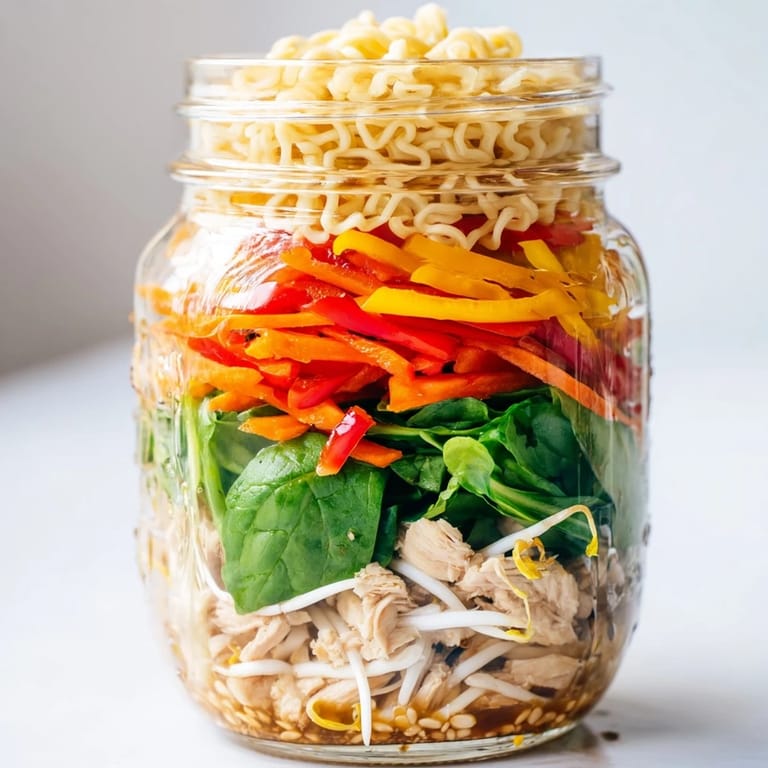
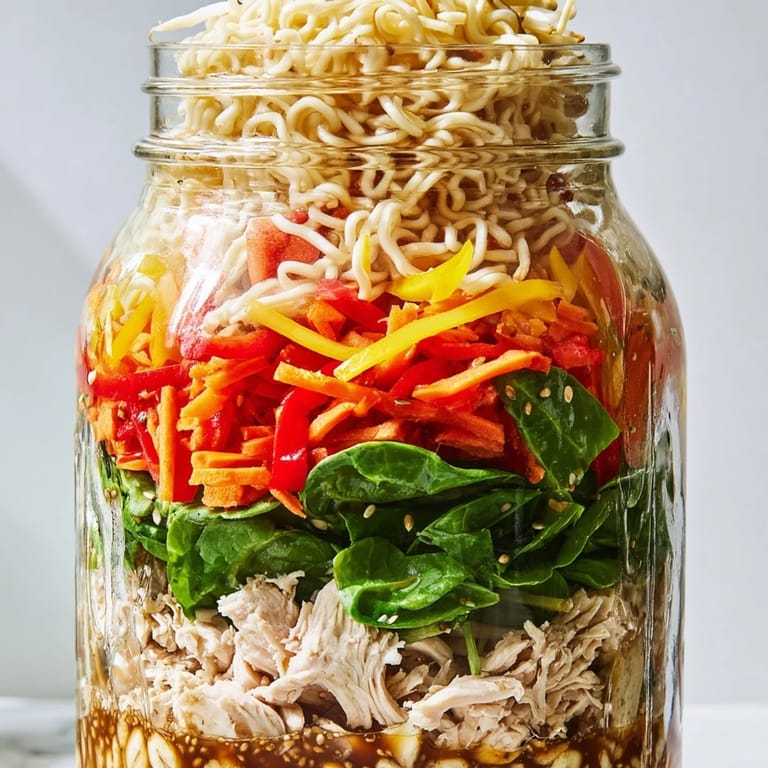
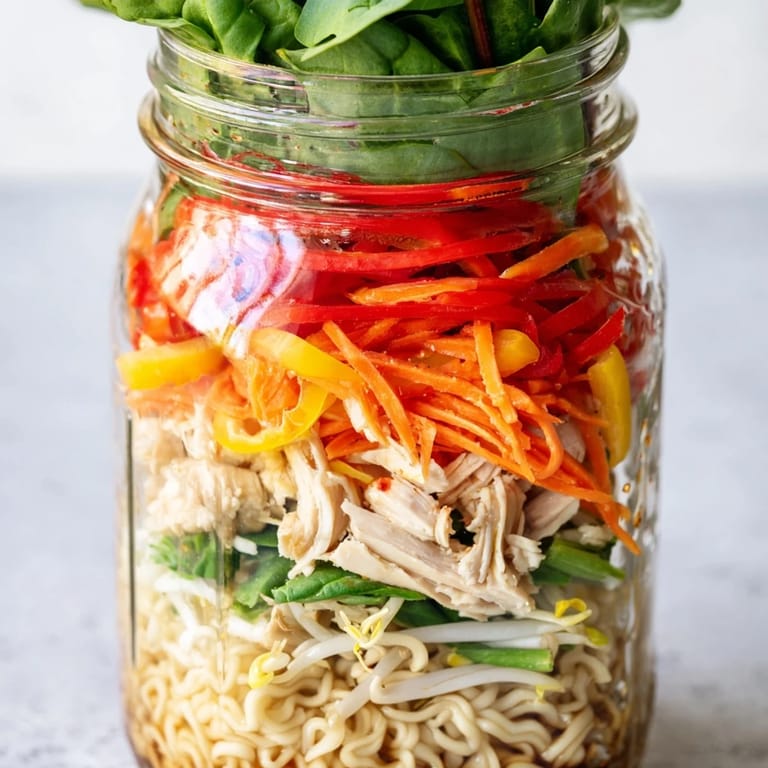
- Sauce goes first, then protein right on top of it, then vegetables in whatever order feels logical. Noodles go last so they're the first thing you see and the last to absorb extra moisture.
- Seal and refrigerate:
- Press the lids on tight and trust that your lunch is taken care of for the next few days.
- Reheat and serve:
- Pour hot water into the jar, let it sit for a couple of minutes while everything warms and loosens, then give it a good mix. If the layers feel too tight, a quick stir loosens everything up.
 Pin
Pin I realized these jars had become more than just meal prep when a coworker asked why I was eating lunch so slowly—and I told her it was because watching each temperature change as the hot water hit the different layers felt like watching the dish come alive. That's when I knew I'd found something worth doing again and again.
Building Flavor That Lasts
The magic of these jars is that flavors actually improve as they sit, because the sauce gently infuses everything through the layering. The first time you open a jar two days after making it, you'll taste how much more cohesive everything has become—the vegetables have traded some of their individual sharpness for a unified, savory depth. If you're skeptical about day-four jars, try one and be amazed that it doesn't taste tired at all.
Customization Without Overthinking
The beauty of this recipe is that it works with whatever you have, so you're never locked into one way of making it. If you have cucumber instead of bell pepper, use it; if your protein is leftover salmon instead of chicken, layer it in; if you want to use quinoa because you cooked too much, that works too. This is the kind of recipe that rewards your instincts rather than punishing you for improvising.
Transport and Storage Wisdom
These jars are genuinely portable—you can shake them in your bag without worrying about leaks the way you would with a loose container, and eating straight from the jar saves you dishes at work or wherever you are. Keep them on the bottom shelf of your fridge where the temperature is most consistent, and they'll stay fresh and vibrant for up to four days.
- Pack a little carton of toppings separately so nuts stay crispy and cilantro stays bright green.
- If you're taking a jar to work, pack a fork or chopsticks because eating from a jar in public is only fun if you commit to it.
- On day five, everything still tastes fine but the vegetables start losing their snap, so stick to the four-day rule.
 Pin
Pin These jars have saved my weeknight sanity more times than I can count, and they've also made me realize how much pleasure comes from eating something you actually planned for. There's no guilt in reheating or overthinking—just open, pour, stir, and enjoy.
Recipe Questions
- → Can I substitute the protein in this dish?
Yes, you can swap chicken for tofu, shrimp, edamame, or any preferred protein that suits your dietary needs.
- → What noodles work best for this meal?
Dried ramen or rice noodles provide the right texture, but spiralized zucchini or shirataki noodles are great low-carb alternatives.
- → How should I store the layered jars?
Seal jars tightly and refrigerate. The layers keep fresh for up to four days before serving.
- → Is it possible to make this dish gluten-free?
Use tamari instead of regular soy sauce and choose gluten-free noodles to maintain gluten-free standards.
- → How can I adjust the spice level?
Add or omit Sriracha or chili sauce in the dressing to control the heat according to your preference.
- → What toppings complement this dish?
Chopped cilantro, roasted peanuts or cashews, sesame seeds, and lime wedges add extra flavor and texture.