 Pin
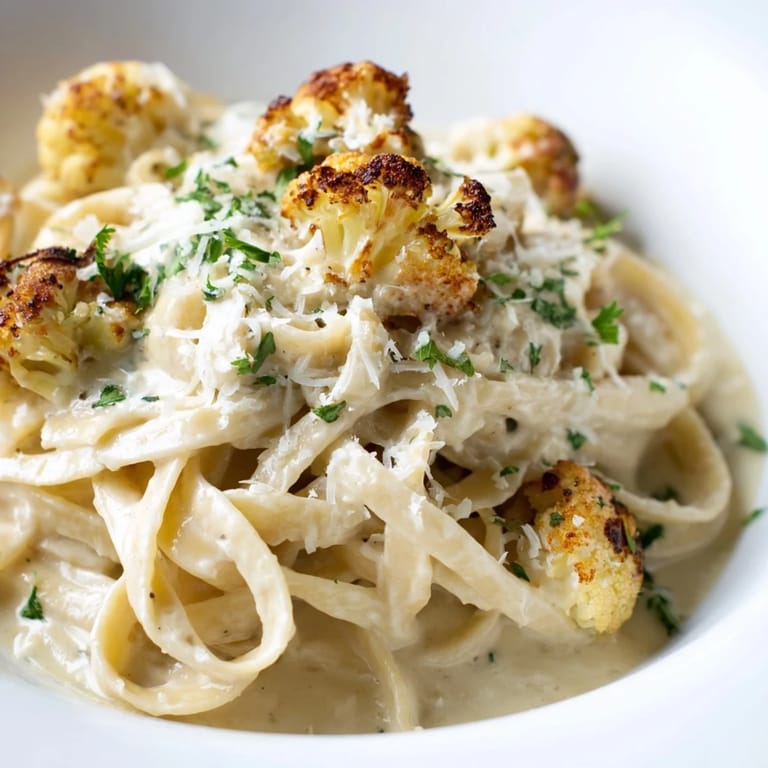
Pin My blender was making a sound I'd never heard before, somewhere between a hum and a wheeze, as I watched ivory cauliflower and roasted garlic swirl into the creamiest sauce I never saw coming. I'd been skeptical when a coworker mentioned cauliflower Alfredo at lunch, convinced it was another sad diet swap, but curiosity won. That first taste, standing over the skillet with a wooden spoon, changed everything. It was silky, rich, and somehow tasted like comfort without the heaviness that usually follows a bowl of traditional Alfredo.
The first time I made this for my sister, she scraped her bowl clean and asked if I'd added cream cheese. When I told her it was just cauliflower and Parmesan, she laughed and accused me of lying. I had to show her the empty baking sheet still sitting on the counter, golden bits stuck to the parchment. Now she requests it every time she visits, and I've stopped telling people what's in it until after they've finished eating.
Ingredients
- Cauliflower: Choose a head that feels heavy for its size with tight, creamy white florets, as older cauliflower can taste bitter and won't blend as smoothly.
- Garlic: Roasting whole cloves with the cauliflower mellows the sharpness into something sweet and almost caramelized, so don't skip this step or substitute jarred.
- Whole Milk: This adds the body and creaminess the sauce needs, though I've used unsweetened almond milk in a pinch and it still worked surprisingly well.
- Parmesan Cheese: Freshly grated from a block melts better and tastes sharper than the pre-shredded kind, which often has additives that make the sauce grainy.
- Unsalted Butter: It helps the cauliflower roast beautifully and adds a silky richness to the finished sauce without overpowering the other flavors.
- Fettuccine: The flat, wide noodles hold onto the sauce perfectly, but I've used penne and rigatoni with great results when that's what I had on hand.
- Nutmeg: Just a whisper of it adds warmth and a subtle complexity that makes people wonder what your secret is.
- Salt and Black Pepper: Taste as you go, because the Parmesan brings saltiness too, and you want balance, not a sodium bomb.
Tired of Takeout? 🥡
Get 10 meals you can make faster than delivery arrives. Seriously.
One email. No spam. Unsubscribe anytime.
Instructions
- Get the Oven Ready:
- Preheat your oven to 425°F and line a baking sheet with parchment paper so cleanup is easy and nothing sticks. This high heat is what coaxes out the natural sweetness in the cauliflower.
- Prep and Roast the Vegetables:
- Toss the cauliflower florets and whole garlic cloves with a tablespoon of butter, spreading them in a single layer on the sheet. Roast for 25 to 30 minutes, stirring halfway through, until the edges are deeply golden and the cauliflower is fork-tender.
- Cook the Pasta:
- While the vegetables roast, bring a large pot of well-salted water to a boil and cook your pasta according to the package directions. Before draining, scoop out a cup of that starchy pasta water, it's liquid gold for adjusting the sauce later.
- Blend the Sauce:
- Add the roasted cauliflower, garlic, remaining butter, milk, Parmesan, nutmeg, salt, and pepper to a blender and blend until it's completely smooth and velvety. If it seems too thick, add splashes of the reserved pasta water until it reaches a pourable consistency.
- Combine and Heat:
- Pour the sauce into a large skillet over medium heat and let it warm until it just starts to simmer gently. Toss in the drained pasta and stir everything together until every strand is coated in that creamy sauce.
- Serve:
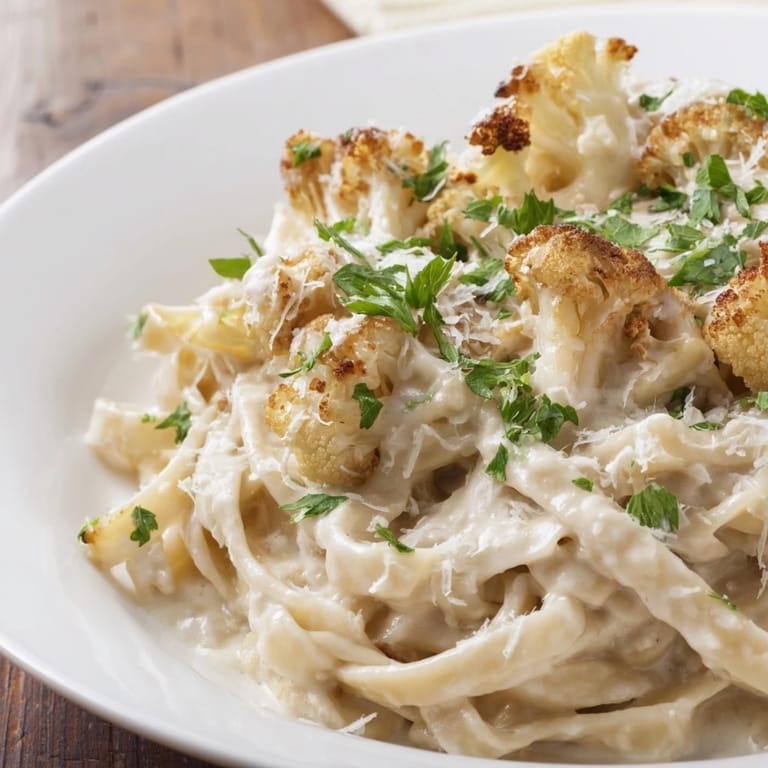
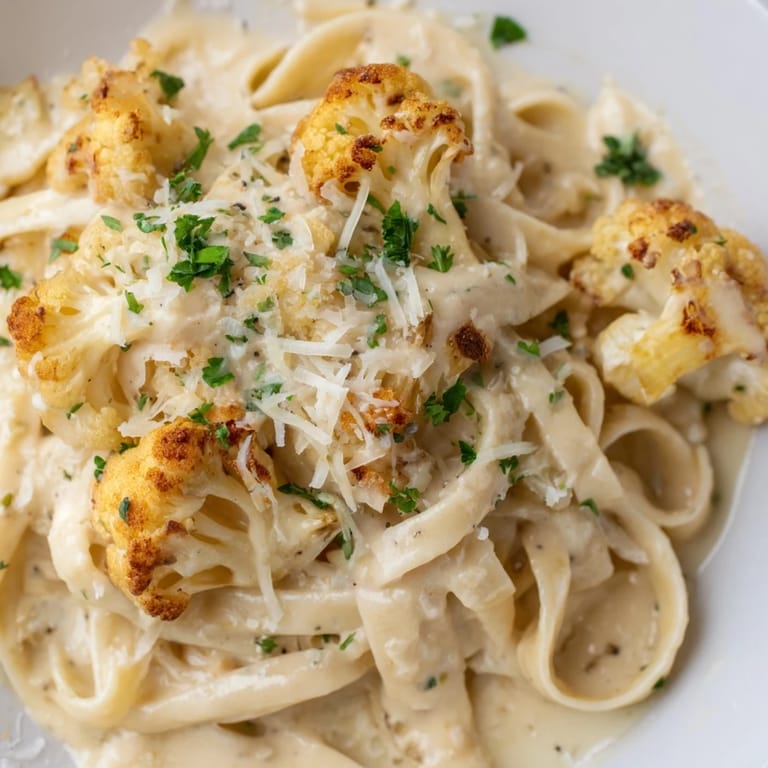
- Plate it up immediately while it's hot and glossy, then finish with a sprinkle of fresh parsley and extra Parmesan if you're feeling generous.
 Pin
Pin There's a moment right after you toss the pasta with the sauce, when the steam rises and the kitchen smells like a cozy Italian restaurant, that makes this dish feel special. My husband once said it reminded him of Sunday dinners at his grandmother's house, even though she never made anything like this. I think it's just the kind of comfort that bypasses logic and goes straight to memory.
How to Store and Reheat Leftovers
I store leftover pasta and sauce together in an airtight container in the fridge for up to three days, though it rarely lasts that long. When reheating, add a splash of milk or pasta water to a skillet over medium-low heat and stir gently until it's warmed through and creamy again. Microwaving works in a pinch, but the stovetop method keeps the sauce from breaking or drying out.
Variations to Try
I've stirred in sautéed mushrooms and spinach for a heartier version, and once added a handful of sun-dried tomatoes that brought a tangy brightness. Roasted cherry tomatoes on top add color and a pop of acidity that cuts through the richness. If you want protein, grilled chicken or shrimp fold in beautifully without competing with the sauce.
Common Mistakes to Avoid
The biggest mistake is not roasting the cauliflower long enough, because you need that caramelization for flavor depth. Another is adding cold sauce to hot pasta, which can make it seize up and turn grainy, so always warm the sauce first. Finally, don't forget to salt your pasta water generously, it's your only chance to season the noodles themselves.
- Taste the sauce before mixing it with pasta, because it's easier to adjust seasoning when it's on its own.
- Use a high-speed blender if you have one, it makes the sauce impossibly silky in less time.
- Serve immediately for the best texture, because the sauce thickens as it sits and pasta absorbs liquid over time.
 Pin
Pin This dish has become my go-to when I want something that feels indulgent but doesn't leave me sluggish, and it's proof that vegetables can be just as satisfying as cream. I hope it surprises you the same way it surprised me that first night with my noisy blender.
Recipe Questions
- → Can I prepare this sauce ahead of time?
Yes, you can blend the roasted cauliflower mixture up to 2 days ahead. Store it in an airtight container in the refrigerator. Reheat gently in a skillet with a splash of pasta water to restore the creamy consistency before serving.
- → What pasta shapes work best with this sauce?
Fettuccine is traditional, but any flat or ridged pasta works wonderfully. Pappardelle, linguine, or penne all hold the creamy sauce beautifully. Avoid delicate shapes like angel hair, which may get overwhelmed by the rich coating.
- → How do I achieve the smoothest sauce?
Blend the roasted cauliflower thoroughly in a high-speed blender or food processor until completely smooth. If lumps remain, strain the sauce through a fine-mesh sieve. Add pasta water gradually until you reach your desired consistency—thicker for coating, thinner for a lighter drape.
- → Can I make this dairy-free?
Absolutely. Substitute whole milk with unsweetened oat or almond milk, use dairy-free butter, and replace Parmesan with nutritional yeast or a plant-based Parmesan alternative. The sauce will be equally creamy and flavorful with these swaps.
- → Why roast the cauliflower instead of steaming it?
Roasting develops deep, caramelized flavors that steaming cannot achieve. The high heat creates golden edges and concentrates the natural sweetness of the cauliflower, resulting in a more complex and satisfying sauce.
- → What can I do to enhance the flavor?
A squeeze of fresh lemon juice brightens the sauce beautifully. You can also add roasted garlic for deeper flavor, white wine for acidity, or fresh thyme for herbaceous notes. Taste and adjust seasonings before serving.