 Pin
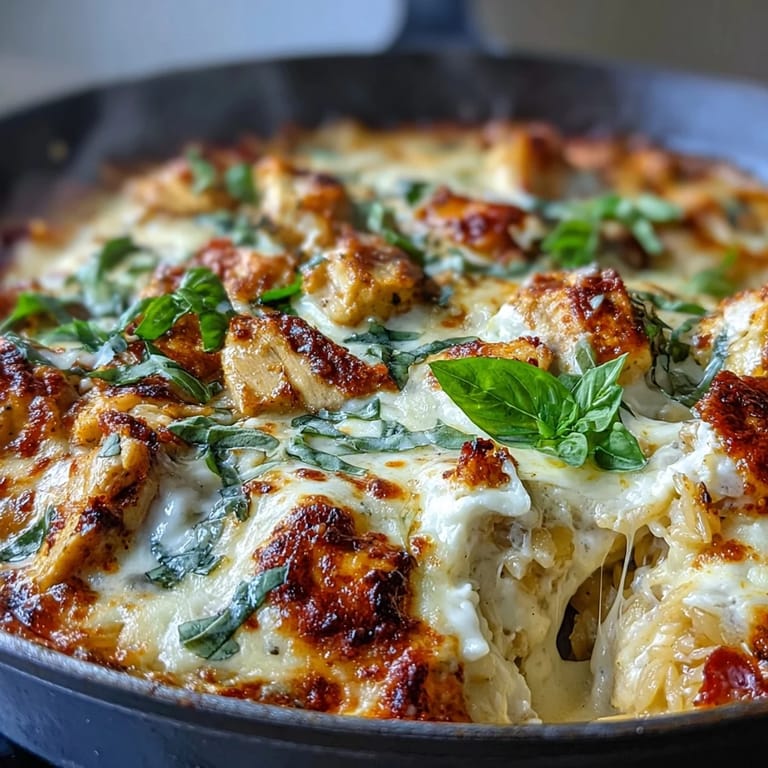
Pin There's something about a weeknight when everything feels rushed, and you're standing in front of the stove wondering what magic could happen in the next thirty minutes. That's when I discovered this one-pan creamy chicken lasagna orzo—a dish that tastes like you've been simmering it for hours but actually comes together faster than you can set the table. It's the kind of meal that bridges the gap between comfort food cravings and real life, when time is short but your appetite for something warm and genuinely satisfying is not.
My sister called one Tuesday evening asking if I could bring dinner over, and I had maybe twenty minutes before heading to her place. Instead of the usual panic, I remembered this recipe and actually arrived early with something steaming and real. Watching her face when she tasted it—that moment when comfort food hits differently because someone took care to make it—that's when I knew this would become a regular in my rotation.
Ingredients
- Olive oil: Use a good quality oil here since it's both a cooking medium and a flavor builder; it carries the aromatics beautifully.
- Chicken breast or thighs: Thighs stay juicier if you're not careful with timing, but either works—just cut them into bite-sized pieces so they cook through quickly.
- Yellow onion: Finely chop this so it melts into the sauce rather than remaining chunky; it becomes the sweet backbone of the whole dish.
- Garlic: Mince it fresh and add it right after the onion softens so it perfumes the entire skillet without burning.
- Orzo pasta: This small rice-shaped pasta is essential—it nestles into the sauce and absorbs flavor in a way regular lasagna noodles never could.
- Chicken broth: Low-sodium is important so you can control the salt level as the liquid reduces.
- Crushed tomatoes: A good canned variety works perfectly here; fresh tomatoes would require cooking down too long.
- Tomato paste: This concentrated umami punch deepens the sauce without adding extra liquid.
- Italian herbs: Dried works beautifully in this application since they bloom in the hot broth.
- Red pepper flakes: Optional but recommended—just a whisper adds complexity that keeps people guessing what makes it taste so good.
- Mozzarella cheese: Shredded rather than fresh so it melts evenly into the creamy sauce.
- Ricotta cheese: This creates the creamy lasagna texture; dolloped on top, it stays slightly distinct and luxurious.
- Parmesan cheese: Grated fresh tastes sharper and more alive than pre-grated versions.
- Fresh basil: Save this for the very end so it stays bright green and aromatic rather than turning dark and muted.
Tired of Takeout? 🥡
Get 10 meals you can make faster than delivery arrives. Seriously.
One email. No spam. Unsubscribe anytime.
Instructions
- Sear the chicken until golden:
- Heat your olive oil until it shimmers, then add chicken pieces in a single layer if possible. Let them sit for a minute before stirring—you want a light golden crust, not raw-looking chicken. After about 4 to 5 minutes, transfer everything to a plate; it doesn't need to be fully cooked since it'll finish in the sauce.
- Build the aromatic base:
- In the same skillet with all those fond bits still clinging to the bottom, sauté your onion until it softens and turns translucent. Add garlic and let it toast for just 30 seconds until the smell hits you—that's the signal it's ready.
- Toast the orzo:
- Add your orzo directly to the skillet and stir it around for about a minute. This toasting step is subtle but important; it gives the pasta a slightly nutty undertone that deepens the final flavor.
- Create the cooking liquid:
- Pour in the broth, crushed tomatoes, tomato paste, herbs, and pepper flakes. Stir everything together so the tomato paste dissolves completely and nothing is stuck to the bottom. This is when your kitchen smells like something special is happening.
- Return chicken and simmer:
- Add the chicken back in along with any juices that collected on the plate. Bring the whole thing to a gentle simmer, then cover with a lid and let it cook undisturbed for about 9 to 11 minutes. The orzo will soften, the chicken will cook through, and most of the liquid will be absorbed.
- Melt in the creamy cheeses:
- Reduce heat to low and stir in half the mozzarella and all the Parmesan. Keep stirring gently until everything melts into a creamy sauce that coats each piece of orzo.
- Add the ricotta crowns:
- Dollop spoonfuls of ricotta across the top—don't stir it in completely. Sprinkle the remaining mozzarella over and around the ricotta dollops, cover, and let it cook for 2 to 3 minutes just until melted and warm.
- Finish and serve:
- Turn off the heat and scatter fresh basil over everything. The residual warmth will soften it just enough while keeping that bright flavor intact.
 Pin
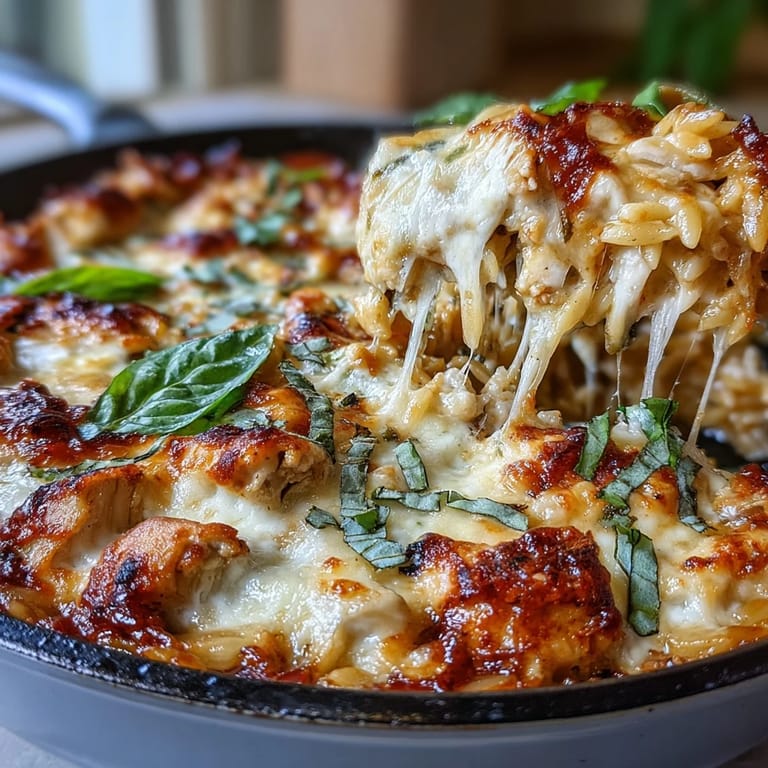
Pin There was a moment last month when my neighbor knocked on my door because the smell coming from my kitchen was irresistible—she could see the steam escaping from my cracked window. We ended up sharing a bowl while standing in my kitchen, and she told me it reminded her of Sunday dinners her Italian grandmother used to make, which somehow felt like the highest compliment this simple one-pan recipe could ever receive.
The Beauty of One-Pan Cooking
The magic of cooking everything in a single skillet isn't just about convenience, though that's certainly part of it. It's about how flavors layer and build—the chicken releases its juices into the broth, the broth picks up the sweetness of caramelized onion, the pasta absorbs all of it while releasing its own starch to create a naturally creamy sauce. By the time you finish cooking, there's no separate component; everything has married together into something cohesive and deeply satisfying.
Why Orzo Is the Secret Star
If you've never cooked with orzo before, this recipe is the perfect introduction. Unlike regular pasta that sits separate in a dish, orzo is small enough to nestle directly into the sauce and cook alongside everything else. It becomes almost porridge-like in texture without ever being mushy—creamy, tender, and absolutely cling to your spoon in the best way possible. This is why lasagna lovers instantly recognize the comfort in this dish; it delivers that same creamy, cheesy feeling through completely different means.
Flexibility and Variations
The truth about a one-pan dinner is that it's remarkably forgiving once you understand the basic formula. You can swap the chicken for ground turkey if you want something leaner, or stir in crumbled Italian sausage for deeper, more assertive flavor. For vegetarian versions, mushrooms bring earthiness while spinach adds brightness; just sauté them with the onion so they release their moisture early and season properly. The ricotta topping remains constant because it's truly the lasagna element that makes this dish feel intentional and special.
- If your skillet doesn't have a lid, a sheet of foil works just as well to trap steam and finish cooking the pasta evenly.
- Leftovers actually taste better the next day after flavors have settled, and they reheat beautifully with just a splash of broth or water to restore creaminess.
- Make this in advance and refrigerate before the final cheese step, then reheat gently on the stovetop and finish with fresh ricotta and basil for a meal that feels fresh every time.
 Pin
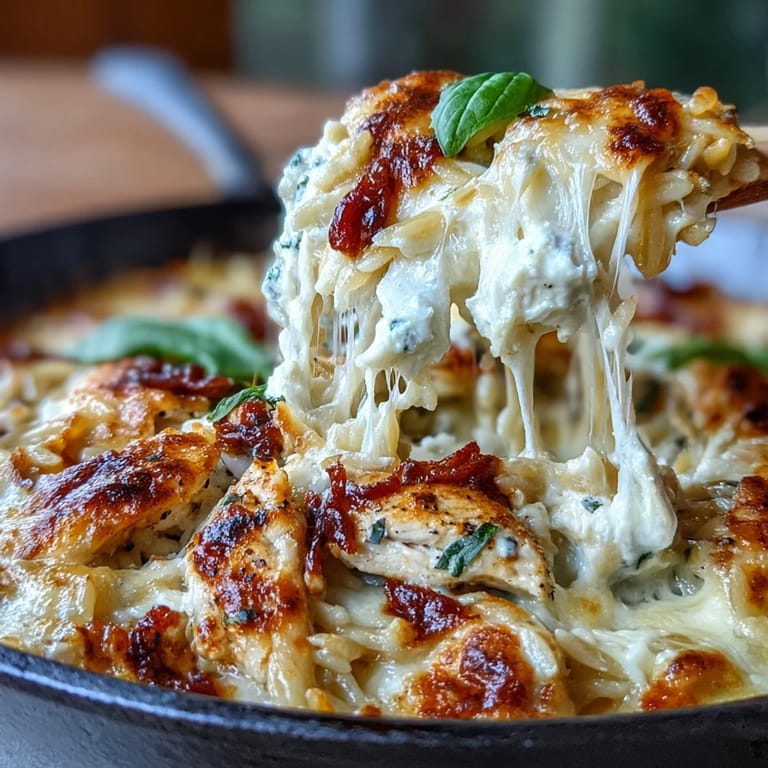
Pin This meal has become my answer to the question what's for dinner when time is short but the need for something real and nourishing is urgent. Every time I make it, someone asks for the recipe—it's that kind of dish.
Recipe Questions
- → Can I use different pasta instead of orzo?
Yes, small pasta shapes like acini di pepe or small shells can substitute orzo, but adjust cooking time to maintain al dente texture.
- → How can I make this dish vegetarian?
Omit the chicken and use vegetable broth. Adding sautéed mushrooms or spinach boosts flavor and texture.
- → What cheeses work best for the creamy sauce?
A combination of mozzarella, ricotta, and Parmesan creates a rich, melted texture and balanced flavor.
- → Can I prepare this ahead of time?
Yes, prepare and refrigerate leftovers for up to 3 days; reheat gently to preserve creaminess.
- → How spicy is the dish and can it be adjusted?
The optional red pepper flakes add mild heat, which can be increased or omitted according to preference.