 Pin
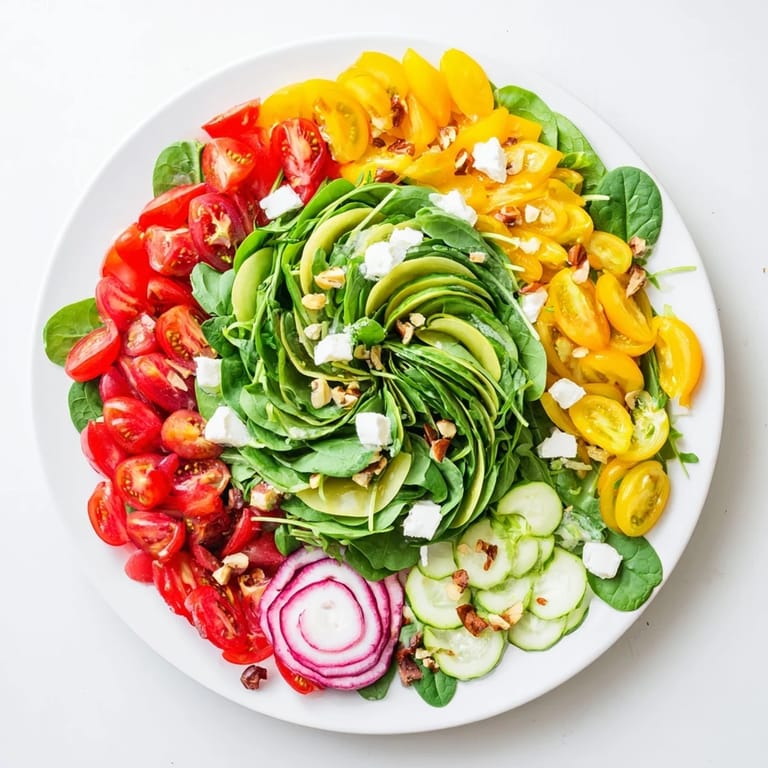
Pin I discovered the Fibonacci Fan while sketching spirals during a particularly slow afternoon in the kitchen, and something clicked—what if dinner could look like nature's most elegant pattern? My hands moved almost instinctively, layering leaves and vegetables in expanding arcs, and suddenly I wasn't just making a salad, I was painting with food. The golden ratio, it turns out, tastes as good as it looks.
I made this for someone who'd only ever seen salads in takeout containers, and watching their eyes widen when they saw the spiral laid out was worth every careful slice. They ate slowly that night, actually tasting things, commenting on how the arugula would play against the sweetness of the blueberries, the cool crunch of cucumber. That's when I realized presentation isn't shallow—it changes how we experience food.
Ingredients
- Baby spinach leaves: The soft inner foundation of your spiral, tender enough to yield under your fork but sturdy enough to hold its crescent shape without wilting.
- Arugula: Peppery and resilient, it creates the second arc and stands up beautifully against heavier elements without overpowering the palate.
- Cherry tomatoes, halved: Their natural sweetness and burst of juice anchor the middle rings, providing both color pop and moisture.
- Cucumber, thinly sliced: Keeps things crisp and fresh, the watery counterweight to richer ingredients like feta and avocado.
- Radishes, thinly sliced: Bring a sharp, almost spicy note that livens up the whole composition without needing much dressing.
- Red onion, finely sliced: A thin, delicate ring near the outer edge adds bite and visual drama without overwhelming.
- Avocado, sliced: Nestle this into the spiral for creamy richness; its mild flavor lets other ingredients shine.
- Blueberries: The surprise element that no one expects in a salad until they taste the subtle sweetness and pop of it against savory greens.
- Toasted walnuts, chopped: Brings warmth and crunch; toasting them yourself makes all the difference in flavor depth.
- Crumbled feta cheese: Salty and slightly tangy, it ties the whole spiral together without dominating.
- Extra-virgin olive oil: Use good oil here—you'll taste it, and it carries all the other dressing flavors smoothly across the salad.
- Lemon juice: Brightens everything and keeps the avocado from browning as quickly.
- Honey: Just enough to round out the acidity and add a whisper of sweetness that makes the dressing memorable.
- Dijon mustard: A small amount emulsifies the dressing and adds subtle complexity without sharpness.
Tired of Takeout? 🥡
Get 10 meals you can make faster than delivery arrives. Seriously.
One email. No spam. Unsubscribe anytime.
Instructions
- Start with the spinach crescent:
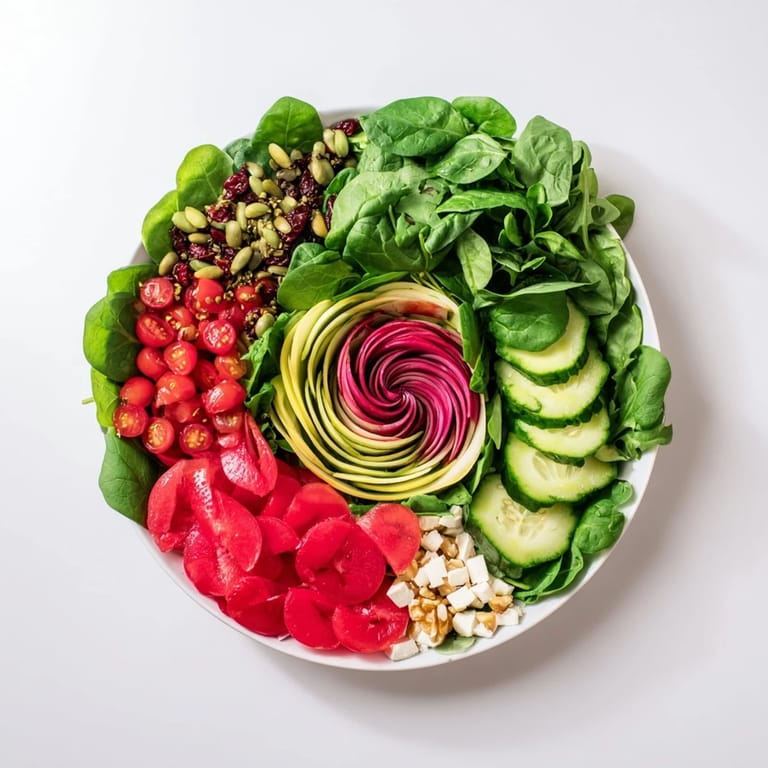
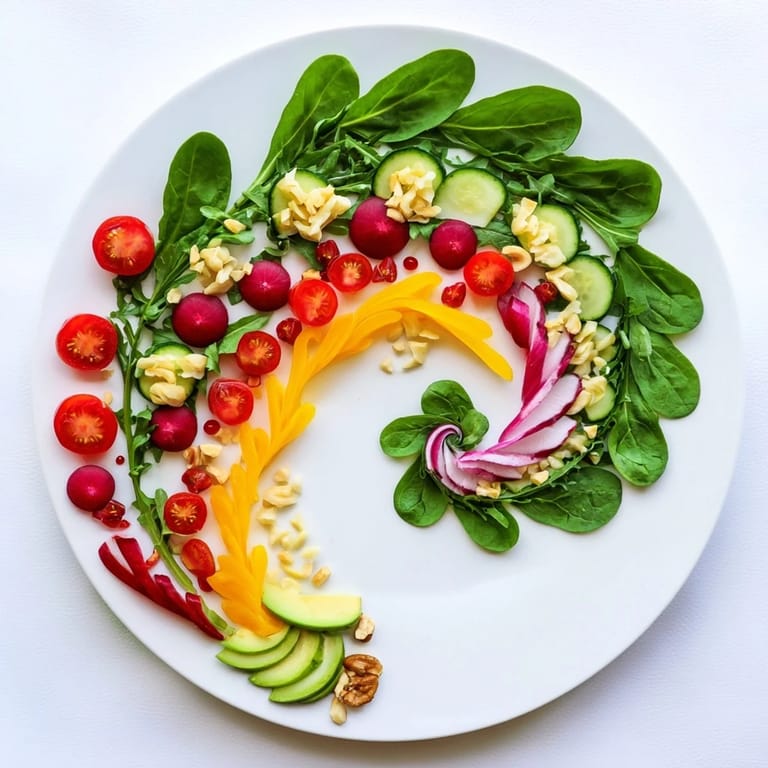
- On a large round platter, arrange your baby spinach leaves in a gentle crescent shape to form the innermost arc. Think of it as the starting point of a spiral that unfolds outward—handle the leaves gently so they stay intact and create that soft, welcoming beginning.
- Layer the arugula fan:
- Create a fan of arugula overlapping the spinach edge, each leaf angling slightly outward as the spiral expands. The slight pepper of the arugula should feel like a natural progression from the mild spinach.
- Build the middle spirals:
- Continue with the cherry tomato halves, then cucumber slices, then radishes, each section larger than the last and following that golden ratio. You'll start to see the pattern take shape—it's oddly meditative, and each ring feels deliberate rather than random.
- Add the red onion accent:
- Arrange your finely sliced red onion as a thin, delicate ring near the outer edge, almost like a border. This adds visual definition and a subtle bite without overwhelming.
- Tuck in the soft elements:
- Nestle your avocado slices and blueberries throughout the spiral, spacing them with intention so the eye keeps moving and nothing feels crowded. These unexpected flavors scattered across the pattern create little surprises with each forkful.
- Crown with nuts and cheese:
- Sprinkle your toasted walnuts and crumbled feta evenly over the top, letting them settle into the nooks and crannies. This is your final touch, adding texture and richness across the whole composition.
- Whisk your dressing:
- In a small bowl, whisk together the olive oil, lemon juice, honey, and Dijon mustard until emulsified, then season with salt and pepper to taste. Taste as you go—the dressing should feel balanced, neither too sharp nor too mellow.
- Finish and serve:
- Drizzle the dressing evenly over the arranged salad just before serving, moving your hand in a light spiral pattern to honor the design. Serve immediately so everything stays crisp and that beautiful spiral remains the centerpiece of the moment.
 Pin
Pin I realized one evening that food doesn't just fill our stomachs—sometimes it fills our eyes and our hearts first. When everyone stopped talking to admire the spiral, leaning in to appreciate each layer before eating, I understood that some dishes are more than nourishment. They're an invitation to slow down.
Why the Golden Ratio Works Here
The Fibonacci spiral appears everywhere in nature—in seashells, sunflower seeds, and the curve of a nautilus. When you arrange your salad using this pattern, you're tapping into something visually satisfying on an almost primal level. Your eye naturally flows through the spiraling sections, and because each ingredient expands outward in proportion, the flavors feel balanced even though you're using different amounts of each. It's not just pretty—it's mathematically designed to feel right on your plate.
Adapting the Spiral to Your Preferences
The beauty of this salad is that the structure stays the same while the ingredients bend to your mood. If you're not feeling blueberries, swap them for pomegranate seeds or roasted beets. Don't love arugula's peppery edge? Use more spinach or add some delicate butter lettuce. The spiral pattern creates enough visual interest that small swaps won't disrupt the overall impact. I've made versions with grilled chicken nestled into the center, with chickpeas for protein, even with a drizzle of balsamic glaze instead of lemon dressing. Each one still feels like a Fibonacci salad.
Serving and Storage Tips
This salad is at its best served fresh and whole, dressed right before eating so every element maintains its individual character and crunch. If you're meal-prepping, keep everything separate until serving time—store the greens and harder vegetables in one container, the dressing in another, and the avocado and nuts on the side. The salad will keep this way for a couple of days, though the visual impact is really meant for the moment you present it. Once it's plated, you have about five minutes before the greens start to soften, so time your dinner accordingly.
- For added protein, grilled chicken, roasted chickpeas, or even a soft-boiled egg can be nestled into the spiral's center.
- Goat cheese works beautifully as a substitute for feta if you want something creamier and slightly less sharp.
- If you're serving guests with nut allergies, skip the walnuts and add toasted pumpkin seeds for crunch instead.
 Pin
Pin There's something quietly magical about serving a salad that makes people pause before they eat. This spiral, with its layers of color and texture, reminds us that the way food looks matters just as much as how it tastes.
Recipe Questions
- → What is the Fibonacci fan arrangement?
It is a method of arranging ingredients in expanding sections following the golden spiral, enhancing visual appeal and balance.
- → Can I substitute the feta cheese?
Yes, goat cheese or another mild cheese can be used to maintain similar texture and flavor.
- → How do I keep the salad fresh before serving?
Prepare the ingredients ahead, then dress the salad just before serving to maintain crispness and vibrant presentation.
- → Are the nuts essential for the salad?
Toasted walnuts add crunch and depth, but you can omit or replace them with seeds if preferred.
- → What dressing pairs best with this salad?
A light blend of extra-virgin olive oil, lemon juice, honey, and Dijon mustard complements the fresh, varied ingredients perfectly.
- → Can this salad accommodate a gluten-free diet?
Yes, all ingredients used are naturally gluten-free, making this an excellent choice for gluten-sensitive individuals.