 Pin
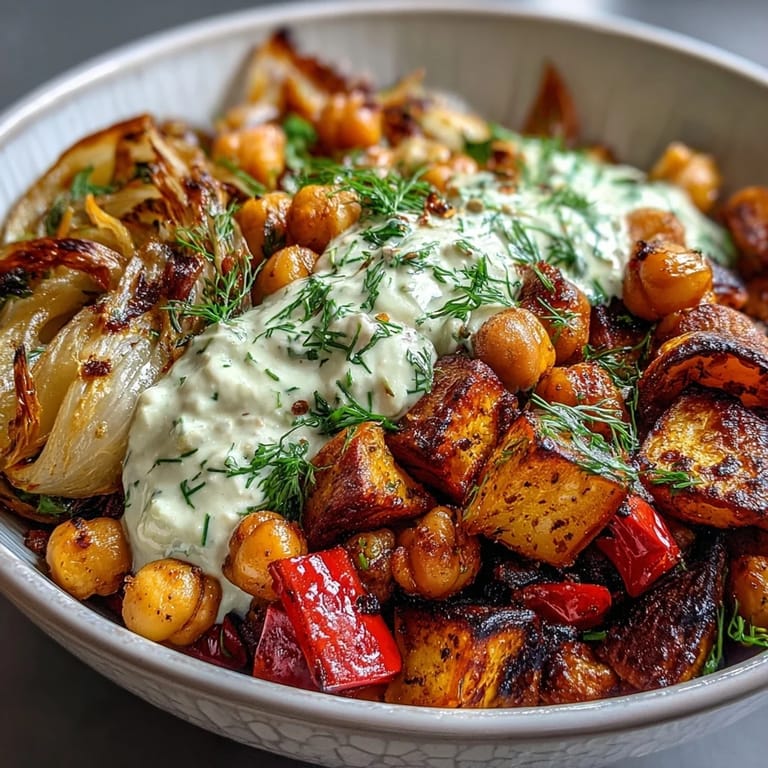
Pin There's something about roasted vegetables that transforms the ordinary into something worth slowing down for. I discovered this bowl on a Wednesday when my fridge looked like a sad advertisement for produce that needed rescuing—a red pepper, some potatoes, half an onion, and a can of chickpeas I'd been meaning to use. The kitchen filled with the kind of heat that made me crack open a window, and by the time everything came out of the oven, golden and caramelized, I understood why people get genuinely excited about vegetables. That creamy tzatziki underneath it all? Pure Mediterranean magic that made the whole thing feel intentional, not improvised.
Last summer I made this for a friend who'd been going through a rough patch, and she showed up looking exhausted. We sat on my porch with these bowls, and somewhere between the second and third bite, she actually laughed—not politely, but genuinely. That's when I realized this dish does something beyond nourishment; it quietly says, I'm taking care of myself, and somehow that matters. She asked for the recipe before leaving, and I knew she would.
Ingredients
- Chickpeas: These little protein powerhouses hold their shape beautifully when roasted and develop this almost nutty exterior that changes everything about the bowl.
- Red bell pepper: The sweetness that balances the earthiness—choose one that feels firm and has smooth skin for best roasting.
- Red onion: Slice it into wedges rather than dice so the layers stay intact and get those gorgeous caramelized edges.
- Potatoes: Cut them smaller than you think necessary because they need time to crisp up and get tender inside.
- Olive oil: Use something you actually like tasting because this isn't the place to hide behind inferior oil.
- Spice blend: This combination of paprika, oregano, dill, and garlic creates that Mediterranean foundation—don't skip the dill, it's the secret whisper in the background.
- Greek yogurt or plant-based alternative: The base of your sauce should be creamy and tangy; this is what makes tzatziki sing.
- Cashews: They blend into an almost invisible creaminess that makes this sauce luxurious without dairy heaviness.
- Fresh dill: The difference between a good sauce and one that tastes like the Mediterranean coast itself.
- Cucumber: Grating it is the key—you want those fine shreds that distribute throughout rather than chunks that pool moisture.
- Red wine vinegar: Just enough to brighten everything without making it sharp.
Tired of Takeout? 🥡
Get 10 meals you can make faster than delivery arrives. Seriously.
One email. No spam. Unsubscribe anytime.
Instructions
- Heat your oven and prep your vegetables:
- Get that oven to 400°F so it's ready when you are. While it heats, cut your potatoes into ¾-inch cubes, dice the bell pepper into bite-sized pieces, cut the red onion into wedges, and drain your chickpeas really well—moisture is the enemy of crispiness here.
- Create your spice masterpiece:
- In a small bowl, combine your paprika, basil, garlic powder, oregano, dill, parsley, salt, and pepper. This is your seasoning safety net—having it mixed beforehand means even coating and no missed flavor spots.
- Coat and spread:
- Toss everything on your baking sheet with olive oil and that spice blend until every piece looks evenly dressed. Spread it out in a single layer rather than piling it up—crowding the pan is how you steam instead of roast, and that's not what we're after.
- Roast with patience:
- Slide it in for 40 minutes, stirring halfway through so everything caramelizes evenly. You'll know it's ready when the potatoes are fork-tender and the edges are turning golden brown, almost crispy.
- Build your sauce while vegetables roast:
- Combine yogurt, cashews, tofu, and minced garlic in your blender and blend until absolutely smooth—this should look almost impossibly creamy. Transfer to a bowl and stir in grated cucumber (squeezed of excess moisture), fresh dill, red wine vinegar, salt, pepper, and lemon juice. Taste and adjust because your palate is the final authority.
- Assemble with intention:
- Spread a generous layer of tzatziki sauce on each plate or bowl—this is your flavor foundation. Top with the roasted vegetables and chickpeas while they're still warm so everything melds together.
 Pin
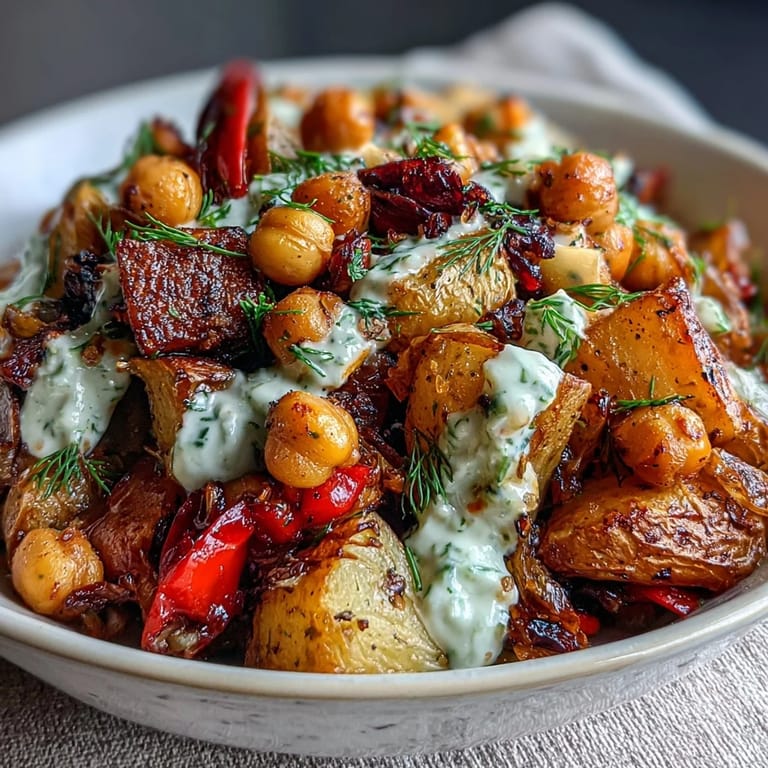
Pin There's a moment when you bite into this and taste the whole Mediterranean at once—the herb warmth, the cool creamy sauce, the textural contrast between crispy vegetables and tender insides. That's the moment this stops being just dinner and becomes something you remember.
Building Better Bowls
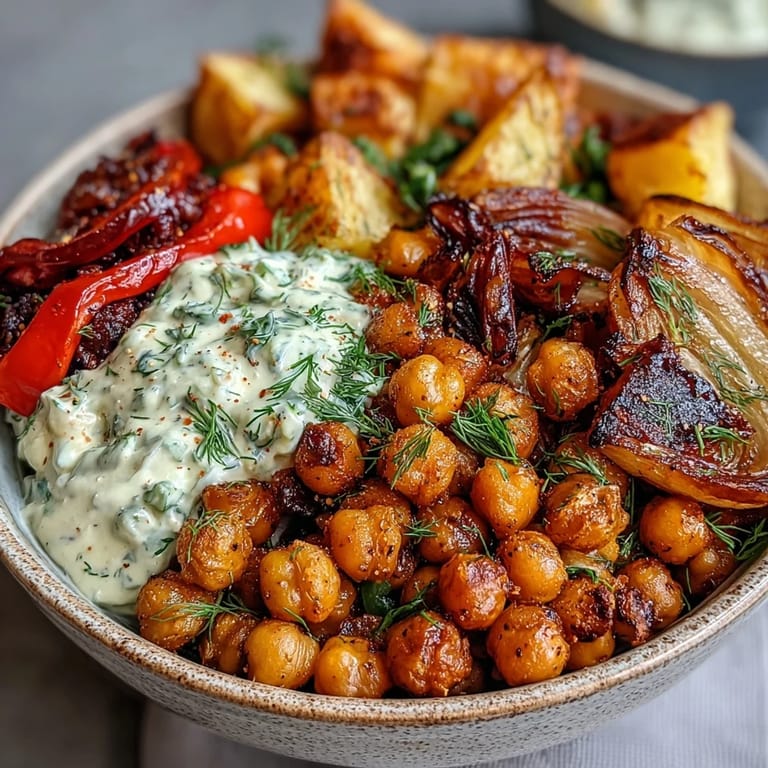
The architecture of this bowl matters more than you'd think. Starting with sauce on the bottom isn't just for aesthetics—it creates a flavor base that every bite builds on, and it keeps everything from drying out if you're eating it later. I learned this when I made it the traditional way first and then experimented, and the sauce-first method actually changed how the whole thing tastes. The vegetables sit in that cool, creamy cushion and somehow become more vibrant instead of less.
Sauce Science and Variation
Tzatziki isn't just a topping here—it's the reason people come back for seconds. The combination of cashews and tofu creates a texture that's impossible to achieve with yogurt alone, and it works beautifully for anyone avoiding dairy while still delivering that luxurious mouthfeel. I've tried this with all-yogurt sauce, and while it works, it's thinner and less substantial. The cashew-tofu version holds up better, tastes richer, and actually makes you feel like you're eating something thoughtfully constructed rather than hastily assembled.
Timing and Make-Ahead Strategy
One of the reasons I make this recipe constantly is that it actually improves when you let it sit. The spices deepen into the vegetables, the tzatziki flavors meld and become more integrated, and it stores beautifully for three days. I've eaten this straight from the fridge, reheated it gently, and cold as a salad—it works every way. Here's what matters most if you're planning ahead:
- Keep the tzatziki separate from the vegetables until you're ready to eat, or it'll eventually soften everything.
- Store the roasted vegetables in an airtight container, and they'll actually stay crispier than you'd expect.
- The sauce gets thicker as it sits, so thin it with a little lemon juice or water if needed when reheating or serving cold.
 Pin
Pin This bowl became my answer to the question, What can I eat that feels nourishing but also tastes like something I actually want? Make it once and it becomes the thing you make when you need to feed yourself well.
Recipe Questions
- → What vegetables work best for roasting in this bowl?
Potatoes, red bell peppers, and red onions provide a balanced texture and sweetness, caramelizing beautifully in the oven.
- → How can I make the tzatziki sauce creamier?
Blending yogurt with cashews and tofu creates a smooth, rich texture, while grated cucumber adds freshness without excess moisture.
- → Can this dish be prepared vegan?
Yes, use plant-based yogurt in the tzatziki to keep it creamy and dairy-free without compromising flavor.
- → What is the best way to season the vegetables?
A mix of paprika, dried basil, garlic powder, oregano, dill, and parsley provides aromatic Mediterranean flavors that enhance the roasted vegetables.
- → How long should the vegetables be roasted?
Roast at 400°F (200°C) for about 40 minutes, stirring halfway to ensure even caramelization and tenderness.
- → Are there suggested side dishes to serve with this bowl?
Warm pita bread, quinoa, or a fresh side salad complement the flavors and textures perfectly.