 Pin
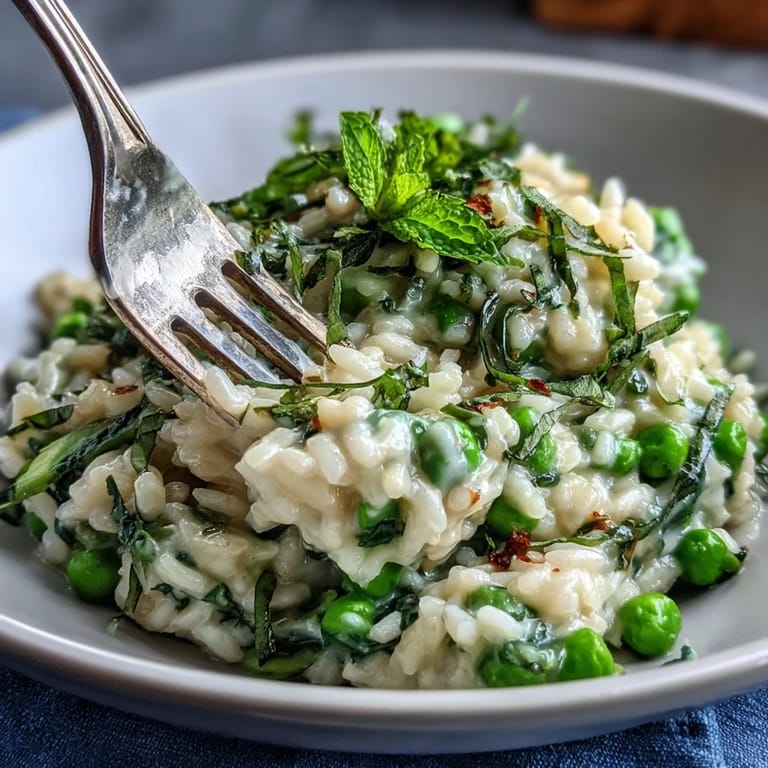
Pin There's something about the first warm days of spring that makes you crave something bright and creamy all at once. I discovered this risotto by accident, really—I had a handful of fresh peas from the farmers market and a bunch of mint threatening to take over my kitchen, and I thought, why not throw them into something comforting? The result was so unexpectedly silky and green-kissed that it became my go-to when I want to feel like spring is actually here, even if the weather hasn't quite caught up.
I made this for my sister on an April afternoon when she dropped by unexpectedly, and watching her face light up at the first bite reminded me why I cook at all. She's usually skeptical about anything that takes effort, but the combination of buttery rice, sweet peas, and that cool mint finish won her over completely. We ended up opening a bottle of wine and eating it slowly, talking for hours at the kitchen table.
Ingredients
- Fresh or frozen spring peas, 1 cup: These are the heart of the dish—if you can find them fresh at a farmers market in spring, grab them, though frozen ones work beautifully and sometimes taste fresher than the supermarket versions anyway.
- Arborio rice, 1 1/2 cups: This short-grain variety releases starch as it cooks, creating that signature creamy texture that makes risotto so irresistible.
- Vegetable broth, 4 cups: Keep it warm in a separate pot; adding cold broth to hot rice disrupts the cooking process and gives you a lumpy result instead of that silky finish.
- Dry white wine, 1/2 cup: The wine adds acidity and complexity—don't skip it or use cooking wine, as it makes a real difference in flavor.
- Unsalted butter, 3 tablespoons divided: You'll use some for the base and reserve the rest for the finish, where it creates that glossy, luxurious coating on the rice.
- Parmesan cheese, 1/2 cup grated: Grate it fresh if you can; pre-grated cheese has anti-caking agents that prevent it from melting smoothly into the risotto.
- Fresh mint leaves, 2 tablespoons finely chopped: Mint is the secret that transforms this from a standard risotto into something that tastes unmistakably of spring.
- Small onion, 1 finely chopped: This builds the foundational flavor—the sweetness of a well-cooked onion is what makes risotto taste so complete.
- Garlic, 2 cloves minced: One minute of cooking is all it needs, enough to release its flavor without turning bitter.
- Extra-virgin olive oil, 2 tablespoons: This and the butter create the silky base where the rice will eventually swim.
- Lemon zest, from 1 lemon optional: It's optional, but those bright flecks of zest bring an almost electric freshness that plays beautifully with the mint.
- Heavy cream, 1/4 cup optional: This is for those moments when you want to lean into pure indulgence, though the risotto is creamy enough without it.
- Salt and freshly ground black pepper, to taste: Season at the end when you can taste exactly what the risotto needs.
Tired of Takeout? 🥡
Get 10 meals you can make faster than delivery arrives. Seriously.
One email. No spam. Unsubscribe anytime.
Instructions
- Get your broth warm and ready:
- Pour your vegetable broth into a medium saucepan and let it heat over low heat—you want it simmering gently, never boiling, so it stays ready to add to the rice whenever you need it. This might sound fussy, but cold broth will shock the hot rice and interrupt its cooking, so this step actually matters.
- Build your flavor base:
- Heat olive oil and 2 tablespoons of butter in your large skillet over medium heat, then add the chopped onion and cook, stirring occasionally, until it turns soft and translucent—about 4 minutes. The kitchen will smell sweet and welcoming, which is how you know you're on the right track.
- Wake up the garlic:
- Add your minced garlic and let it toast for just 1 minute—you want it fragrant but not brown, which happens faster than you'd think. Burnt garlic tastes bitter, so set a mental timer or listen for when the smell shifts from sharp to sweet.
- Toast the rice:
- Stir in the Arborio rice and cook for 2 minutes, stirring constantly, until each grain is coated in the oil and butter and the edges start to turn slightly translucent. This toasting step coaxes out the nutty flavor in the rice and helps it absorb liquid more evenly.
- Add the wine:
- Pour in the white wine and stir until it's mostly absorbed, about 2 minutes—you'll see the rice glisten as the wine soaks in. The acidity of the wine works with the rice to create that creamy texture you're after.
- The patient dance of adding broth:
- This is the core of risotto-making: add one ladleful of warm broth and stir frequently until it's mostly absorbed before adding the next ladleful. Keep doing this for about 18 to 20 minutes, and you'll feel the rice gradually become creamier under your spoon.
- Bring in the peas:
- About 5 minutes before the rice is fully cooked, stir in the fresh or frozen peas and let them warm through and cook into the rice. They'll turn a deeper green and soften just enough to contribute their sweetness.
- The final magic:
- Remove the pan from heat and stir in the remaining tablespoon of butter, the grated Parmesan, the chopped mint, and the lemon zest if you're using it. If you have heavy cream, add it now too—the heat of the rice will melt everything into a glossy, luxurious coating.
- Rest and serve:
- Let the risotto sit for 2 minutes before serving—this resting period lets everything settle and come together, and the rice continues to absorb any remaining liquid. Taste, adjust the salt and pepper, and serve immediately while it's still warm and creamy, with a scatter of extra mint and Parmesan on top.
 Pin
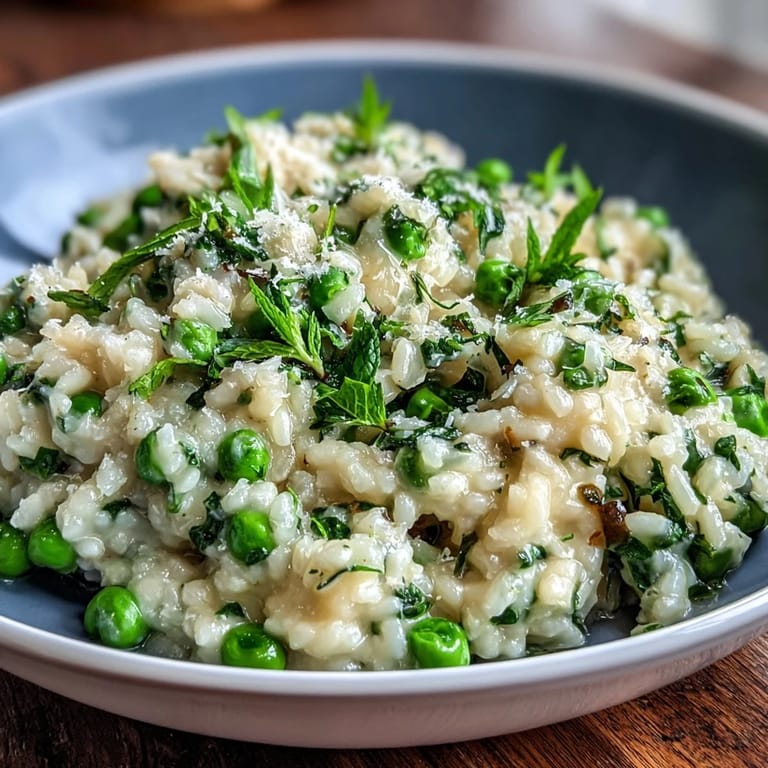
Pin My neighbor once told me that good risotto is like a relationship—it requires attention and presence, and you can't rush it if you want it to turn out right. I thought she was being dramatic until I actually paid attention instead of checking my phone, and suddenly I understood what she meant. There's something meditative about the repetitive stirring, the gradual transformation, the moment when you taste it and realize you've made something genuinely delicious with your own hands.
Why Spring Calls for This Dish
There's a reason risotto feels different in spring than it does any other season—it's because of dishes like this one that celebrate what the season is actually giving you. When you use fresh peas and fresh mint, suddenly risotto stops being a heavy, wintery comfort food and becomes something alive and forward-looking. The brightness cuts through the creaminess in a way that feels necessary, like your body is finally ready to shed the heaviness of winter cooking and embrace something more alive.
The Secret Life of Constant Stirring
People complain about the stirring, but I've come to love it—it's the one part of cooking where you're fully present, watching something transform in real time. Every stir releases more of the rice's natural starch, and you can actually see the shift from loose and watery to creamy and luxurious happening in front of you. It's the opposite of passive cooking, and honestly, that's partly why it feels so satisfying when you finally get to eat it.
Making It Work Year-Round
While this risotto tastes perfect in spring when both peas and mint are at their peak, you can absolutely make it work in other seasons by swapping in what's available—butternut squash and sage in autumn, roasted mushrooms and thyme in winter, summer corn and basil when those are in season. The technique stays exactly the same; only the final ingredients change to reflect what the market is offering you.
- If you want to add greens, stir in a handful of fresh spinach or arugula right at the end so it stays bright and tender instead of turning dark and wilted.
- Try toasting some pine nuts separately and scattering them on top for a contrast of texture that makes each bite more interesting.
- A squeeze of fresh lemon juice right before serving can brighten everything and make the mint taste even more alive.
 Pin
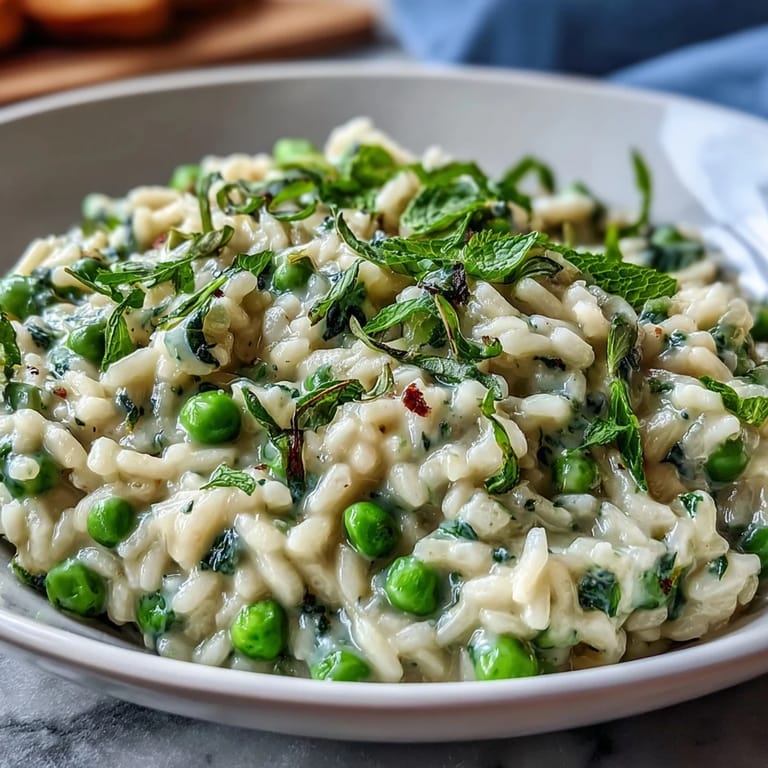
Pin This risotto is comfort and celebration all at once, the kind of dish that makes you feel capable in the kitchen and generous toward the people you're cooking for. Serve it with a crisp white wine and a side salad, and you've got something that tastes like spring actually happened.
Recipe Questions
- → Can I use frozen peas instead of fresh?
Yes, frozen peas work well and can be added directly during the final cooking stages for convenience and flavor retention.
- → How do I achieve the perfect creamy risotto texture?
Gradually adding warm broth while stirring frequently allows the rice to release starch, creating a smooth and creamy texture.
- → Is it possible to make this dish vegan-friendly?
Use plant-based butter and cheese alternatives, and omit the heavy cream to maintain creaminess while keeping it vegan.
- → What wine pairs best with this risotto?
A crisp Sauvignon Blanc or light Pinot Grigio complements the fresh pea and mint flavors beautifully.
- → Can I add other vegetables to enhance the dish?
Adding baby spinach or toasted pine nuts provides extra texture and flavor without overpowering the delicate balance.