 Pin
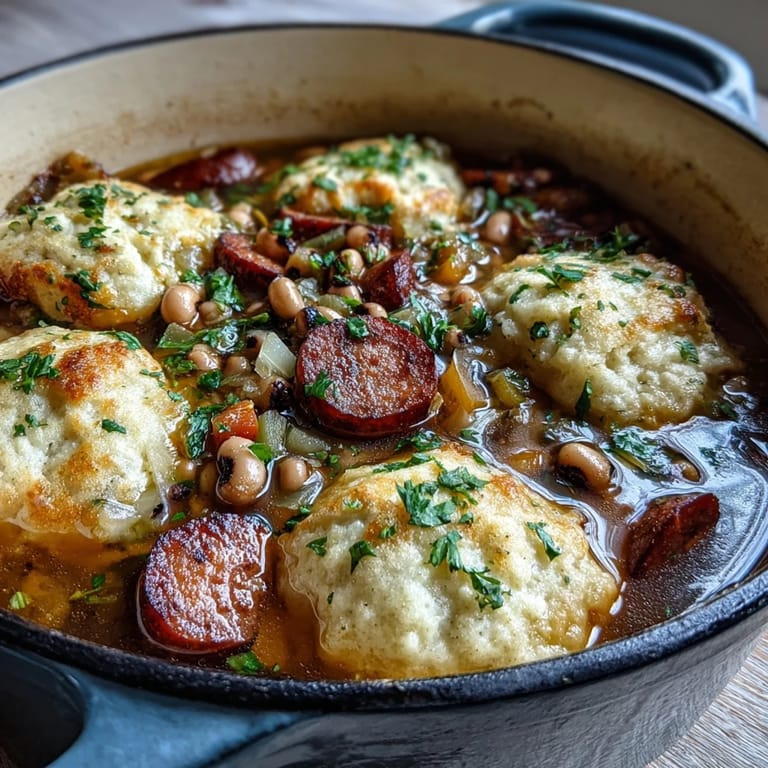
Pin My neighbor stood at my kitchen door on a gray February afternoon with a pot of something steaming, apologizing because she'd made too much. What she'd brought was this: a deep bowl of black-eyed peas cooked down with sausage until the broth turned rich and dark, crowned with these pillowy dumplings that had soaked up all that savory goodness. I watched her technique that day, the way she didn't fuss over the dumplings once they hit the pot, just let them rise quietly under the lid. That meal became my template for comfort, especially on mornings when the kitchen felt too quiet.
I made this for my book club years ago, and it became the reason people showed up early. Someone asked for thirds, which never happens. The combination of earthy black-eyed peas, smoky sausage, and that unexpected sweetness from the cornmeal dumplings sparked a conversation about soul food that lasted through dessert.
Ingredients
- Smoked sausage (12 oz): This is where the backbone of your flavor comes from—look for good quality smoked sausage with real smoke, not just liquid smoke. I learned to slice it thick enough to brown properly, thin enough to cook through.
- Black-eyed peas (2 cans): Draining and rinsing them removes the tin taste and excess starch, which kept catching me off guard until someone pointed it out.
- Yellow cornmeal (1/2 cup): This brings a gentle sweetness and helps create that tender, slightly gritty texture in the dumplings that feels authentic.
- Buttermilk (3/4 cup): Don't substitute regular milk—the acidity reacts with the baking soda to create lift and tang that matters.
- Chicken broth (4 cups): Low-sodium lets you control the salt and prevents the stew from becoming too aggressive as it simmers.
- Fresh vegetables (onion, garlic, celery, carrot, bell pepper): This vegetable base is your aromatics—they build flavor depth that makes the stew taste like someone's been tending it for hours.
- Thyme and smoked paprika: These seasonings whisper rather than shout, giving the broth a quiet complexity that makes people ask what the secret ingredient is.
Tired of Takeout? 🥡
Get 10 meals you can make faster than delivery arrives. Seriously.
One email. No spam. Unsubscribe anytime.
Instructions
- Brown the sausage first:
- Heat oil in your pot until it shimmers, then add the sliced sausage and let it sit undisturbed for a minute or two before stirring—this is how you get that caramelized edge that makes everything taste deeper. You'll smell the smoke releasing, and that's exactly what you want.
- Build your aromatic base:
- Once the sausage has color, add onion, garlic, celery, carrot, and bell pepper, stirring occasionally until the onion turns translucent and the kitchen smells like home. This slow sauté (5 to 7 minutes) makes the vegetables soft enough to almost disappear into the broth while their sweetness remains.
- Create the stewing liquid:
- Pour in the broth, then add the drained peas, thyme, smoked paprika, black pepper, cayenne if you're feeling bold, the bay leaf, and salt to taste. Bring everything to a boil so you see those active bubbles, then reduce the heat and let it simmer uncovered for 25 minutes—this gives the flavors time to marry without reducing too much.
- Prepare the dumpling batter while the stew cooks:
- Whisk together flour, cornmeal, baking powder, baking soda, and salt in a separate bowl, then stir in melted butter and buttermilk just until barely combined—overmixing develops gluten and makes the dumplings tough and dense. The batter should look shaggy and loose, almost like it hasn't come together, and that's perfect.
- Season and adjust:
- After the stew has simmered, fish out that bay leaf and taste a spoonful of broth. Add more salt if needed, or a pinch more cayenne if you want heat—this is your moment to own the flavor.
- Add the dumplings and steam them gently:
- Drop spoonfuls of batter (about 2 tablespoons each, which I do by using two spoons) directly onto the simmering stew, spacing them so they have room to puff. Cover the pot, lower the heat, and do not—I cannot stress this enough—do not lift that lid for 20 to 25 minutes, because the steam is doing all the work and letting it escape ruins everything.
- Finish with a gentle serving:
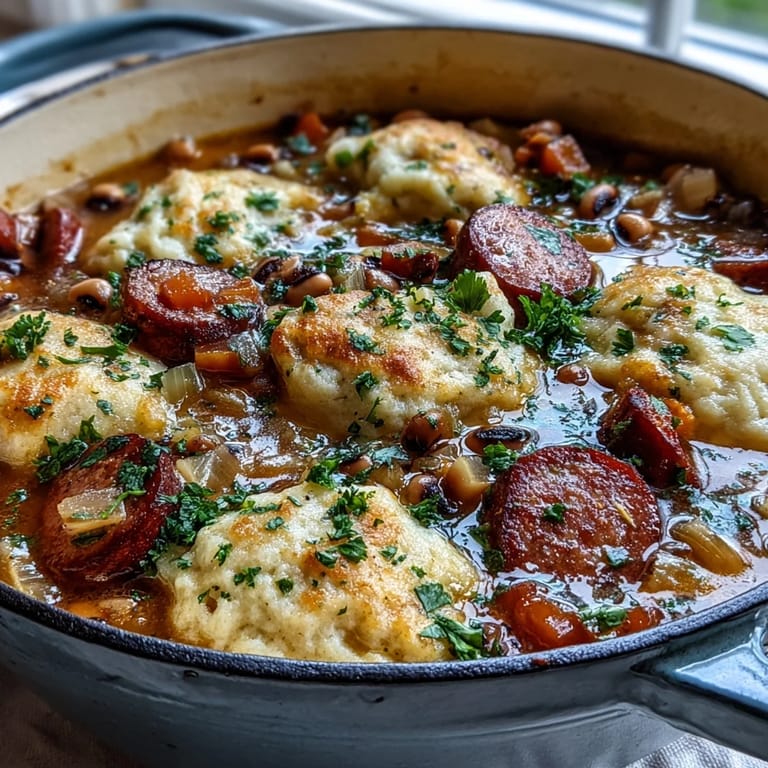
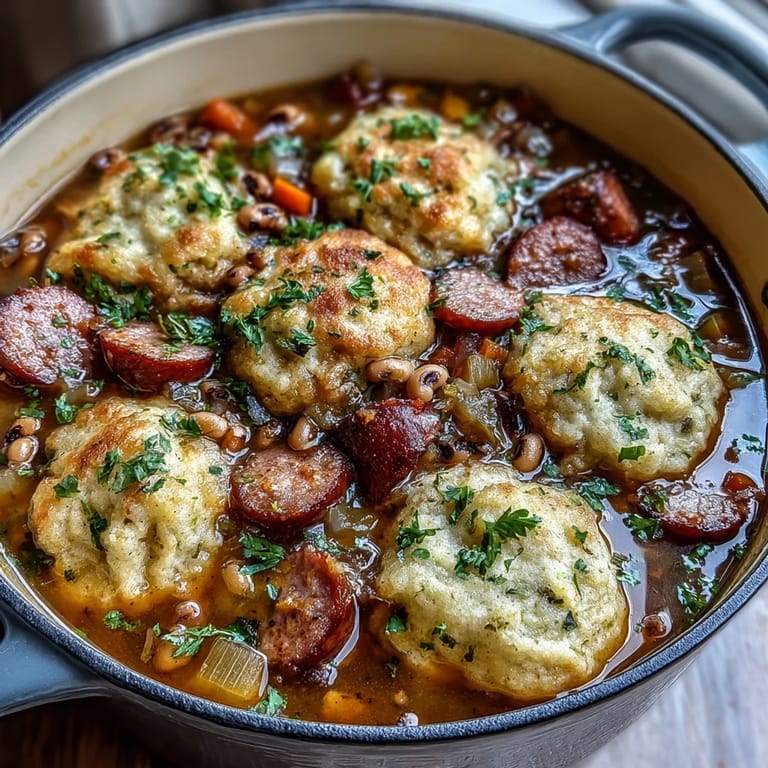
- When you finally lift the lid, you'll see dumplings that have puffed up and absorbed the broth, their edges slightly darkened and crispy. Ladle everything into bowls, garnish with fresh parsley if you have it, and let people come to the table.
 Pin
Pin There's a moment late on cold nights when I ladle this into a bowl and sit by the window with the stew steaming, watching the world quiet down. This dish became less about feeding myself and more about giving myself permission to slow down, to sit with something warm and old-fashioned while everything outside moves too fast.
Playing with Heat and Spice
The cayenne in this recipe is optional because I learned that not everyone wants their comfort food to surprise them with heat. But if you do, a quarter teaspoon adds a gentle warmth that creeps up toward the end of each spoonful—almost undetectable until it's there. I've also added a splash of hot sauce right at the table for people who want to customize their own bowl, which turns out to be one of those small courtesies that makes people feel cared for.
Sausage Choices and Substitutions
Smoked sausage is traditional, but I've made this with andouille when I wanted deeper, spicier notes, and with kielbasa when I was out of everything else and it still turned out beautiful. Each brings its own personality to the broth—andouille adds a Creole swagger, kielbasa brings a gentler smoke. For vegetarian versions, omit the sausage entirely, use vegetable broth instead of chicken, and bump up the smoked paprika to two teaspoons so the stew doesn't lose its soulful depth.
Make-Ahead Wisdom and Storage
The stew base (everything before the dumplings) actually improves after a day in the refrigerator, so you can make it ahead and reheat it gently before adding fresh dumpling batter. The batter itself doesn't keep well, so make it fresh and drop it in just before serving. Leftovers stay good for three days in the refrigerator, though the dumplings will soften—I don't mind that because they soak up the broth like bread in soup, but you might prefer to eat it the same day for the crispest texture.
- Store the stew base and dumplings separately if you're meal prepping for the week.
- Reheat gently on the stovetop over low heat, adding a splash of broth if it seems thick.
- Frozen dumplings don't really work here, so make this one when you're ready to eat it fresh.
 Pin
Pin This is the kind of dish that fills you up and somehow also feels nourishing in ways that go beyond nutrition. Serve it hot, with good company, and watch how quickly people come back for more.
Recipe Questions
- → Can I make this dish vegetarian?
Yes, simply omit the smoked sausage and use vegetable broth instead of chicken broth. Add extra smoked paprika or liquid smoke to maintain the depth of flavor that sausage typically provides.
- → What type of sausage works best?
Andouille or kielbasa are excellent choices for this dish. Any smoked sausage with good flavor will work well. The smokiness of the sausage enhances the overall depth of the stew.
- → Can I use dried black-eyed peas instead of canned?
Yes, soak 1 cup dried black-eyed peas overnight, then cook them in fresh water for about 45-60 minutes until tender before adding them to the stew. You may need to adjust the simmering time accordingly.
- → Why shouldn't I lift the lid while dumplings cook?
Lifting the lid releases the steam that's essential for cooking the dumplings. The trapped steam creates a moist environment that allows the dumplings to puff up and cook through evenly.
- → How do I store leftovers?
Store in an airtight container in the refrigerator for up to 3-4 days. Note that the dumplings will absorb some liquid as they sit, so you may need to add a splash of broth when reheating on the stovetop.
- → Can I make the dumplings gluten-free?
Yes, substitute the all-purpose flour with a 1:1 gluten-free flour blend. Ensure your baking powder is gluten-free as well. The texture may be slightly denser but still delicious.