 Pin
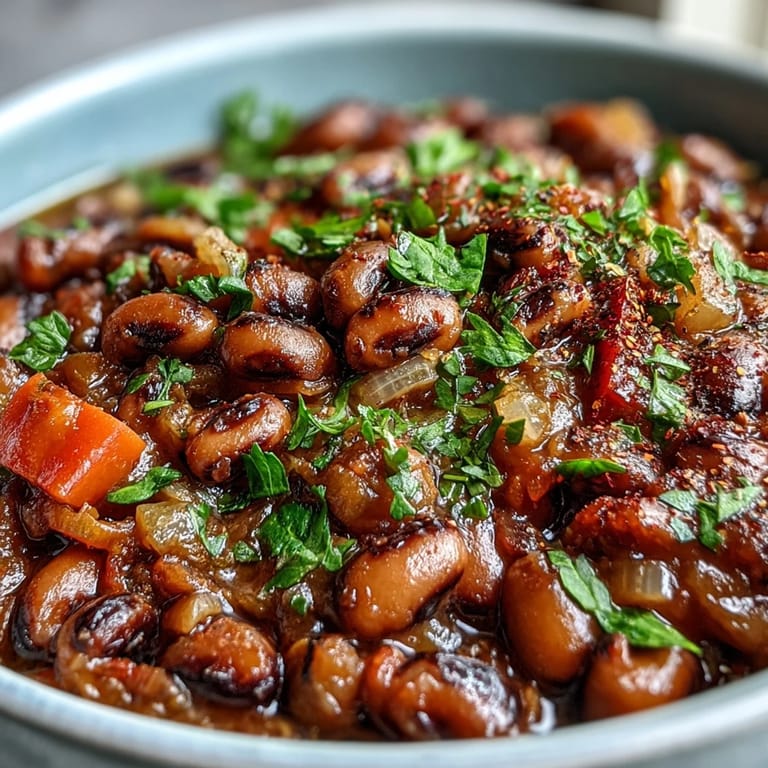
Pin My neighbor Maria showed up at my door one cold afternoon with a Tupperware container of black-eyed peas that her grandmother had been simmering all day, and I was immediately hooked by how the kitchen smelled like oregano and olive oil had somehow merged into one golden, comforting cloud. She laughed when I asked for the recipe, insisting it wasn't fancy or complicated, just patience and time and a slow cooker doing the heavy lifting. That evening I adapted her version to my own kitchen, and now whenever I make it, I can almost hear her saying you see how easy this is in that warm, knowing way of hers. It became my go-to dish for those nights when I want something substantial but don't have the energy to stand at the stove, and it's taught me that sometimes the best meals are the ones that practically cook themselves.
I made this for a small dinner party last spring when my friend insisted on bringing her partner, who'd mentioned being vegan almost in apology, and I realized I had absolutely no stressful cooking to do because this dish was already perfect as it was. Watching her go back for seconds while everyone else did the same made me realize how often we overcomplicate things trying to impress people, when sometimes the simplest, most honest food is exactly what lands. That's when this recipe shifted from just being something I liked to make into something that felt genuinely meaningful in my kitchen.
Ingredients
- Dried black-eyed peas (2 cups, about 400 g): Rinsing and picking them over takes two minutes but removes any hidden stones or dust, and dried peas are far more economical than canned while delivering a better, firmer texture that holds up through the long cook.
- Large onion (1), finely chopped: This is your aromatic foundation, and chopping it fine helps it break down into the sauce rather than staying as distinct pieces.
- Garlic (3 cloves), minced: Raw garlic mellows beautifully during the six hours of cooking, becoming sweet and almost creamy rather than sharp or aggressive.
- Carrots (2), diced: They add natural sweetness and body to the broth, and their bright orange color makes the finished dish feel more alive and appetizing.
- Red bell pepper (1), diced: This brings both sweetness and a slight fruity note that complements the earthiness of the peas without overwhelming it.
- Canned diced tomatoes (1 can, 400 g), undrained: Using them with their juices means you're not wasting any of that acidic, tangy flavor that helps balance the richness.
- Tomato paste (2 tablespoons): This concentrated umami bomb deepens the flavor considerably, but it needs to be stirred in well to avoid settling at the bottom.
- Vegetable broth (4 cups or 1 liter): The quality here matters more than you might think, since it's literally becoming your sauce, so taste yours first if you have a choice.
- Extra virgin olive oil (1/3 cup or 80 ml): This is your luxury ingredient, the one that makes this feel Mediterranean and tastes like care, so don't skimp or substitute with regular oil.
- Dried oregano (2 teaspoons): Oregano is the soul of Greek cooking, and the slow cooker infuses it throughout rather than letting it stay on the surface.
- Smoked paprika (1 teaspoon): Just enough to add depth and a whisper of smokiness without making anyone ask what that flavor is.
- Ground cumin (1/2 teaspoon), optional: I add this when I want the dish to feel slightly earthier, more Moroccan-leaning, but it's genuinely optional and the dish is perfect without it.
- Bay leaf (1): This perfumes the entire pot with a subtle herbal note that you don't consciously taste but would definitely notice missing.
- Salt and freshly ground black pepper, to taste: Add conservatively at first since the broth brings salt too, and you can always adjust at the end when flavors have concentrated.
Tired of Takeout? 🥡
Get 10 meals you can make faster than delivery arrives. Seriously.
One email. No spam. Unsubscribe anytime.
Instructions
- Get everything into the slow cooker:
- Place your rinsed black-eyed peas, chopped onion, minced garlic, diced carrots, and red bell pepper directly into the slow cooker bowl without any fussing or pre-cooking. This is where most of the prep happens, and once you've done this chopping, the work is essentially done.
- Build the flavor base:
- Pour in the canned tomatoes with their liquid, stir in the tomato paste so it dissolves evenly, then add the vegetable broth and that beautiful olive oil. Add the oregano, smoked paprika, cumin if you're using it, the bay leaf, and a reasonable pinch of salt and pepper, then stir everything until it looks cohesive and nothing is clumping at the bottom.
- Let time do the work:
- Cover the slow cooker and set it to low for six to seven hours, which means you can ignore it almost completely while the heat slowly softens those peas and melds all the flavors into something golden and integrated. Resist the urge to peek too often because each time you lift the lid, heat escapes and cooking time increases slightly.
- Finish and taste:
- Fish out the bay leaf and give the whole pot a gentle stir, then taste a spoonful and adjust your salt and pepper to your preference. The peas should be tender enough to squish between your tongue and the roof of your mouth but not so soft they're mushy.
- Serve it warm:
- Ladle into bowls and top with chopped fresh parsley, crumbled feta if you're not keeping it vegan, and a wedge of lemon to squeeze over just before eating. The brightness of the lemon at the very end is the magic touch that lifts everything.
 Pin
Pin There was an afternoon when my daughter came home from school exhausted and overwhelmed by something she wouldn't talk about, and I realized this stew was already waiting in the slow cooker from this morning, still hot and ready, and watching her sit down and eat three bowls without speaking while something in her shoulders gradually loosened reminded me that food doesn't have to be complicated to do its real job. That's the moment this stopped being just a recipe I liked and became something I understood the true purpose of.
When You Want It Thicker
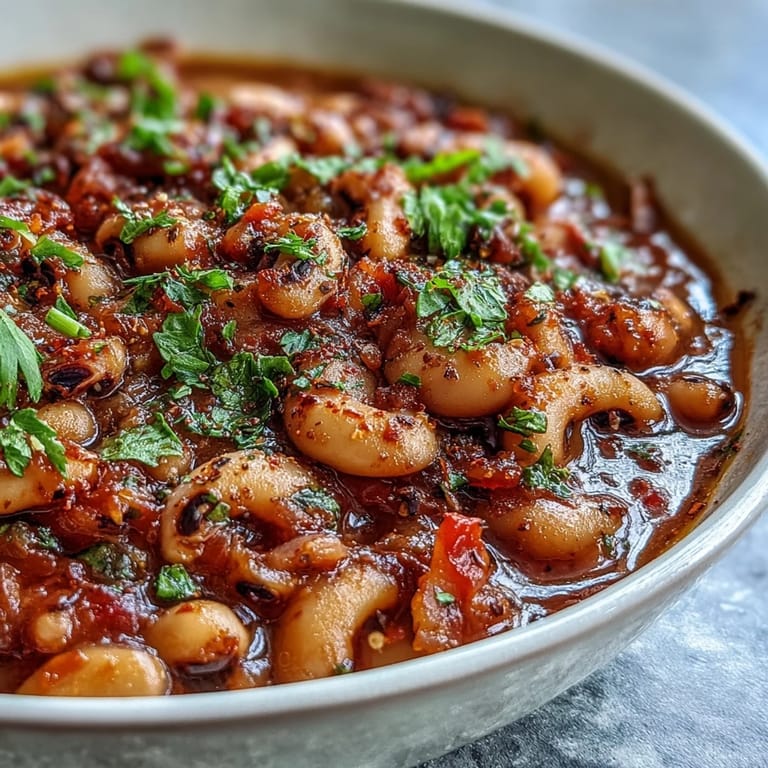
If you prefer your stew less brothy and more stew-like, remove the lid during the final thirty minutes of cooking and let some of the liquid evaporate, which concentrates everything and gives you more of a sauce-to-pea ratio. The heat still low, the liquid just gently reduces without the peas breaking apart, and you end up with something that clings to your spoon rather than sliding around in the bowl.
Adding Greens Without Losing Anything
Spinach or kale stirred in during those final thirty minutes adds nutrition and color without adding work or overwhelming the flavors that are already developed and harmonious. The heat is gentle enough that the greens will wilt and integrate rather than turning dark and bitter, and the earthiness of the greens actually deepens the oregano-forward flavor profile you've built. I've found that kale holds its texture better if you tear it into smaller pieces first, while spinach can go in almost as is.
Serving Ideas That Make It Feel Like Dinner
This dish is complete and satisfying on its own, but there's something about pairing it with crusty bread or spooning it over rice that transforms it from a weeknight meal into something that feels intentional and hospitable. The bread absorbs all the golden broth at the bottom, and the rice becomes infused with all those Mediterranean flavors, turning what could be a simple bowl into something almost luxurious in its generosity.
- Serve alongside warmed crusty bread for dipping into the rich broth and soaking up every last bit of flavor.
- Spoon over fluffy white rice or creamy feta cheese polenta to make it even more substantial and stretchy enough for seconds.
- A crisp Sauvignon Blanc or Greek Assyrtiko wine pairs beautifully, cutting through the richness with acidity while honoring the Mediterranean roots.
 Pin
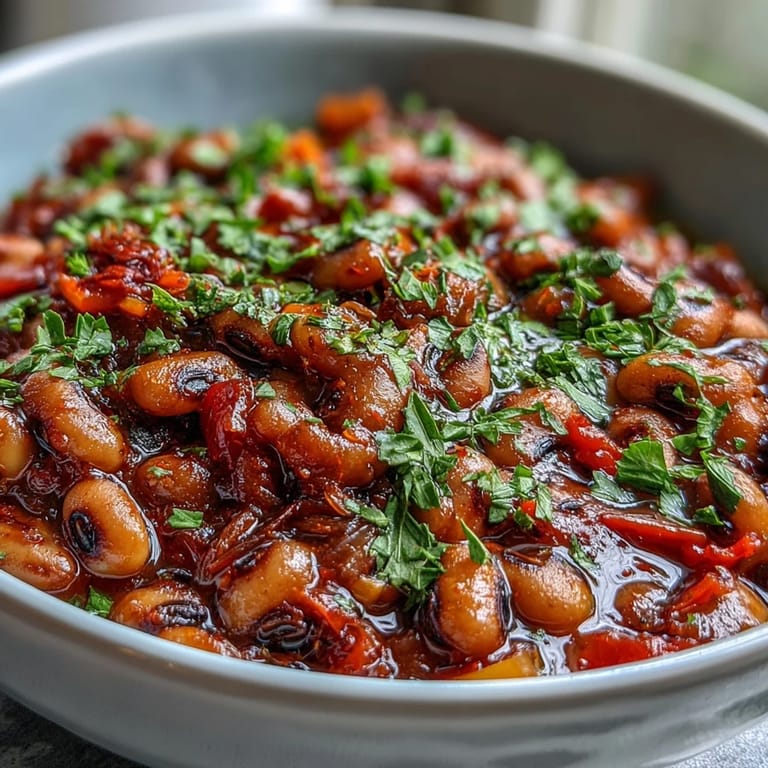
Pin This is the kind of dish that quietly becomes a cornerstone of your cooking life, the one you reach for when you're tired or sad or simply hungry for something that tastes like care. It's humble enough to feel achievable and complex enough to taste like you spent hours thinking about every detail.
Recipe Questions
- → Do I need to soak black-eyed peas before cooking?
No soaking required. The slow cooker method works perfectly with dried black-eyed peas. Just rinse them thoroughly and remove any debris before adding to the cooker.
- → Can I use canned black-eyed peas instead?
Yes, you can substitute canned beans. Reduce cooking time to 2-3 hours on low since they're already tender. Adjust liquid as needed since canned peas require less broth.
- → What makes this dish Greek-style?
The Mediterranean combination of olive oil, oregano, tomatoes, and optional feta creates classic Greek flavors. Smoked paprika adds depth while cumin provides earthy notes common in Greek cuisine.
- → How long do leftovers keep?
Store in an airtight container in the refrigerator for 4-5 days. The flavors actually develop and improve over time. Reheat gently on the stove or in the microwave.
- → Can I freeze this dish?
Absolutely. Portion cooled leftovers into freezer-safe containers for up to 3 months. Thaw overnight in the refrigerator before reheating. The texture remains excellent after freezing.
- → What other vegetables can I add?
Spinach or kale work beautifully added in the last 30 minutes. Celery, zucchini, or eggplant can be added with other vegetables at the start for extra heartiness and nutrition.