 Pin
Pin My grandmother used to say that black-eyed peas on New Year's Day weren't just tradition—they were insurance, a small edible promise that the year ahead would bring good fortune and full bellies. Years later, I realized she was onto something deeper: this humble dish has a way of turning a simple January first into something ceremonial, something that tastes like hope mixed with smoke and earth. When I started making this version with smoked turkey instead of the heavier cuts, something clicked—it felt lighter but no less substantial, honest in a way that made me want to cook it year-round.
I made this for the first time during a particularly chaotic January when three friends showed up at my door needing warmth and comfort. My kitchen was half unpacked, my pots were scattered, but I had a bag of black-eyed peas and smoked turkey in the freezer. By the time that pot was bubbling away, everyone had settled in, leaning against counters, talking in that easy way people do when they're genuinely tired and grateful. We ate it straight from bowls standing up, and somehow it tasted better than any sit-down meal I'd planned that month.
Ingredients
- Black-eyed peas (1 pound, dried): Rinse and sort these before cooking—you'd be surprised how often a small stone hides in there, and biting down on it is the opposite of festive.
- Smoked turkey wings or drumsticks (1 pound): The smoke is the backbone here; it whispers through the entire pot without overpowering the earthiness of the peas.
- Onion, celery, and carrot (the holy trinity): These three chopped and softened first build the flavor foundation that makes everything taste intentional.
- Garlic (3 cloves, minced): Don't skip the mincing—pieces are too aggressive here; you want garlic that dissolves into the broth like it was always meant to be there.
- Low-sodium broth and water (6 cups and 2 cups): The balance matters; too much broth and the peas taste like soup, too little and they're stodgy.
- Smoked paprika (1 teaspoon): This is what makes people ask what your secret ingredient is; it's gentle but unmistakable.
- Thyme, bay leaf, and black pepper: Together these create a subtle backbone of old-fashioned kitchen wisdom without any one flavor screaming louder than the others.
- Olive oil (2 tablespoons): Just enough to coat your vegetables and coax out their sweetness without making the final dish feel heavy.
Tired of Takeout? 🥡
Get 10 meals you can make faster than delivery arrives. Seriously.
One email. No spam. Unsubscribe anytime.
Instructions
- Build your flavor base:
- Heat olive oil in a large pot over medium heat and add your chopped onion, celery, carrot, and minced garlic. You'll know you're ready to move forward when the vegetables soften and the kitchen smells like something good is starting to happen—about five to six minutes.
- Combine everything:
- Add the smoked turkey, rinsed black-eyed peas, bay leaf, smoked paprika, thyme, red pepper flakes if you're using them, black pepper, broth, and water. Give it a good stir so nothing gets stuck to the bottom, and you'll see the mixture start to take on a beautiful dark color.
- Let time do the work:
- Bring everything to a boil, then lower the heat and let it simmer uncovered for sixty to seventy-five minutes. As it cooks, skim off any foam that rises to the surface—this is one of those small gestures that keeps the dish clean and clear.
- Shred and return the turkey:
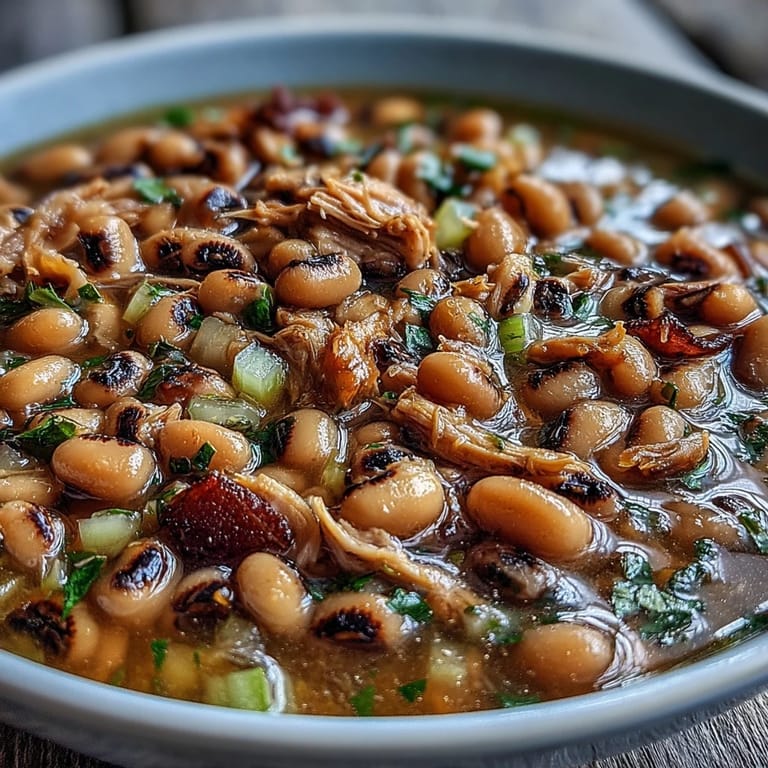
- Once the peas are tender enough to break between your fingers, pull the turkey out and let it cool just enough to handle. Shred the meat from the bones, discard the skin and bones, and return just the meat to the pot where it belongs.
- Taste and adjust:
- This is the moment when the dish becomes yours—taste it, add salt if needed, remove the bay leaf, and consider whether it wants another whisper of heat or spice. Trust your instinct here.
- Serve with intention:
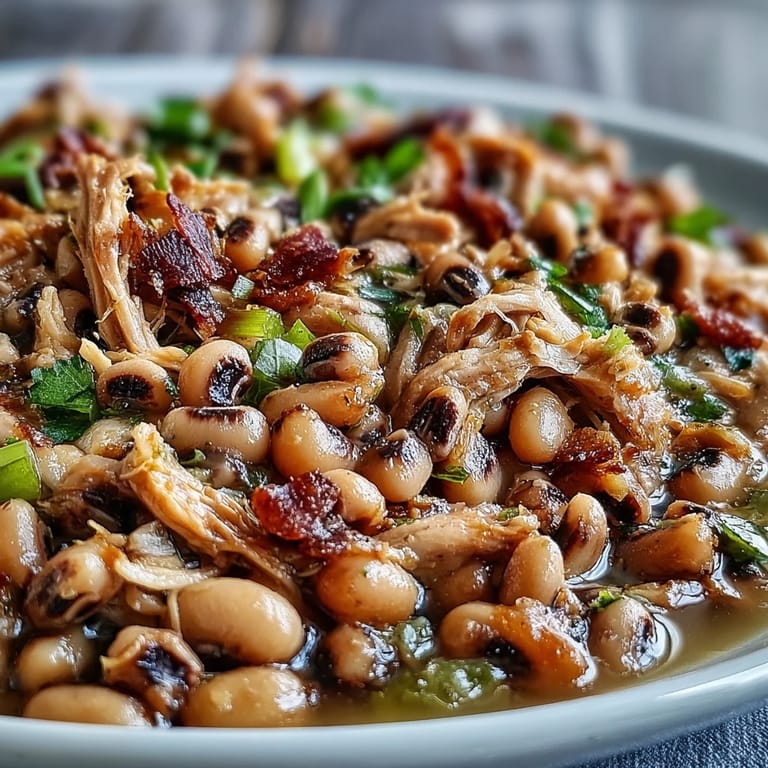
- Ladle it into bowls, add fresh parsley if you have it, a dash of hot sauce if you're feeling it, and let people come to the table.
 Pin
Pin There's something about serving this dish that feels like you're handing someone permission to rest, to eat something that tastes like it was made with patience instead of shortcuts. The first time a friend told me this version helped her feel better after a rough week, I understood why my grandmother made this every January—it's not just about luck or tradition, it's about feeding people something that says you have time for them.
The Story Behind Black-Eyed Peas
Black-eyed peas carry history in every bite—a crop that sustained through hard seasons, a dish that shows up on tables across the South with the kind of quiet importance usually reserved for prayer. Using smoked turkey instead of traditional pork is a way of honoring that legacy while making room for different bodies and different choices at the same table. The smoke does what the traditional fat used to do: it carries flavor through every component of the dish and makes eating it feel ceremonial.
Pairing and Serving Ideas
Serve this over steamed white rice or brown rice to catch all the broth, or alongside cornbread still warm from the oven for that textural contrast that makes eating more interesting. I've also ladled it over crispy fried polenta and watched people's faces light up at the combination. Some of my best meals have come from bringing this pot to the table with cornbread, hot sauce, and whatever greens I've cooked that day—let people build their own plate.
Variations and Flexibility
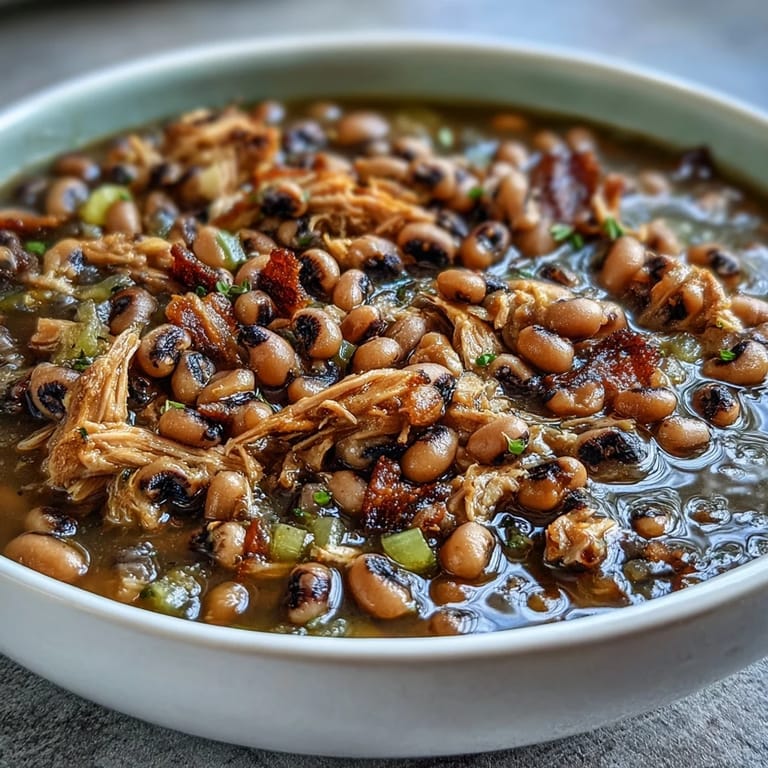
This recipe is forgiving in ways that matter—you can add a diced bell pepper or two for brightness, a splash of liquid smoke if you want even more depth, or substitute smoked chicken for something lighter. For vegetarian guests, the smoked paprika and liquid smoke keep the flavor profile intact even without the turkey. The flexibility is the point; this dish should adapt to who's at your table and what you have on hand, not the other way around.
- A diced bell pepper added with your other vegetables brings sweetness that balances the smoke beautifully.
- Liquid smoke is your friend if you want to deepen the flavor or make a vegetarian version that doesn't taste like it's missing anything.
- Leftovers keep for days and honestly taste better the next day once all the flavors have gotten to know each other.
 Pin
Pin This dish has taught me that the most nourishing meals are the ones made without rushing, the ones that fill a room with their presence before they ever reach a plate. Make this with the kind of attention that says the people eating it matter, and everything else will follow.
Recipe Questions
- → Do I need to soak black-eyed peas before cooking?
No soaking is required for this preparation. The dried peas cook directly in the broth and water, becoming tender after 60–75 minutes of simmering. This method saves time while still achieving perfectly tender peas.
- → Can I make this vegetarian?
Absolutely. Simply omit the smoked turkey and use vegetable broth instead of chicken broth. Add extra smoked paprika or a splash of liquid smoke to maintain that characteristic smoky flavor that makes this dish special.
- → What cuts of smoked turkey work best?
Smoked turkey wings or drumsticks are ideal because they contain enough connective tissue and fat to infuse the broth with rich flavor. These cuts become tender during cooking and easily shred into bite-sized pieces.
- → How should I serve black-eyed peas with smoked turkey?
Serve hot over steamed white or brown rice to soak up the flavorful broth. Cornbread makes an excellent side for soaking up the liquid. Garnish with fresh parsley and hot sauce for added brightness and heat.
- → How long do leftovers keep in the refrigerator?
Store cooled leftovers in an airtight container for up to 4–5 days. The flavors continue to develop, often tasting even better the next day. Reheat gently on the stove, adding a splash of water or broth if needed.
- → Can I use canned black-eyed peas instead of dried?
Yes, rinse and drain about 4 cans (15 ounces each) of black-eyed peas and add them during the last 20–30 minutes of cooking. This reduces cooking time significantly while still producing a delicious result.