 Pin
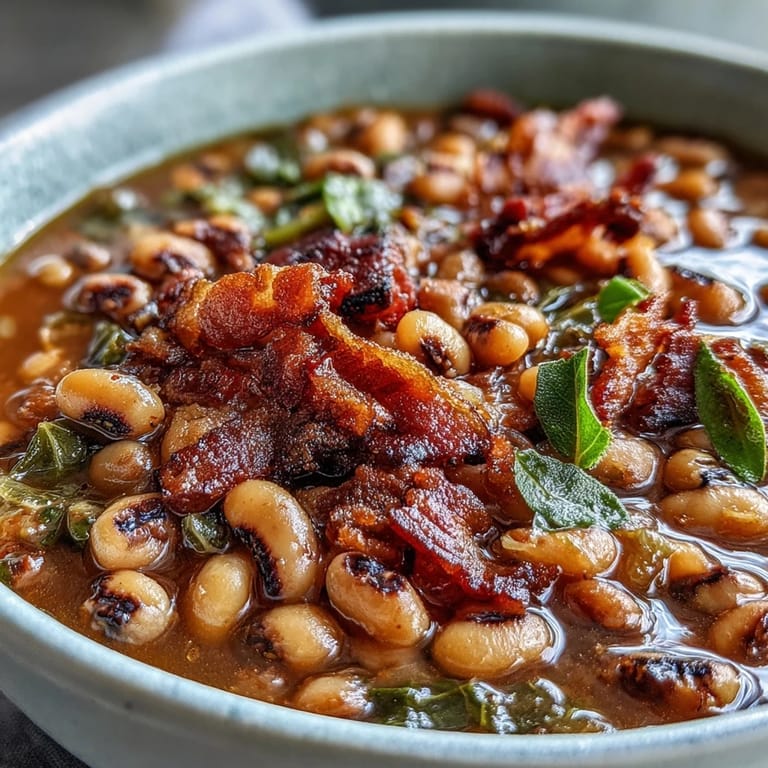
Pin My uncle swears by the smell of bacon fat hitting hot cast iron as the true beginning of any proper meal, and when he makes his big pot of Texas black-eyed peas, that's exactly where the magic starts. Years of watching him work through that first step taught me that you're not just cooking bacon—you're building the foundation for everything that follows. The Rotel tomatoes, jalapeños, and smoky spices are all just waiting for that rendered fat to carry their flavors deep into each tender pea. This isn't fussy food; it's the kind of dish that makes people linger at the table, asking for thirds.
I made this for a potluck once where I was nervous about contributing something that felt substantial enough, and I watched people go back for seconds while the cornbread went untouched on the other table. That moment taught me something about confidence in what you're serving—this dish doesn't apologize for itself. The combination of smoky, spicy, and deeply savory just works, and it somehow feels like home cooking even if you're making it for the first time.
Ingredients
- Dried black-eyed peas (1 pound): Rinsing and sorting these removes dust and any odd bits, and it's worth the minute it takes because you'll taste the difference in the final texture.
- Thick-cut bacon (8 ounces): Don't skip the thickness here; thin bacon crisps into nothing while thick-cut pieces stay substantial and add real heft to each spoonful.
- Yellow onion (1 large): Finely chopping it means it melts into the pot rather than staying as distinct pieces, building a subtle sweetness that balances the heat.
- Garlic (4 cloves): Minced fresh garlic gives you that sharp, alive quality that no powder can replicate.
- Jalapeños (2): Seeding them reduces heat slightly, but leaving a few seeds if you like spice gives you control over the final kick.
- Rotel diced tomatoes with green chilies (2 cans): Don't drain these—the juice carries all the flavor and helps create the creamy consistency you're after.
- Low-sodium chicken broth (6 cups): Low-sodium lets you control the salt and taste the actual pea flavor instead of broth dominance.
- Water (2 cups): This dilutes the broth slightly so the peas can absorb liquid evenly without becoming oversalted.
- Chili powder (2 teaspoons): This is your main spice player, so use a good quality one that smells warm and slightly smoky.
- Smoked paprika (1 teaspoon): This ingredient is what makes people ask if there's more bacon in here than you actually used.
- Cumin (1 teaspoon): A little goes a long way with cumin; it adds earthiness without overwhelming the dish.
- Black pepper and salt: Start conservative and taste as you go, especially since bacon and Rotel bring their own saltiness.
- Bay leaves (2): These add a subtle herbal note that becomes obvious if you forget them.
- Fresh cilantro and green onions (optional garnishes): These brighten the finished dish and add a pop of color that makes it feel intentional.
Tired of Takeout? 🥡
Get 10 meals you can make faster than delivery arrives. Seriously.
One email. No spam. Unsubscribe anytime.
Instructions
- Get the bacon crispy and set your base:
- Dice your bacon thick enough that it won't disappear, then cook it slowly over medium heat until the edges curl and turn golden—you'll smell when it's right, usually around 6 to 8 minutes. The rendered fat left behind is liquid gold for sautéing your vegetables, so don't drain it all away.
- Build your aromatic foundation:
- Toss your chopped onion and jalapeños into that bacon fat and let them soften for a few minutes, stirring occasionally so nothing sticks. You're looking for the onion to turn translucent and the jalapeños to smell sweet rather than harsh.
- Wake everything up with garlic:
- Add your minced garlic and cook for just a minute—this prevents it from burning while still releasing all its pungent, amazing flavor into the fat. You'll smell the shift happen almost immediately.
- Combine and bring to life:
- Pour in your rinsed peas, bacon, Rotel (with all its liquid), broth, water, and all your spices and bay leaves, then stir everything together so nothing sits on the bottom of the pot. Bring it up to a boil, which typically takes 5 to 8 minutes, then drop the heat down low.
- Let time do the heavy lifting:
- Cover the pot and simmer gently for about an hour, stirring now and then so the bottom doesn't scorch. The peas will start to break down and thicken the liquid naturally.
- Finish strong with uncovered simmering:
- After an hour, remove the lid and let it bubble away for another 20 to 30 minutes so the liquid reduces and the peas become creamy. You're looking for a texture where some peas have broken down but plenty of whole ones still remain.
- Taste, adjust, and serve:
- Fish out those bay leaves, then taste a spoonful and add more salt or spice if your palate wants it. Serve hot with a handful of cilantro and green onions scattered on top, or just as is with a spoon.
 Pin
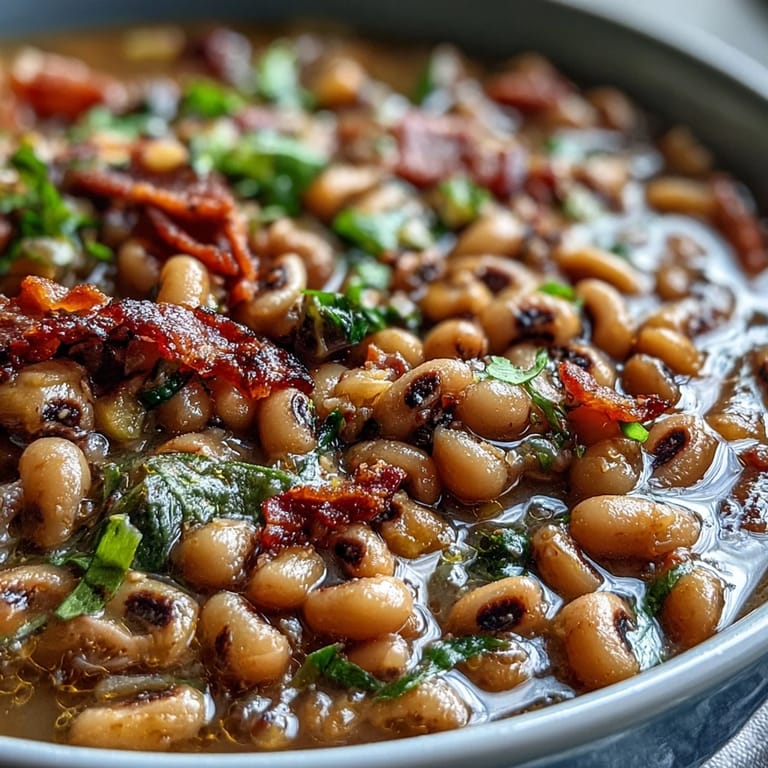
Pin There's a particular quiet that settles over a dinner table when everyone is too busy enjoying the food to make much conversation, and that's the moment this dish creates. It's the kind of meal that tastes like someone cared enough to spend time in the kitchen, even though most of that time is just letting the pot do its job.
The Texan Spirit of One-Pot Cooking
Pots like this one represent something real about Texan cooking—nothing fussy, nothing pretentious, just good ingredients given time and attention. The beauty is that you can walk away after the first 20 minutes and the pot handles itself, which makes it perfect for days when you want something substantial but your schedule is tight. I've learned that the simplest dishes often create the most memorable meals, and this one proves that point entirely.
Variations and Flexibility
If bacon isn't in your plans, smoked paprika or a splash of liquid smoke keeps the dish feeling rich and intentional. Some folks add a ham hock or smoked turkey for a different angle on the smokiness, and that works beautifully if you have one hanging around. The jalapeños can be swapped for serranos if you want heat that cuts sharper, or dialed back entirely if you're cooking for people who prefer mild flavors.
Making It Your Own
This recipe is forgiving enough that you can experiment without fear of failure, which is one reason it's become something I return to constantly. I once added diced bell peppers along with the jalapeños and they brought a sweetness that rounded out the spice beautifully. The point is that this dish invites you to taste it, think about what it needs, and adjust accordingly.
- Leftovers genuinely improve after a day in the refrigerator as flavors meld, so don't hesitate to make this a day ahead.
- Freeze portions in airtight containers for up to three months and you have a quick dinner waiting whenever you need it.
- Serve it alongside cornbread, over rice, or in a bowl with a crusty piece of bread—there's no wrong way to eat something this good.
 Pin
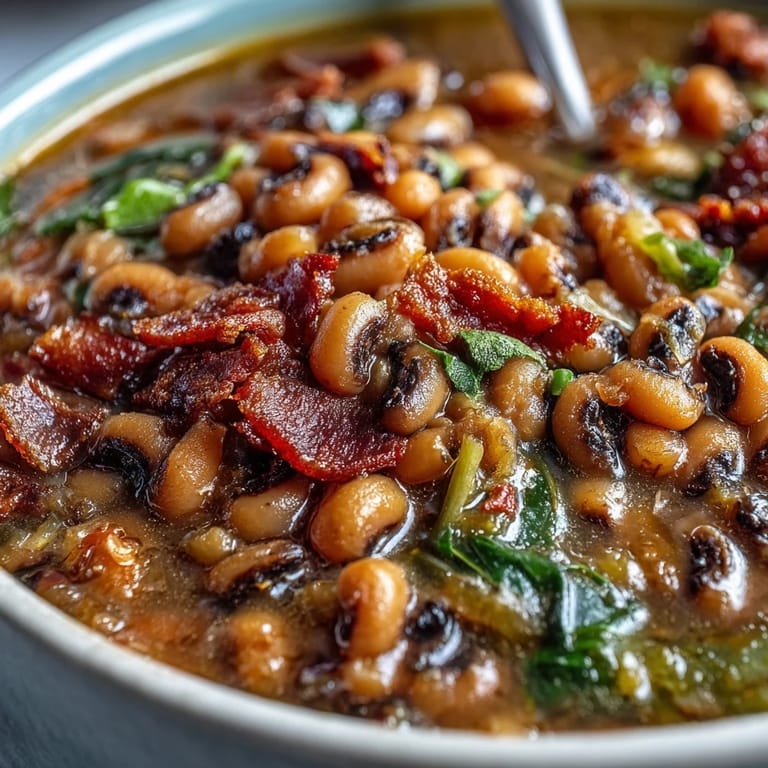
Pin This big pot of Texas black-eyed peas is the kind of food that wraps around you like a favorite sweater, warm and familiar and exactly what you need. Make it once and you'll understand why it shows up on tables across the South again and again.
Recipe Questions
- → Do I need to soak black-eyed peas before cooking?
No soaking required for this method. The peas simmer directly in the broth for about 1 hour 20 minutes until creamy and tender. This technique works perfectly with dried black-eyed peas.
- → Can I make this vegetarian?
Absolutely. Omit the bacon and substitute vegetable broth for chicken broth. Add extra smoked paprika or a few drops of liquid smoke to maintain that smoky depth of flavor.
- → How spicy are these black-eyed peas?
Mild to medium heat level. Two jalapeños provide gentle warmth, but you can increase heat by leaving some seeds or adding cayenne. The Rotel tomatoes also contribute mild chile flavor.
- → What should I serve with Texas black-eyed peas?
Cornbread is the classic accompaniment. Steamed rice also works beautifully. Top with fresh cilantro, green onions, or hot sauce for serving.
- → How long do leftovers keep?
Refrigerate for up to 4 days. The flavors actually improve over time as the peas continue absorbing the seasoning. Reheat gently with a splash of broth or water.
- → Can I use canned black-eyed peas instead?
You can, but reduce cooking time to 20-30 minutes since they're already tender. You may need less liquid as well. The flavor won't develop quite as deeply as with dried peas.