 Pin
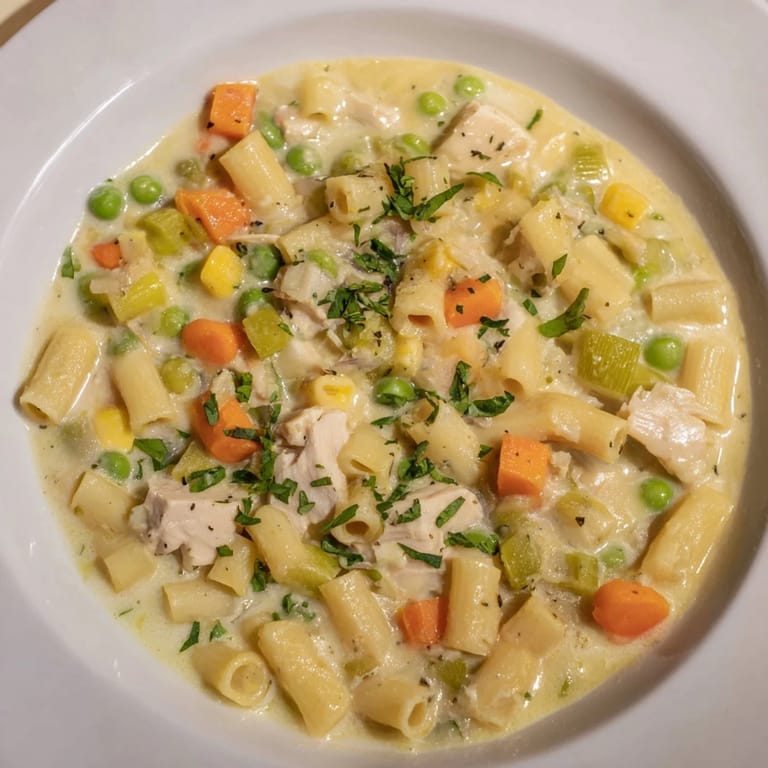
Pin There's something about a bowl of chicken pot pie soup that stops me mid-conversation. It happened last winter when I ladled this into a mug for my neighbor who'd just moved in—she came back the next day asking for the recipe. What started as an easy weeknight dinner idea became this thing I make whenever someone needs comfort without fuss. It's all the goodness of classic pot pie: tender chicken, soft vegetables, creamy broth—just in soup form where everything mingles together instead of hiding under a crust.
I remember my sister calling while I was making this, and she could hear the soup bubbling in the background. She'd had a rough day, so I invited her over. By the time she arrived, the whole house smelled like butter, thyme, and something impossible to describe except as 'warmth.' She sat at the counter for two hours just talking, and we barely touched the bread because the soup kept us occupied.
Ingredients
- Cooked chicken breast, 2 cups shredded or diced: Use rotisserie chicken if you're short on time—it adds so much more flavor than plain poached chicken, and saves you a step entirely.
- Carrots, 1 cup diced: Cut them smaller than you think; they'll soften beautifully and disappear into bites, making the soup feel abundant without being chunky.
- Celery, 1 cup diced: This is your secret backbone—it adds a subtle sweetness and depth that makes people ask what your special ingredient is.
- Frozen peas, 1 cup: Fresh or frozen both work, but frozen are honestly better here because they don't get mushy and they brighten the soup with pops of color.
- Yellow onion, 1 small diced: The first thing that hits the butter—it's where all the flavor starts building, so don't rush this step.
- Garlic, 2 cloves minced: Add it after the vegetables soften so it doesn't brown and turn bitter; just 1 minute is enough to wake up the whole pot.
- Fresh parsley, 2 tablespoons chopped plus extra for garnish: This gets stirred in at the end so it stays bright and herbaceous rather than cooked into submission.
- Ditalini pasta, 1 cup uncooked: These small tubes catch the broth inside them, which is why they're perfect here instead of bigger shapes.
- Low-sodium chicken broth, 4 cups: Start with good broth; it's the foundation, and the salt in the broth matters—low-sodium lets you control the final seasoning.
- Whole milk, 1 cup: This is your richness without overwhelming; it makes the broth creamy but not heavy.
- Heavy cream, 1/2 cup: The reason this tastes like comfort—use real cream, not something labeled 'cream product.'
- Unsalted butter, 2 tablespoons: Start with real butter for sautéing the vegetables; it matters for that golden, cooked-with-love flavor.
- All-purpose flour, 2 tablespoons: This thickens the broth and creates that silky mouthfeel; cooking it briefly after mixing with butter removes the raw flour taste.
- Salt, 1 teaspoon or to taste: Always taste before the final seasoning; you might need less if your broth is already salty.
- Black pepper, 1/2 teaspoon: Freshly ground makes a noticeable difference in something this simple.
- Dried thyme, 1/2 teaspoon: This is the herb that makes it taste like 'pot pie'—don't skip it or substitute carelessly.
- Dried sage, 1/2 teaspoon optional: If you love sage, add it; it deepens the flavor in a way that feels like autumn, even if it's not.
Tired of Takeout? 🥡
Get 10 meals you can make faster than delivery arrives. Seriously.
One email. No spam. Unsubscribe anytime.
Instructions
- Sauté the foundation:
- Melt butter in your pot over medium heat, then add diced onion, carrots, and celery. Let them cook for about 5 minutes, stirring every minute or so, until they start to soften and the onion turns golden at the edges. You'll notice the vegetables releasing their sweetness and the butter taking on a light golden color.
- Build the roux:
- Add minced garlic and cook for just 1 minute—you want it fragrant but not brown. Sprinkle flour over everything and stir constantly for 2 minutes; this cooks out the raw flour taste and creates a paste that will thicken your broth beautifully.
- Create the creamy base:
- Slowly pour in the chicken broth while whisking steadily to break up any flour lumps. Once smooth, add the whole milk and heavy cream, stirring gently. Bring everything to a simmer—you'll see small bubbles breaking the surface around the edges.
- Cook the pasta:
- Add uncooked ditalini, thyme, sage if you're using it, salt, and pepper. Stir occasionally for about 10 minutes until the pasta is tender but still has a bit of texture. The broth will thicken as the pasta absorbs liquid, and the kitchen will smell incredible.
- Finish strong:
- Stir in the cooked chicken and frozen peas, and let everything simmer together for 3 to 5 minutes until the peas are tender and heated through. The soup should be creamy and thick, coating a spoon but still pourable.
- Taste and serve:
- Remove from heat, stir in fresh parsley, and taste for salt and pepper. Serve in bowls or mugs, with extra parsley scattered on top and crusty bread on the side if you have it.
 Pin
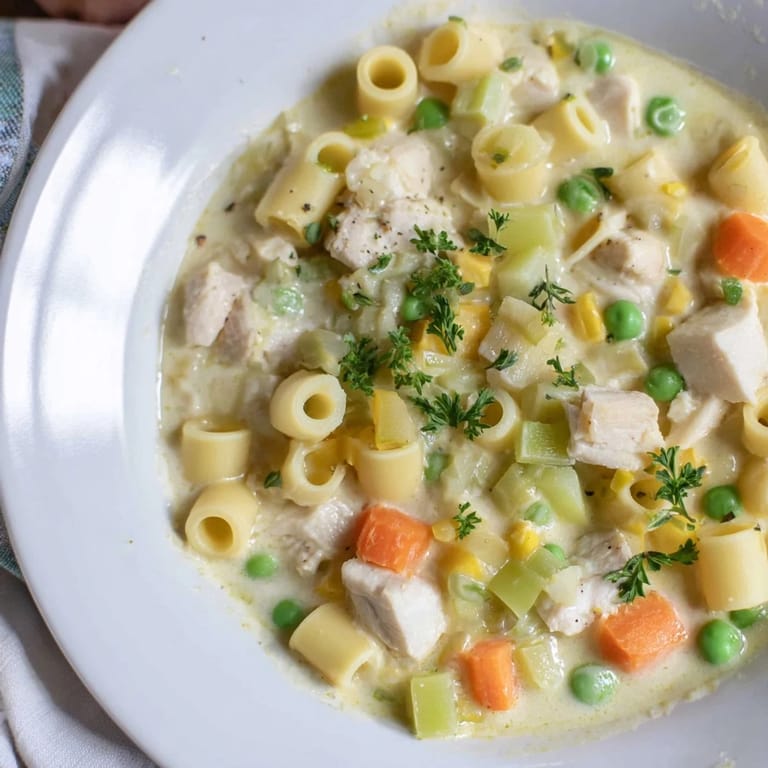
Pin One afternoon I made this soup for my friend who'd just gotten back from the hospital. She sat at my kitchen table while I stirred and simmered, not saying much, but when she tasted it, she closed her eyes. That's when I realized this soup isn't really about the ingredients at all—it's about the care that goes into standing over a pot and making something just for someone.
Make It Your Own
This recipe is forgiving enough to handle your preferences and whatever's in your fridge. I've added extra thyme when I'm feeling herbaceous, swapped in shredded turkey for chicken, and once used white wine in place of some of the broth because I had an open bottle. The core technique stays the same—sauté, make a roux, add broth and cream, cook the pasta—and the result always feels like home.
Timing and Make-Ahead Notes
This soup is best eaten the day you make it, while the pasta still has texture and the broth is at its silkiest. If you're planning ahead, prepare the vegetables the night before and store them in separate containers, so you're just chopping garlic and assembling in the morning. The soup does keep in the refrigerator for three days if you have leftovers, though the pasta will soften slightly; reheat gently over low heat with a splash of milk to restore the creamy consistency.
Why This Works as Comfort Food
Chicken pot pie soup hits that sweet spot where it feels familiar and indulgent without demanding much from you. There's no rolling out dough, no worrying about crust texture, just vegetables becoming tender, pasta absorbing all that cream and broth, and a finished dish that tastes like someone spent hours on it even though you've been cooking for less than an hour. It's the kind of food that brings people together without any fuss—serve it in bowls, let the bread do the talking, and watch how quickly it disappears.
- A splash of white wine added with the broth deepens the flavor if you're in the mood for something richer.
- Leftovers reheat beautifully on the stovetop with a splash of milk to loosen the broth back up.
- This freezes well for up to three months if you want to make a double batch on a lazy Sunday.
 Pin
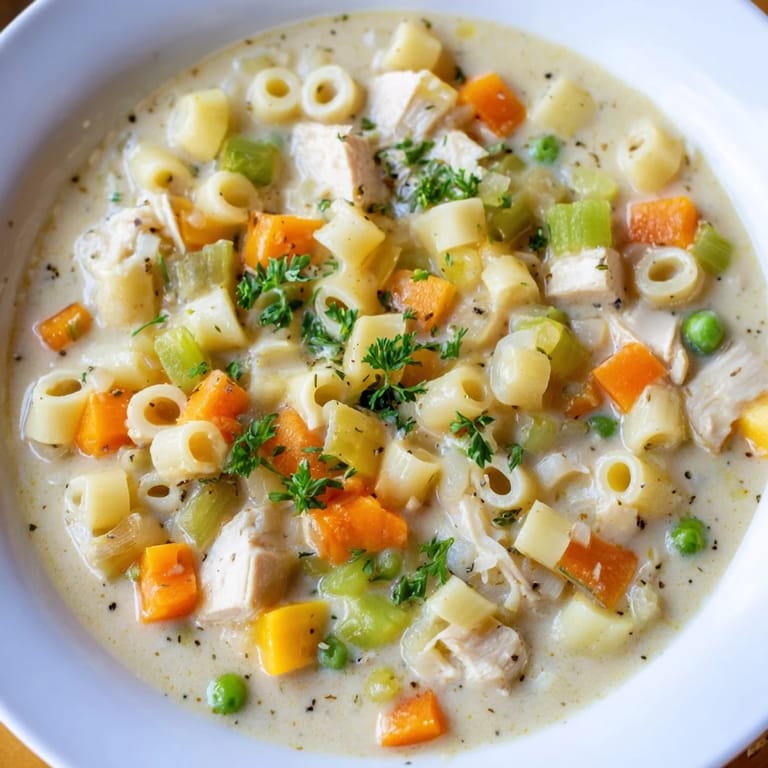
Pin This soup has become the recipe I make when words aren't enough—when someone needs fed, cared for, or reminded that good things still exist. Make it, share it, and let it become part of your own story.
Recipe Questions
- → Can I use rotisserie chicken for this dish?
Yes, rotisserie chicken works well and can save you prep time without sacrificing flavor.
- → What pasta works best?
Small, tubular pasta like ditalini is ideal as it holds the creamy broth well and cooks evenly.
- → How can I make this gluten-free?
Substitute regular pasta and flour with gluten-free versions to keep it suitable for gluten sensitivities.
- → Can I add wine to enhance flavor?
A splash of dry white wine added with the broth adds depth to the savory flavors.
- → What sides pair well with this dish?
A crisp green salad or crusty bread complements the creamy texture and rounds out the meal.