 Pin
Pin My neighbor knocked on my door one Tuesday evening holding a container of something that smelled like sweet heat and toasted sesame. She'd made too much dinner, she said, and thought I might want to try her quick Korean beef bowl. One bite and I was digging through her recipe box the next morning. That impromptu weeknight meal turned into my most requested dish, the one I make when I need dinner fast but want it to feel special.
I started making this for my kids on school nights when soccer practice ran late and everyone came home starving. They'd hover around the stove, sneaking bites of beef straight from the pan before I could even plate it. The cucumber and carrot on top became non negotiable after my youngest declared it wasn't a real bowl without the crunch. Now it's our reset meal, the one that brings us back to the table no matter how chaotic the week gets.
Ingredients
- Lean ground beef: The base of the bowl, browned until just crispy at the edges so it soaks up all that sauce without getting greasy.
- Gochujang: This Korean chili paste is the soul of the dish, bringing fermented depth and a slow building heat that's nothing like hot sauce.
- Low sodium soy sauce: Adds that savory umami backbone, and using low sodium means you control the saltiness instead of the bottle.
- Brown sugar: Balances the spice and helps the sauce caramelize slightly, creating little sweet pockets throughout the beef.
- Sesame oil: Just a tablespoon fills the kitchen with that nutty, toasted aroma that makes everyone ask what's for dinner.
- Garlic and fresh ginger: Minced fine and sautéed until fragrant, they wake up the whole skillet and add brightness to the rich meat.
- Rice vinegar: A splash cuts through the richness and keeps the sauce from feeling heavy.
- Cooked rice or cauliflower rice: The bed that catches all the sauce, whether you want comfort or something lighter.
- Cucumber and carrot: Thinly sliced and fresh, they add coolness and crunch that contrast perfectly with the warm, saucy beef.
- Green onions and sesame seeds: The final touch, a little sharpness and nuttiness sprinkled on top that makes it look as good as it tastes.
Tired of Takeout? 🥡
Get 10 meals you can make faster than delivery arrives. Seriously.
One email. No spam. Unsubscribe anytime.
Instructions
- Brown the beef:
- Heat sesame oil in a large skillet over medium high until it shimmers, then add the ground beef and break it up with your spatula. Let it cook undisturbed for a minute or two so it gets those crispy browned bits, then stir and cook until no pink remains, about 4 to 5 minutes total.
- Add the aromatics:
- Toss in the minced garlic and grated ginger, stirring constantly for about a minute until your kitchen smells like a street market. Don't let them burn or they'll turn bitter.
- Build the sauce:
- Stir in the gochujang, soy sauce, brown sugar, rice vinegar, and black pepper, mixing everything until the beef is completely coated. Let it simmer for 2 to 3 minutes, stirring occasionally, until the sauce thickens and clings to the meat.
- Taste and adjust:
- Take a tiny spoonful and see if it needs more heat, sweetness, or salt. This is your chance to make it exactly how you like it.
- Assemble the bowls:
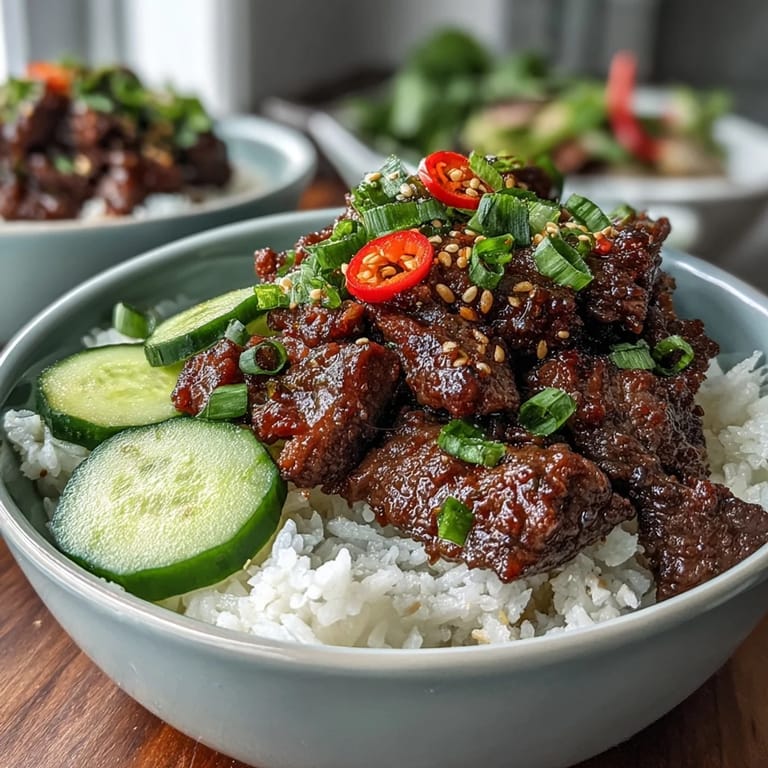
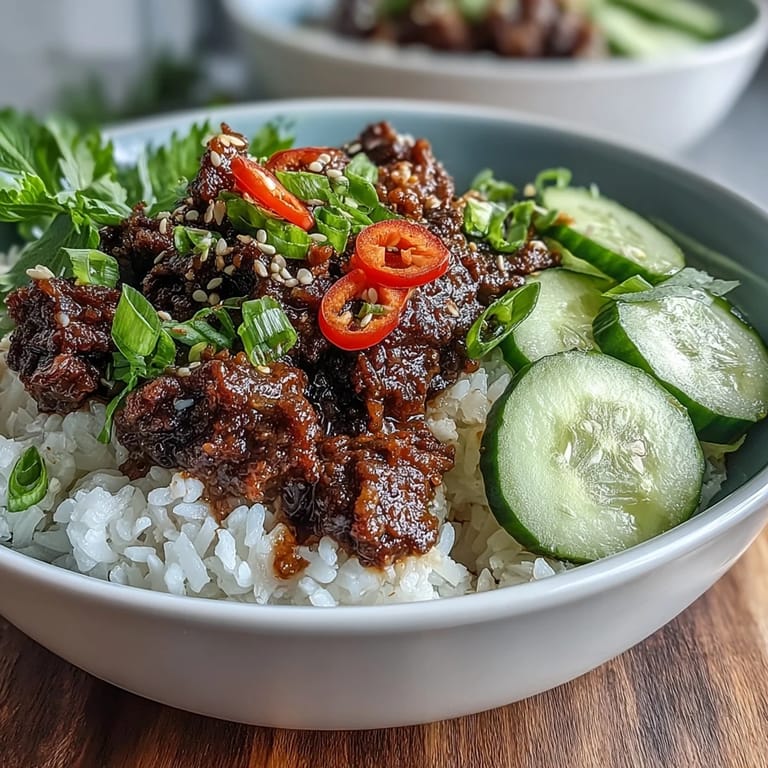
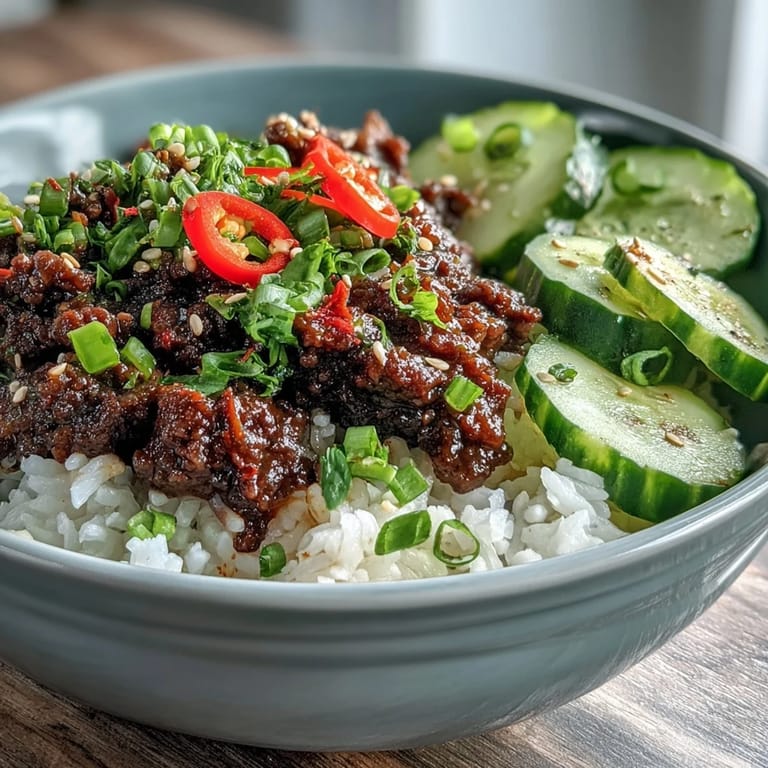
- Divide your cooked rice or cauliflower rice among four bowls, then spoon the saucy beef right on top. Arrange the cucumber, carrot, green onions, sesame seeds, and any optional toppings around the edges so every forkful has a little bit of everything.
 Pin
Pin One night I made this for a friend going through a rough patch, and she sat at my counter crying and laughing at the same time, saying it was the first thing that tasted good in weeks. We didn't talk much, just ate our bowls and let the food do the comforting. She still texts me every few months asking if it's Korean beef night, and I always say yes.
Customizing Your Bowl
This recipe is wildly adaptable once you get the sauce ratio down. I've swapped ground turkey and chicken when I wanted something leaner, and both work beautifully as long as you don't overcook them. For a vegetarian version, crumbled firm tofu or even lentils soak up the sauce just as well. If you're feeding someone who can't handle spice, use just a teaspoon of gochujang and add a little extra brown sugar to keep the flavor complex without the burn.
Prepping Ahead for Busy Nights
I'll often cook a double batch of the beef on Sunday and keep it in the fridge for up to four days. When dinnertime hits, I just reheat it in a skillet with a splash of water to loosen the sauce, and it tastes just as good as fresh. The toppings can be prepped and stored in separate containers so everyone can build their own bowl exactly how they want it. Rice freezes beautifully too, so I always have a stash ready to microwave and skip that step entirely.
Serving Suggestions and Sides
While the bowl is a complete meal on its own, sometimes I'll add a fried egg on top with a runny yolk that mixes into the sauce like liquid gold. A small side of kimchi adds extra tang and crunch, and if you want more vegetables, steamed broccoli or sautéed spinach tucked alongside the beef works perfectly. On weekends when I have more time, I'll make a quick pickled radish with rice vinegar and sugar that cuts through the richness and adds a pop of color.
- Try adding a soft boiled egg or sunny side up for richness.
- Serve with a small bowl of miso soup to make it feel like a full Korean inspired meal.
- Leftover beef makes an incredible filling for lettuce wraps the next day.
 Pin
Pin This bowl has become my love language for weeknights, the thing I make when I want to feed people well without spending hours in the kitchen. I hope it finds a spot in your regular rotation too.
Recipe Questions
- → What is gochujang?
Gochujang is a Korean fermented chili paste that adds sweet, savory, and spicy depth to dishes. You can find it in Asian grocery stores or the international aisle of most supermarkets.
- → Can I make this dish gluten-free?
Yes, simply substitute regular soy sauce with tamari and ensure your gochujang brand is certified gluten-free. Serve over cauliflower rice for a complete low-carb meal.
- → How spicy is this bowl?
The spice level is medium-mild from the gochujang. You can easily increase the heat by adding more gochujang, drizzling sriracha, or including fresh red chili slices as garnish.
- → Can I use a different protein?
Absolutely. Ground turkey or chicken works well as a lighter alternative. Cook times remain the same, though you may want to add a splash more oil since leaner meats have less fat.
- → How long do leftovers keep?
The seasoned beef stores well in an airtight container in the refrigerator for 3-4 days. Reheat gently in a skillet or microwave, and add fresh toppings just before serving.
- → What other toppings work well?
Fresh additions like sliced radishes, shredded lettuce, bean sprouts, or pickled vegetables add great texture and flavor. A fried egg on top makes it extra hearty.