 Pin
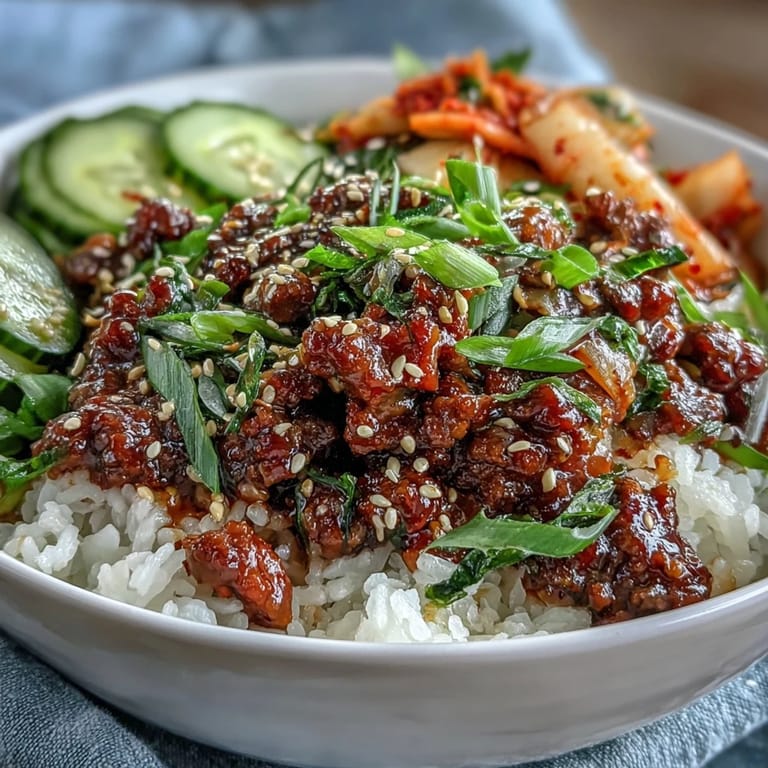
Pin I was craving something fast but full of flavor on a rainy Wednesday night when I threw this bowl together for the first time. The sizzle of garlic and ginger hitting hot sesame oil filled my tiny kitchen, and suddenly the whole evening felt warmer. I had a jar of gochujang I'd been too nervous to use, but once I stirred it into the beef, I couldn't believe I'd waited so long. The balance of sweet, spicy, and umami was instant comfort. Now it's my go-to when I want something satisfying without spending an hour at the stove.
The first time I made this for friends, I panicked because I thought it looked too simple. But when they took their first bites, the room went quiet in that good way where everyone's just eating and nodding. One friend went back for seconds before anyone else had even finished. I realized then that bold flavor doesn't need to be complicated, it just needs to be honest.
Ingredients
- Lean ground beef: The base of the bowl, it soaks up the gochujang sauce beautifully and cooks fast, but you can easily swap it for turkey or plant-based crumbles if you prefer.
- Gochujang: This Korean chili paste is the star, offering a sweet, smoky, fermented heat that's nothing like sriracha or hot sauce, start with less if you're heat-sensitive.
- Soy sauce: Adds salty umami depth that ties the whole sauce together, use tamari if you need it gluten-free.
- Brown sugar: Balances the heat and saltiness with a touch of caramel sweetness, you can use honey or coconut sugar instead.
- Garlic and ginger: Fresh is key here, they create an aromatic base that makes your kitchen smell like a street food stall in Seoul.
- Toasted sesame oil: Just a tablespoon brings a nutty richness that coats every bite, don't skip it.
- Green onions: Bright and sharp, they add color and a mild bite that cuts through the richness of the beef.
- Short-grain rice: Sticky and slightly chewy, it's the perfect bed for all the toppings and soaks up any extra sauce.
- Edamame: Adds protein and a pop of green, plus a little sweetness that contrasts nicely with the spicy beef.
- Cucumber: Cool and crisp, it refreshes your palate between bites of rich, savory beef.
- Carrot: Julienned thin, it adds crunch and a hint of natural sweetness that balances the heat.
- Kimchi: Tangy, funky, and essential for that authentic Korean flavor, buy a good jar or make your own if you're feeling ambitious.
- Toasted sesame seeds: The final sprinkle that adds a nutty crunch and makes everything look restaurant-worthy.
Tired of Takeout? 🥡
Get 10 meals you can make faster than delivery arrives. Seriously.
One email. No spam. Unsubscribe anytime.
Instructions
- Bloom the aromatics:
- Heat sesame oil in a large skillet over medium heat, then add garlic and ginger, stirring constantly for about a minute until the smell makes you lean in closer. Don't let them brown or they'll turn bitter.
- Brown the beef:
- Add the ground beef and break it up with a wooden spoon or spatula, cooking until no pink remains, about 5 to 6 minutes. The meat should be crumbly and starting to get a little crispy at the edges.
- Build the sauce:
- Stir in gochujang, soy sauce, and brown sugar, mixing until the beef is evenly coated and the sauce thickens slightly, about 2 to 3 minutes. The sugar will melt and everything will turn glossy and fragrant.
- Finish the beef:
- Remove the skillet from heat and stir in half the sliced green onions. Let it rest while you prep the bowls.
- Assemble the bowls:
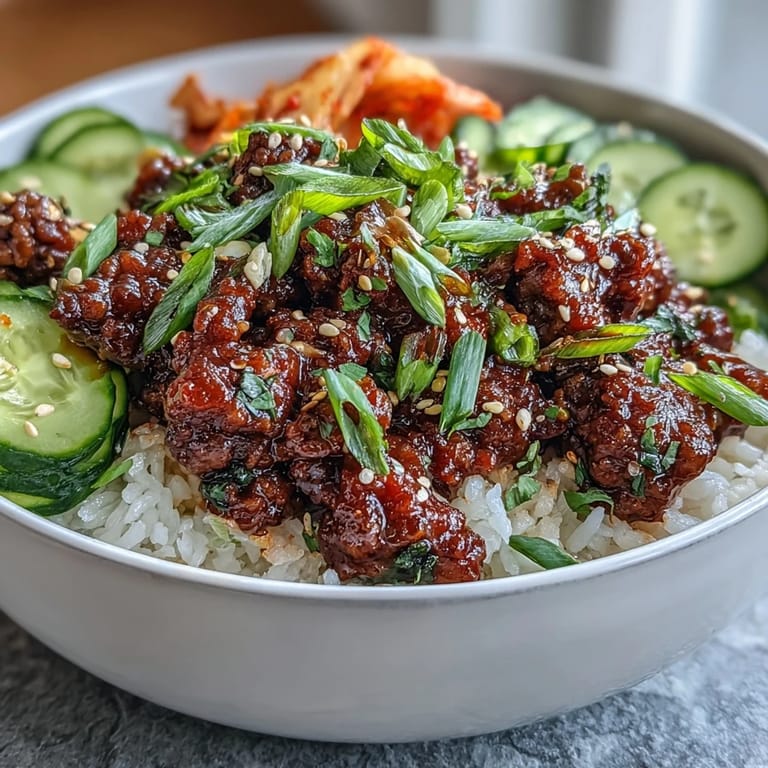
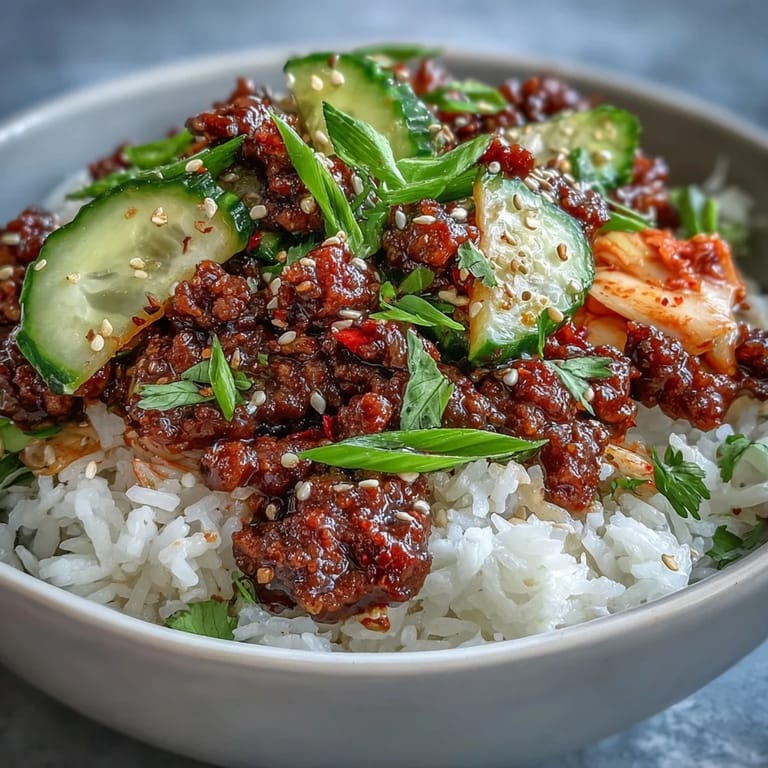
- Divide cooked rice among 4 bowls, then top each with a scoop of the saucy beef, edamame, cucumber, carrot, and kimchi arranged however you like. Finish with the remaining green onions and a generous sprinkle of sesame seeds.
 Pin
Pin One night I added a fried egg on top because I had an extra one in the fridge, and it completely transformed the dish. The runny yolk mixed into the rice and beef like a silky sauce, and now I can't imagine eating it any other way. It's those small, unplanned moments in the kitchen that end up becoming tradition.
Swaps and Substitutions
If you're out of ground beef or just want something lighter, ground turkey or chicken work beautifully and soak up the sauce just as well. I've also used plant-based crumbles for friends who don't eat meat, and honestly, the gochujang is so flavorful that nobody missed the beef. You can swap the edamame for snap peas or even roasted chickpeas if that's what you have on hand. Brown rice or cauliflower rice are great if you want to keep it a little lighter or add more fiber.
Storing and Reheating
I like to store the beef separately from the toppings so everything stays fresh and doesn't get mushy. The cooked beef keeps in an airtight container in the fridge for up to 4 days and reheats perfectly in the microwave or a skillet with a splash of water. The fresh veggies and kimchi should also be stored separately, and honestly, I think the kimchi gets even better after a day or two. Just assemble your bowl fresh each time for the best texture and flavor.
Making It Your Own
This bowl is basically a canvas for whatever you're craving or have in your fridge. I've added shredded cabbage, quick-pickled radishes, and even roasted sweet potato when I wanted something heartier. A drizzle of mayo mixed with a little sriracha or gochujang makes an incredible creamy topping. Sometimes I skip the rice entirely and serve it over greens for a deconstructed salad vibe.
- Top with a fried or soft-boiled egg for extra richness and a luscious runny yolk.
- Add a handful of crispy fried shallots or garlic chips for serious crunch.
- Drizzle with a little extra sesame oil and a squeeze of lime right before serving.
 Pin
Pin This bowl has become one of those recipes I turn to when I want something that feels special but doesn't ask much of me. It's bright, bold, and completely satisfying, and it reminds me that good food doesn't have to be complicated to feel like a celebration.
Recipe Questions
- → What is gochujang and where can I find it?
Gochujang is a Korean fermented chili paste with a sweet and spicy flavor profile. You can find it in the international aisle of most grocery stores, Asian markets, or online. Look for it in red tubs or jars.
- → Can I make this dish ahead of time?
Yes! The seasoned beef can be cooked and stored in the refrigerator for up to 4 days. Reheat it gently in a skillet or microwave. Store the rice and vegetables separately to maintain their texture, then assemble when ready to serve.
- → How can I make this dish less spicy?
Reduce the amount of gochujang to 1 tablespoon, or substitute with half gochujang and half miso paste for a milder flavor. You can also add more brown sugar to balance the heat. The spice level is easily adjustable.
- → What other proteins work well in this bowl?
Ground turkey or chicken are excellent lighter alternatives. For a vegetarian version, use plant-based crumbles or extra-firm tofu crumbles. The cooking time remains the same, and the sauce works beautifully with all these options.
- → Can I use different vegetables in the bowl?
Absolutely! Sliced radishes, shredded cabbage, steamed broccoli, or spinach make great additions. Use whatever fresh vegetables you have on hand. The key is having a mix of textures and colors to complement the seasoned beef.
- → Is this dish gluten-free?
As written, it contains gluten due to the soy sauce. To make it gluten-free, simply substitute the soy sauce with gluten-free tamari or coconut aminos. The gochujang should be gluten-free, but always check the label as brands vary.