 Pin
Pin My neighbor knocked on my door one Tuesday night holding a container of homemade kimchi and asked if I knew what to do with it. I didnt, but I was hungry and curious, so I started browsing Korean bowl recipes. What I ended up making that evening turned into something I now crave at least twice a month. The balance of sweet, spicy, tangy, and savory hits every corner of your palate, and the textures keep each bite interesting.
I made this for a small dinner party once, and everyone built their own bowls at the table. Watching people arrange their toppings, taste, adjust, and go back for seconds felt like hosting a tiny interactive food experience. One friend who claimed she didnt like spicy food went back three times for more gochujang sauce. The customizable nature of these bowls means everyone gets exactly what they want, and somehow that makes the meal feel more generous.
Ingredients
- Lean ground beef: The base of the bowl, it soaks up the gochujang sauce beautifully and cooks fast enough to keep this a weeknight win.
- Vegetable oil: Neutral and reliable for high heat cooking without competing with the other bold flavors.
- Garlic, minced: Fresh garlic makes all the difference here, the jarred stuff just doesnt bloom the same way in hot oil.
- Fresh ginger, grated: Adds a sharp, warming note that plays off the sweetness and heat, use a microplane if you have one.
- Gochujang: This Korean chili paste is the soul of the dish, slightly sweet, deeply savory, and just spicy enough to wake up your taste buds.
- Soy sauce: Brings umami and saltiness, balancing the sugar and vinegar in the sauce.
- Brown sugar: A little sweetness rounds out the heat and helps the sauce cling to the beef.
- Rice vinegar: Cuts through the richness and adds a gentle tang that keeps everything from feeling too heavy.
- Toasted sesame oil: Just a teaspoon gives a nutty, aromatic finish that ties the whole dish together.
- Green onions, thinly sliced: Half go into the beef for flavor, half go on top for color and a fresh bite.
- Carrot, julienned: Thin strips pickle quickly and add a subtle sweetness and crunch.
- Daikon radish, julienned: Mild and crisp, it takes on the vinegar beautifully and adds a refreshing contrast.
- Rice vinegar for pickling: The same vinegar used in the sauce, it works double duty to unify the flavors.
- Sugar for pickling: Balances the acidity and helps the vegetables soften just slightly.
- Salt for pickling: Draws out moisture and seasons the vegetables from the inside out.
- Cooked white rice: The foundation of the bowl, it absorbs the sauce and makes every bite satisfying.
- Cucumber, thinly sliced: Cool, crisp, and refreshing, it provides a textural break from the warm components.
- Radish, thinly sliced: Adds a peppery crunch and a pop of color.
- Kimchi, chopped: Tangy, funky, and slightly spicy, it brings a whole new layer of flavor and probiotic goodness.
- Toasted sesame seeds: A final sprinkle adds visual appeal and a delicate nutty crunch.
Tired of Takeout? 🥡
Get 10 meals you can make faster than delivery arrives. Seriously.
One email. No spam. Unsubscribe anytime.
Instructions
- Prepare the Pickled Vegetables:
- In a small bowl, whisk together the rice vinegar, sugar, and salt until everything dissolves into a clear, tangy brine. Toss in the carrot and daikon, give them a good stir, and let them sit while you cook the beef, they will soften and brighten as they marinate.
- Cook the Beef:
- Heat the vegetable oil in a large skillet over medium high heat until it shimmers. Add the garlic and ginger, stirring constantly for about a minute until the kitchen smells incredible and the garlic just starts to turn golden. Crumble in the ground beef, breaking it apart with a wooden spoon, and cook until browned and cooked through, about five to six minutes, then drain any excess fat if needed.
- Season the Beef:
- Stir in the gochujang, soy sauce, brown sugar, rice vinegar, and sesame oil, mixing well so every bit of beef gets coated in that glossy, spicy sweet sauce. Let it cook for another two to three minutes, stirring occasionally, until the sauce thickens and clings to the meat, then remove from heat and fold in half the green onions.
- Assemble the Bowls:
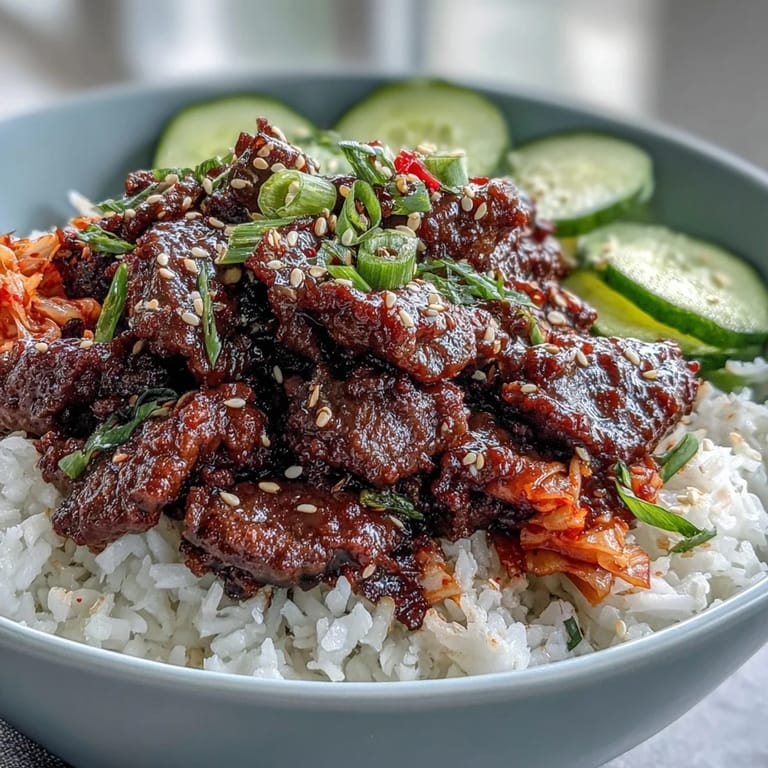
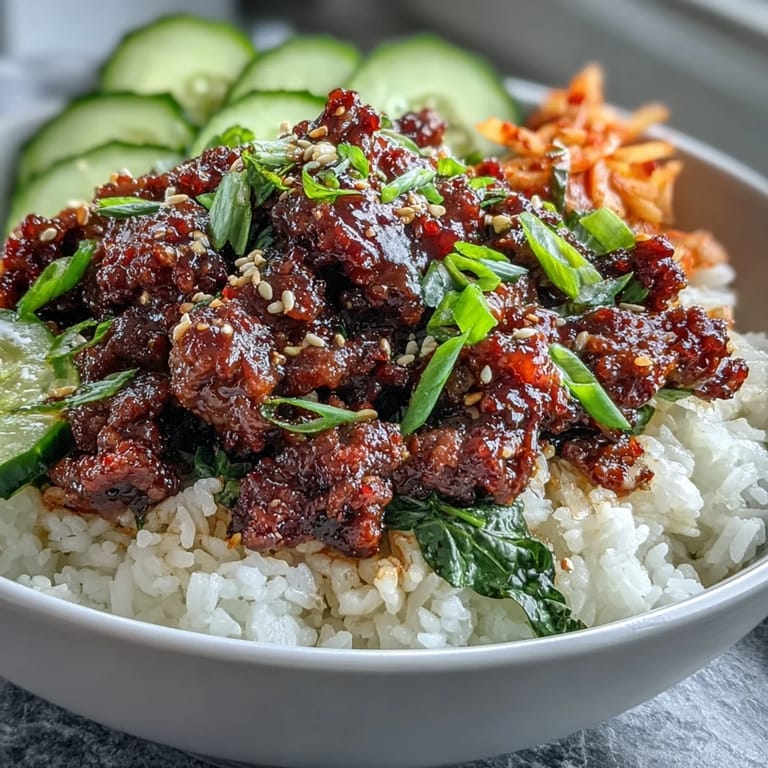
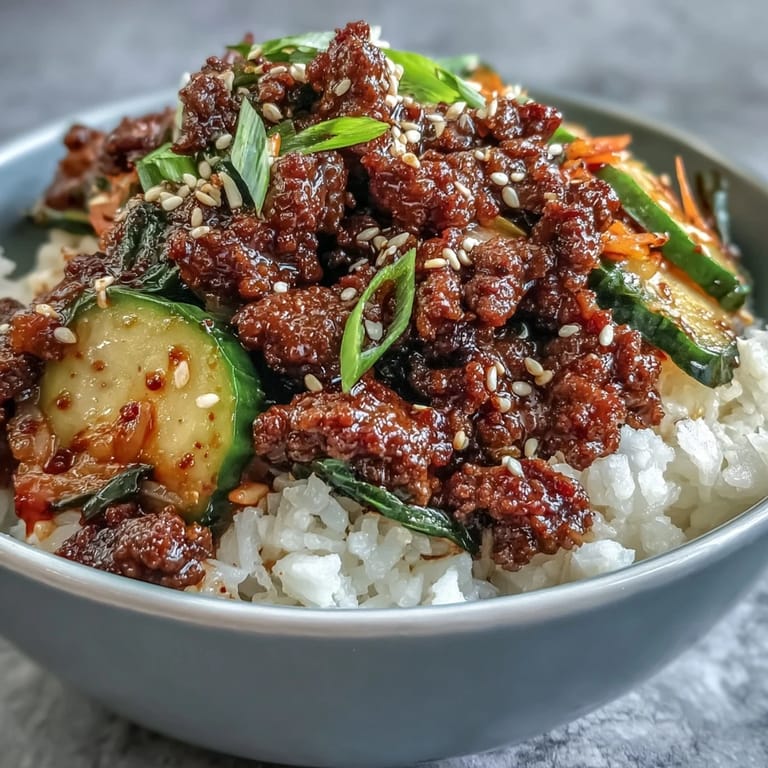
- Divide the cooked rice among four bowls, creating a soft bed for all the toppings. Spoon a generous portion of the seasoned beef over each mound of rice, then arrange the pickled vegetables, cucumber, radish, and kimchi around the beef in colorful sections. Finish with a sprinkle of the remaining green onions and toasted sesame seeds.
- Serve immediately:
- These bowls are best enjoyed right away while the beef is warm, the rice is fluffy, and the vegetables are crisp.
 Pin
Pin The first time I served this to my brother, he ate in silence for a full five minutes, then looked up and said, This is what I want for my birthday dinner. Now its a tradition. Something about the way all the components come together in one bowl, each bite slightly different depending on what you scoop up, makes it feel both comforting and exciting at the same time.
Customizing Your Bowl
If you want extra heat, drizzle sriracha over the top or stir an extra spoonful of gochujang into the beef. I have also swapped ground beef for ground chicken or turkey when I am trying to lighten things up, and it works beautifully. For a gluten free version, use tamari instead of soy sauce and double check that your gochujang is certified gluten free, some brands sneak in wheat.
Choosing the Right Rice
White rice is traditional and soaks up the sauce perfectly, but brown rice adds a nutty chew and extra fiber if that is your preference. I have even used leftover jasmine rice from Thai takeout, and it worked just fine. The key is making sure your rice is warm and fluffy, cold or dried out rice will not absorb the flavors the same way.
Storage and Pairing Ideas
Leftovers keep well in the fridge for up to three days, though I recommend storing the beef, rice, and toppings separately so nothing gets soggy. Reheat the beef gently in a skillet with a splash of water to bring back the sauce. This pairs beautifully with a crisp lager or chilled green tea, something light and refreshing to balance the bold flavors.
- Prep your pickled vegetables the night before to save time on busy evenings.
- Use a rice cooker to keep the rice warm and ready while you finish the beef.
- Taste the beef after adding the sauce and adjust sweetness or heat to your liking before serving.
 Pin
Pin This bowl has become my answer to the question, What should I make when I want something that feels special but does not require a lot of fuss. I hope it becomes that for you too.
Recipe Questions
- → What does gochujang taste like?
Gochujang is a Korean fermented chili paste with a complex flavor profile combining sweet, savory, and spicy notes. It has a deep umami taste from fermentation, moderate heat, and a slight sweetness from rice malt.
- → Can I make this dish less spicy?
Yes, reduce the gochujang to 1-2 tablespoons or add a tablespoon of honey or brown sugar to balance the heat. You can also serve with extra rice to dilute the spice level.
- → What can I substitute for gochujang?
Mix 2 tablespoons of red pepper flakes with 1 tablespoon each of miso paste, soy sauce, and a teaspoon of sugar. This creates a similar fermented spicy paste, though the flavor will be slightly different.
- → How long do pickled vegetables keep?
The quick-pickled carrots and daikon will keep in an airtight container in the refrigerator for up to 1 week. They actually develop more flavor as they sit.
- → Can I use different meat?
Ground turkey, chicken, or even pork work well as alternatives to beef. Adjust cooking time slightly as poultry may cook faster than beef. The seasoning ratios remain the same.
- → Is this dish freezer-friendly?
The seasoned beef mixture freezes well for up to 3 months. Thaw overnight in the refrigerator and reheat gently. Fresh vegetables and rice should be prepared when serving.