 Pin
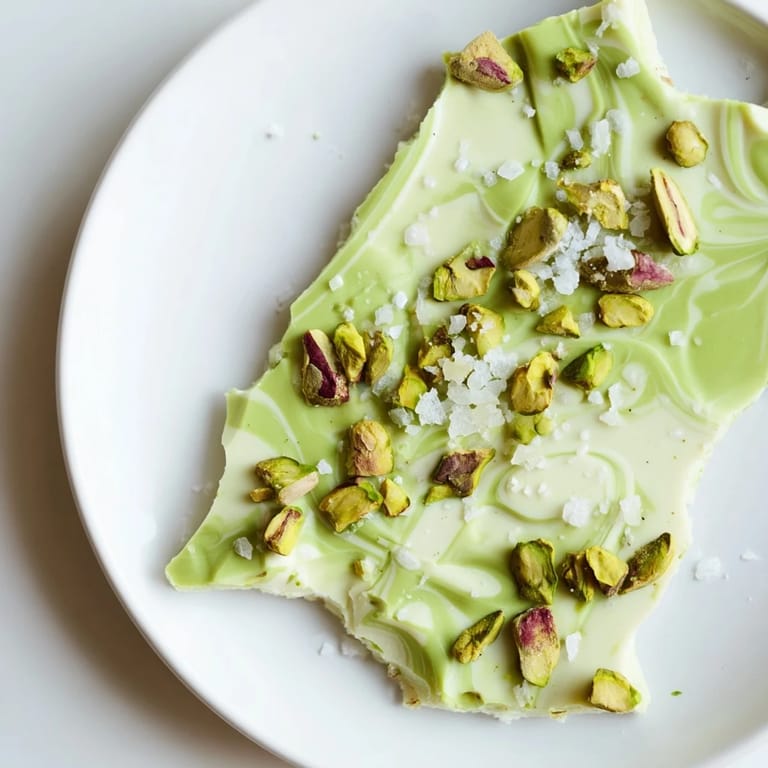
Pin I discovered pistachio matcha white chocolate completely by accident one afternoon while browsing a specialty market. The combination seemed almost too bold—green tea powder swirled into pale white chocolate felt like something that shouldn't work, but the colors alone had me intrigued enough to buy both ingredients. That first batch, made on a whim with shaky tempering and uneven pistachios, taught me that sometimes the most striking dishes come from curiosity rather than careful planning.
The real magic happened when I made this for my sister's book club. Everyone expected something fussy and precious, but when they bit into the bark and felt that satisfying snap, tasted the pistachio crunch mixed with the subtle grass notes of matcha, the whole room went quiet for a moment. That's when I knew it wasn't just a pretty dessert—it was something people actually wanted to eat again and again.
Ingredients
- White chocolate, 300 g chopped: The foundation of this bark; splurge on quality here because it's the canvas everything else sits on, and cheap white chocolate tastes waxy rather than creamy.
- Matcha powder, 2 tsp sifted: Use ceremonial or culinary grade, not the bright neon stuff meant only for lattes—the color and flavor are entirely different, and sifting removes lumps that ruin the visual effect.
- Unsalted pistachios, 60 g roughly chopped: The crunch is non-negotiable; rough chopping gives you pieces of varying sizes that create better texture variation than uniform chips.
- Flaky sea salt (optional): A small pinch cuts through the richness and makes everything taste more sophisticated, but skip it if nuts are your starring texture.
Tired of Takeout? 🥡
Get 10 meals you can make faster than delivery arrives. Seriously.
One email. No spam. Unsubscribe anytime.
Instructions
- Set up your station:
- Line your tray with parchment or a silicone mat—this prevents sticking and gives you confidence when breaking the bark later. Have everything within arm's reach because once chocolate hits the tray, you're moving quickly.
- Temper the chocolate properly:
- Fill the bottom pan with just enough barely simmering water that the bowl hovers above it without touching. Melt two-thirds of the chocolate slowly, stirring often, then remove from heat and stir in the remaining third—this gradual cooling is what gives you that snap and shine rather than a dull, grainy finish. Watch the temperature; it should stay under 31°C (88°F).
- Spread and act fast:
- Pour the tempered chocolate onto your tray and use a spatula to push it into a rough rectangle about 1 cm thick. Don't overthink the shape—rustic is more charming than perfect.
- Swirl in the matcha:
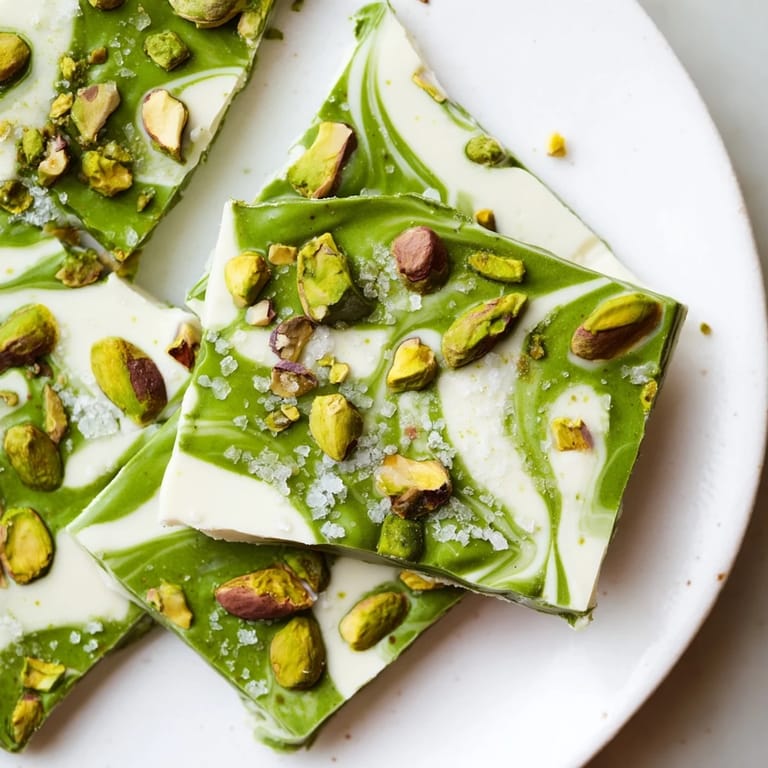
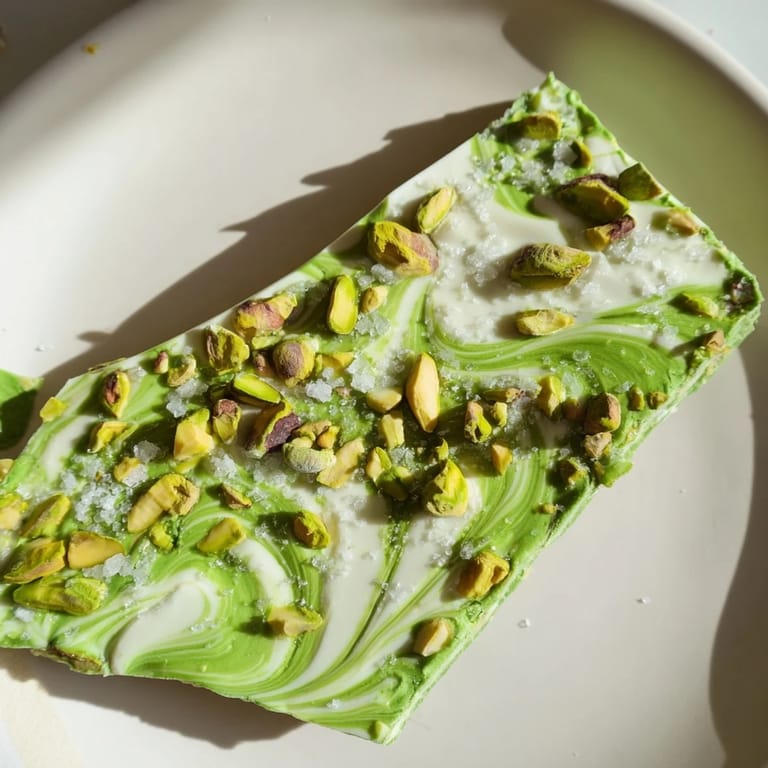
- Sift small patches of matcha powder directly over the warm chocolate, then use a skewer or toothpick to drag through it in gentle, confident motions. Think impressionistic rather than precise; the marble effect is what catches the light.
- Top with pistachios:
- Scatter the chopped pistachios evenly while the chocolate is still warm enough to grab them. Press gently so they sink just slightly into the surface and stay put once it sets.
- Let it cool undisturbed:
- Room temperature works fine and takes about 30 minutes; refrigerating speeds it up to 20 minutes but can sometimes cause bloom (white streaks). Either way, don't move the tray around or touch it.
 Pin
Pin I remember my mom taking a piece and closing her eyes for a moment, really tasting it rather than just eating it. She said it reminded her of a dessert she'd had years ago in Tokyo, but better because it was made with hands she loved. That's when I realized this bark wasn't just about the ingredients—it was about creating a moment someone would remember.
The Art of Chocolate Tempering
Tempering sounds intimidating until you understand it's simply cooling melted chocolate in a controlled way so the cocoa butter crystals align properly. White chocolate is actually the most forgiving to temper because it has such a low melting point and takes heat damage less easily than darker varieties. The double boiler method—where gentle steam heat does the work instead of direct flame—makes it nearly foolproof if you're patient and keep checking the thermometer.
Matcha Beyond Tea
Matcha's earthy, slightly bitter edge is what makes it shine in sweet applications, cutting through richness the way a pinch of salt does in chocolate. The color is almost as important as the flavor—that vibrant green signals freshness and quality, and it transforms white chocolate from plain to striking. One afternoon I tried using regular green tea powder in place of matcha, thinking they'd be interchangeable, and the result was muddy and weak; ceremonial grade matcha is worth the price because a little truly goes a long way.
Building Flavor Layers
The beauty of bark is how it lets different textures and flavors exist independently—you bite through the chocolate snap, then hit pistachio crunch, then taste the subtle matcha warmth, all in sequence. This combination feels modern but balanced, never trying too hard to show off. If you want to play with variations, swapping pistachios for toasted hazelnuts or adding a sprinkle of dried cranberries shifts the whole personality while keeping the matcha-white chocolate core intact.
- Toast any nuts before chopping to deepen their flavor and make the bark taste more intentional.
- If matcha is new to you, taste a tiny bit on its own first so you know what to expect in the final bite.
- Break the finished bark into uneven pieces rather than cutting perfectly—the rustic edges look more appealing and feel more generous to share.
 Pin
Pin This bark has become my go-to when I need something beautiful and refined but don't want to spend hours in the kitchen. Every time someone bites into it, there's that brief moment of discovering something unexpected and delicious, and that feeling never gets old.
Recipe Questions
- → What type of matcha is best for this dish?
Using high-quality ceremonial or culinary grade matcha ensures vibrant color and a smooth earthy flavor that complements the white chocolate well.
- → How do I temper white chocolate correctly?
Melt two-thirds of the chocolate over simmering water, then remove from heat and add the remaining chocolate, stirring gently until glossy without exceeding 31°C (88°F).
- → Can I substitute pistachios with other nuts?
Yes, almonds, hazelnuts, or even dried cranberries can be used to provide different flavors and textures while maintaining crunch.
- → Is it necessary to cool the chocolate before breaking?
Allow the chocolate to set at room temperature or refrigerate for 20–30 minutes to achieve firm pieces that break cleanly.
- → How should I store the finished bark?
Store in an airtight container in a cool, dry place to preserve texture and freshness, avoiding moisture and heat.