 Pin
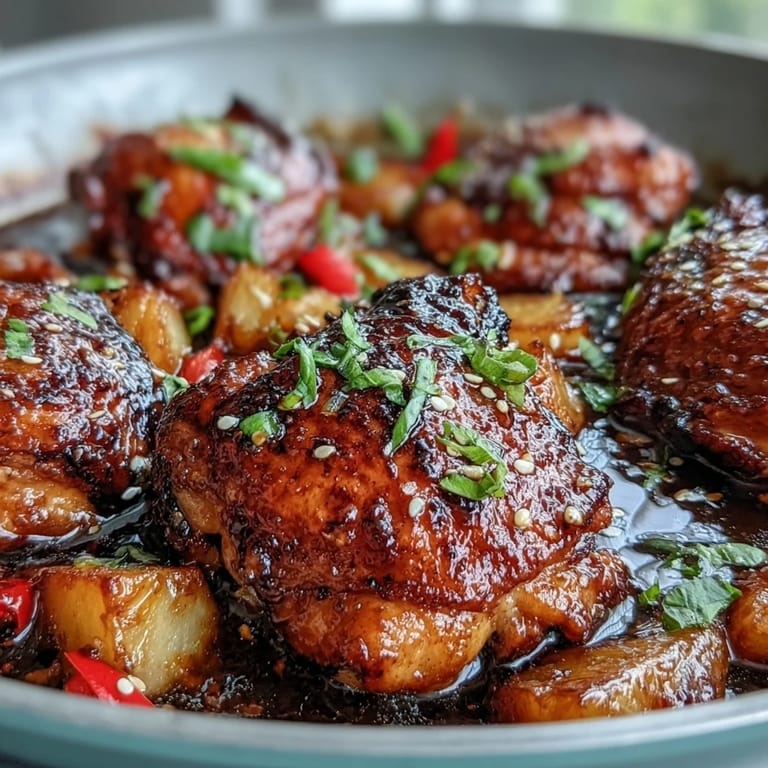
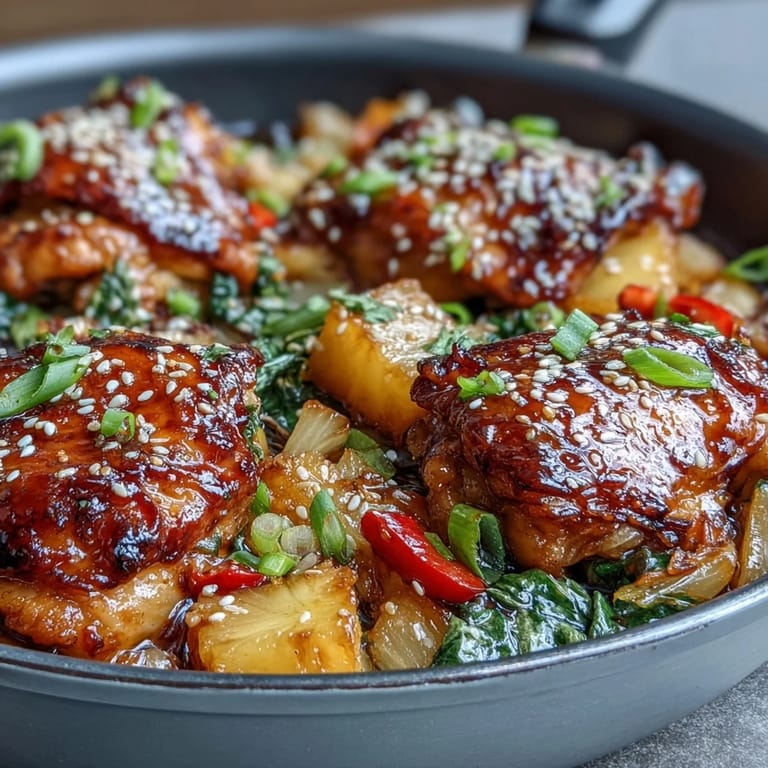
Pin One Thursday night, my kitchen filled with the smell of garlic hitting hot oil, and I realized I'd been overthinking weeknight dinners. This sticky honey garlic chicken skillet came together almost by accident—I had pineapple that needed using, chicken thighs on hand, and a sudden craving for something that tasted restaurant-quality but didn't require me to be a restaurant chef. The first time I made it, my partner kept wandering into the kitchen asking what smelled so good, and by the time we sat down to eat, I knew this was going into permanent rotation.
I made this for my sister's book club dinner last month, and honestly, the compliments caught me off guard. Someone asked if I'd taken a cooking class, which made me laugh because I'd watched this come together while multitasking and checking my phone. What got me most was watching people go back for seconds without hesitation—that moment when you realize food you made became the reason people lingered at the table.
Ingredients
- Boneless, skinless chicken thighs: Thighs are your secret weapon here because they stay juicy even if you're not timing things perfectly. I buy them in bulk and freeze them because they're reliable and honestly more forgiving than breasts.
- Salt and black pepper: Nothing fancy, just enough seasoning to make the chicken taste like itself before the sauce takes over.
- Cornstarch: This creates a light coating that helps the chicken brown beautifully and also thickens the sauce as it cooks, which is why you won't need to add cornstarch slurry at the end.
- Honey: Use the real stuff, not the squeeze bottle imitation. The difference in flavor is subtle but real, and it caramelizes differently than fake honey.
- Low-sodium soy sauce: Low-sodium gives you control over the saltiness instead of the sauce overwhelming everything else on your plate.
- Rice vinegar: This adds brightness and balances the sweetness without making the dish taste sour or aggressive.
- Fresh garlic and ginger: Minced fresh is non-negotiable here. The dried stuff won't give you that fresh punch that makes people lean in and ask what you're cooking.
- Sriracha or chili garlic sauce: Optional, but it adds a subtle heat that makes people who don't even like spicy food keep eating it.
- Vegetable oil: Something neutral so it doesn't compete with the other flavors. I use a light touch because the sauce will add moisture anyway.
- Fresh pineapple chunks: Fresh is better, but canned and drained works beautifully too. Don't use the syrup because it'll make the sauce too sweet.
- Bell peppers: Red and green add color and slight sweetness that plays nicely with the pineapple without repeating the same note.
- Green onions and sesame seeds: These finish the dish and give you texture and freshness that makes it feel complete instead of just saucy.
Tired of Takeout? 🥡
Get 10 meals you can make faster than delivery arrives. Seriously.
One email. No spam. Unsubscribe anytime.
Instructions
- Prep your chicken for the pan:
- Pat the chicken thighs dry with paper towels—this is actually important because wet chicken won't brown properly and you'll end up steaming instead of searing. Season generously with salt and pepper, then dust lightly with cornstarch, shaking off any excess so you get a light coating, not a thick crust.
- Mix your sauce while you wait:
- In a small bowl, whisk together the honey, soy sauce, rice vinegar, minced garlic, grated ginger, and sriracha if you're using it. The garlic and ginger should be evenly distributed, so give it a real whisk and let it sit while you handle the chicken.
- Sear the chicken until golden:
- Heat oil in a large skillet over medium-high heat until it shimmers—you'll know it's ready when it moves easily across the pan. Place chicken thighs skin-side down (if they still have skin) or just lay them flat, and don't move them for 3-4 minutes while they develop that golden-brown crust. Flip and do the same on the other side, then transfer to a plate.
- Caramelize the vegetables and fruit:
- In the same skillet, add your bell pepper pieces and pineapple chunks. Let them sit for a minute without stirring so they get some color and warmth, then toss them around for another 3-4 minutes until the edges look slightly caramelized and the pineapple is warm through.
- Bring it all together with sauce:
- Return the chicken to the skillet, nestling it among the vegetables and pineapple. Pour the sauce over everything, making sure to get the liquid into the pan where it can start reducing. Reduce the heat to medium, cover with a lid, and let it simmer for 10-12 minutes, turning the chicken once halfway through so it glazes evenly.
- Create the sticky glaze:
- Uncover the skillet and check that the chicken is cooked through (it should feel firm, not squishy). If the sauce still looks thin and soupy, cook uncovered for another 2-3 minutes so it reduces down into that glossy, sticky glaze that clings to everything.
- Finish and serve:
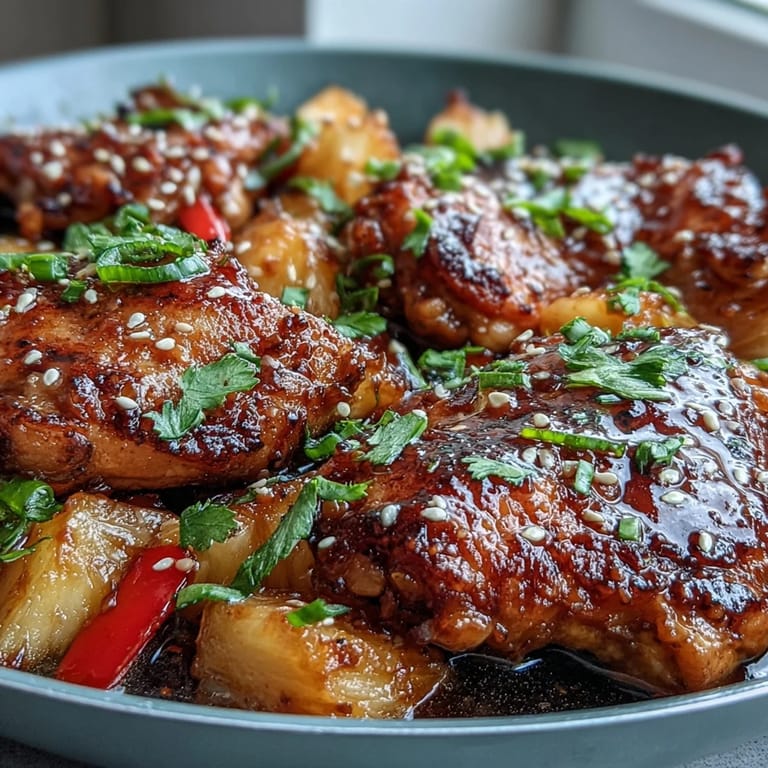
- Scatter green onions and sesame seeds over the top, which adds freshness and texture at the last second. Serve everything hot over steamed rice or quinoa so you have something to soak up the sauce.
 Pin
Pin There's something about watching a skillet full of sticky sauce coat chicken and fruit that makes you feel capable in the kitchen, even if you're just following steps. That's what stayed with me more than anything—not the compliments, but that moment when the sauce thickened and everything started smelling like something I'd imagined could taste good but wasn't sure would actually work.
Why Chicken Thighs Change Everything
Chicken breasts are convenient and lean, but thighs are where flavor lives. They have more fat running through them, which means they stay tender even if you're not watching the clock obsessively, and that fat is what carries the flavor of the sauce into every bite. The first time I made this with thighs instead of breasts, I understood why restaurants often use thighs—they're more forgiving and taste noticeably better. Once you get comfortable with them, you'll start using them for everything because they're honestly the confidence builder every home cook needs.
The Sauce Is the Star
The magic happens when honey, soy sauce, vinegar, and aromatics come together in one pan and reduce into something sticky and glossy. That reduction matters because it's what separates this from just dumping sauce over chicken—you're actually creating a glaze that clings to everything and caramelizes slightly. The cornstarch coating on the chicken helps this process because it breaks down and thickens the sauce as it simmers, which means you don't need any additional thickener. Watch for that glossy sheen as the sauce reduces, and you'll know you're close to done.
Variations and Flexibility
This recipe works because the combination is solid, but it's flexible enough that you can adjust it based on what's in your fridge or what mood you're in. Swap the pineapple for mango if you want something slightly different, or add snap peas and broccoli if you want more vegetables in there. If you need it gluten-free, tamari swaps in for soy sauce without changing anything else, and if you want to use chicken breasts instead of thighs, just watch the cooking time more carefully because they'll cook faster and dry out if you're not paying attention.
- Add snap peas or broccoli in the last few minutes if you want more vegetables and crunch.
- For gluten-free, use tamari instead of soy sauce and double-check your other ingredients.
- Mango chunks work beautifully instead of pineapple if you want to experiment with the flavor profile.
 Pin
Pin This meal has become my go-to when I want something that tastes like I tried harder than I actually did, which is a compliment in my kitchen. It's the kind of dish that makes weeknight dinners feel intentional instead of like you're just trying to get food on the table.
Recipe Questions
- → Can chicken breasts be used instead of thighs?
Yes, chicken breasts can be substituted. Adjust cooking time to avoid drying out the meat.
- → How do I make the glaze thick and sticky?
Simmer the sauce until it reduces and coats the chicken, stirring occasionally to achieve a sticky consistency.
- → What can I use instead of soy sauce for gluten-free options?
Tamari is a great gluten-free alternative to soy sauce that maintains the savory depth.
- → Can I add more vegetables to this dish?
Yes, snap peas or broccoli make excellent additions, adding more texture and nutrition.
- → What side dishes pair well with this skillet meal?
Steamed jasmine rice, quinoa, or a crisp white wine complement the flavors perfectly.