 Pin
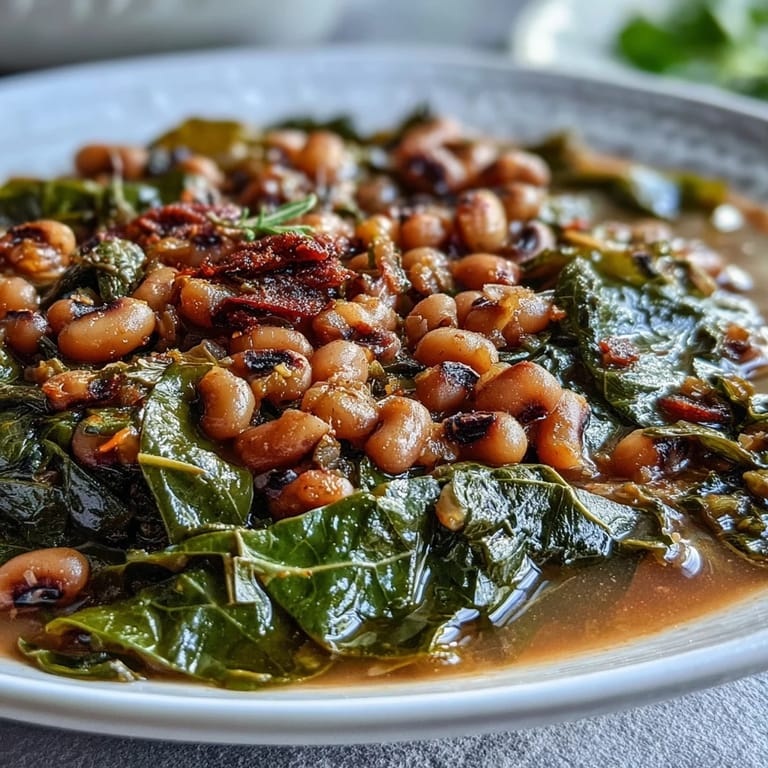
Pin My grandmother used to say that black-eyed peas and collard greens were the reason she made it through winters, and honestly, the first time I made this dish myself, I understood exactly what she meant. The kitchen filled with this warm, savory steam that made everything feel slower and more intentional, like time itself had simmered down to match the pace of the pot. There's something about the combination of tender peas and silky greens that feels less like cooking and more like wrapping yourself in comfort.
I made this for a New Year's Day gathering, and something shifted when I watched people go back for seconds without even asking what was in it. One friend, who usually picked at food politely, ended up sitting at the kitchen counter with a bowl, asking me questions about technique while eating directly from the pot. That's when I realized this dish isn't just sustenance; it's an invitation to slow down together.
Ingredients
- Black-eyed peas: Dried peas have more personality than canned, but canned saves you the overnight soaking if you're short on time—both work beautifully here.
- Collard greens: These sturdy leaves don't wilt into nothing; they actually become silkier and more tender the longer they simmer, almost melting into the broth.
- Onion, garlic, celery, and carrot: This aromatic base is your flavor foundation, and taking the minute to chop them fine means they dissolve into the dish rather than feeling chunky.
- Smoked paprika and thyme: These two spices create that deep, slightly smoky warmth that makes people ask what your secret is.
- Apple cider vinegar: A small splash at the end brightens everything up and keeps the dish from feeling heavy, even though it's deeply satisfying.
- Vegetable or chicken broth: This is the liquid that carries all your flavors, so good broth makes a real difference—taste it first and season accordingly.
- Ham hock or smoked turkey: Optional but traditional; the smoke adds another layer of flavor that rounds out the whole dish, though it's equally lovely without it.
Tired of Takeout? 🥡
Get 10 meals you can make faster than delivery arrives. Seriously.
One email. No spam. Unsubscribe anytime.
Instructions
- Soak your peas overnight if using dried:
- Cold water and time work magic on dried peas, making them cook more evenly and reducing that slightly chalky texture. If you forgot to plan ahead, a quick boil method works too—just boil them for two minutes, let them sit for an hour, then drain and proceed.
- Start with the holy trinity:
- Heat oil in your Dutch oven and let the onion, celery, and carrot soften together until they're fragrant and turning translucent. This takes about five minutes and creates your flavor base.
- Wake up the garlic:
- Add your minced garlic for just one minute—any longer and it turns bitter, any shorter and it stays too raw. You'll know it's ready when the kitchen smells like someone's cooking something intentional.
- Add your meat if using:
- A ham hock or chunk of smoked turkey only needs a couple minutes here; you're not cooking it through, just warming it to release its smoke and flavor into the pot.
- Toast the spices into the vegetables:
- Stir in your black-eyed peas, bay leaf, smoked paprika, thyme, and red pepper flakes, coating everything in that warm spice. This minute of contact lets the spices bloom and distribute evenly.
- Bring everything together with broth:
- Pour in your broth and bring to a boil, then immediately lower to a gentle simmer. Cover and let it cook—forty-five minutes for dried peas, twenty for canned—until the peas are completely tender.
- Add the greens and let them transform:
- Stir in your chopped collards and simmer uncovered for another thirty minutes. Watch them go from dark and sturdy to soft and almost silky, darkening as they absorb all the flavor around them.
- Finish with brightness:
- Splash in the apple cider vinegar, which cuts through the richness and makes everything feel lighter. Remove your bay leaf and shred any meat from the ham hock before returning it to the pot.
- Taste and adjust:
- Season generously with salt and pepper—this is your moment to make it taste exactly like you want it to. Don't be shy; the broth can handle it.
 Pin
Pin There was a moment when my teenage nephew, who usually disappears during holiday meals, came back to the kitchen specifically to taste this. He stood there, bowl in hand, asking real questions about why the greens tasted the way they did and whether he could learn to make it himself. That's when I understood that cooking something this simple, this honest, is its own kind of magic.
The Soul of This Dish
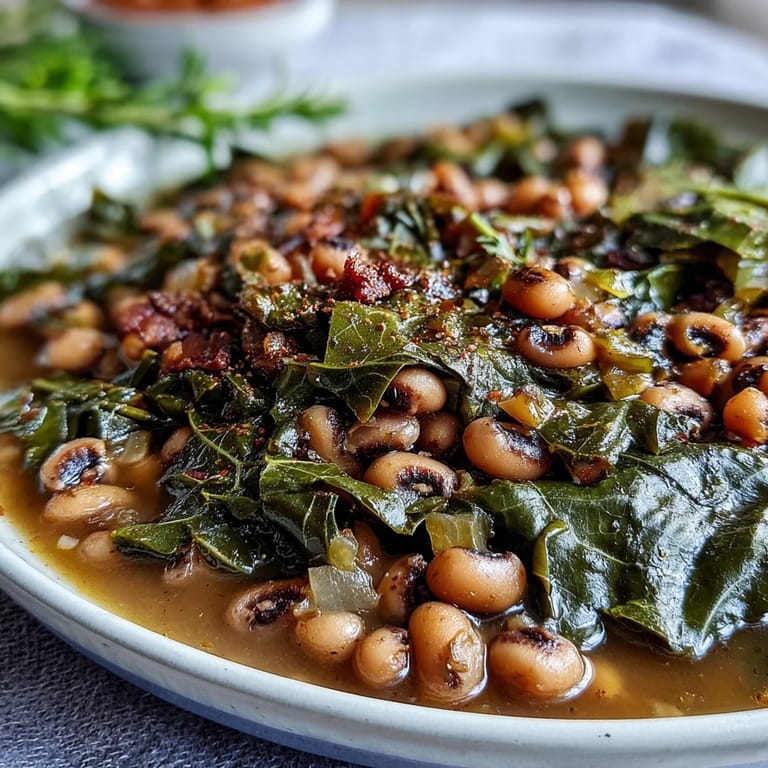
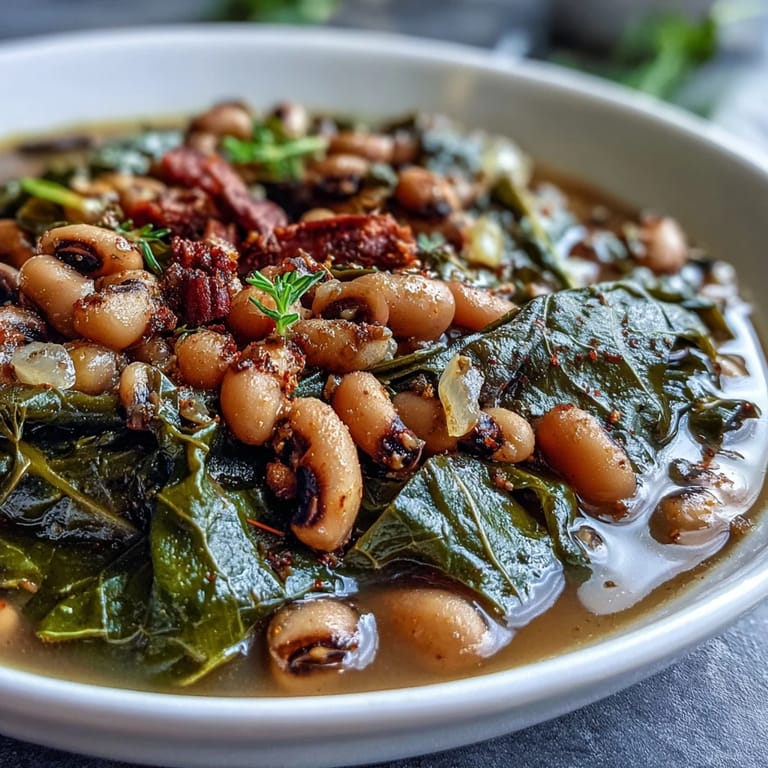
This isn't a dish that tricks you with fancy technique or surprising ingredients; it's built on the simple truth that good things happen when you give vegetables time and heat and good seasonings. The collard greens aren't hiding under anything—they're front and center, dark and earthy and delicious. The black-eyed peas aren't there for luck alone; they're creamy and deeply satisfying, breaking slightly as you eat them.
When to Make This
Yes, this is a New Year's Day tradition meant to bring luck and prosperity, but honestly, it's too good to reserve for one day. I make it when the weather turns cold and I want something that feels substantial and warming without being heavy. It's also perfect for feeding people without spending your entire day cooking—most of the work is just waiting, which means you can actually enjoy the company while everything simmers.
Making It Work for Your Table
The beauty of this dish is how it adapts to what you need it to be. Skip the ham if you want something vegetarian; substitute mustard greens or kale if that's what you have; adjust the spices to your heat preference. I've made it with chicken broth instead of vegetable broth, and I've made it completely plant-based for friends with dietary restrictions. It's forgiving enough to handle your changes but confident enough to stay delicious either way.
- Serve it with a wedge of buttered cornbread and a dash of hot sauce: Each element matters—the cornbread soaks up the liquid, the heat wakes up your palate, and together they create something whole.
- Leftover magic: This dish genuinely improves after a day in the fridge, as the flavors continue to meld and deepen, so don't hesitate to make extra.
- Wine or tea pairing: A crisp white wine or a tall glass of sweet iced tea both cut through the richness and complement the earthiness of the greens.
 Pin
Pin Make this dish when you want to feel like you're honoring something real and true, something that's fed people through winters and celebrations for generations. It's simple food that tastes like it took hours, which means you get to feel accomplished without spending your whole day in the kitchen.
Recipe Questions
- → Do I need to soak dried black-eyed peas before cooking?
Yes, dried black-eyed peas require overnight soaking in cold water to soften them and reduce cooking time. If you're short on time, you can use canned black-eyed peas instead—just rinse, drain, and add them during the last 20 minutes of simmering.
- → Can I make this dish vegetarian?
Absolutely. Simply omit the ham hock or smoked turkey and use vegetable broth instead of chicken broth. The smoked paprika and aromatic vegetables still provide plenty of depth and savory flavor without any meat.
- → What can I substitute for collard greens?
Kale, mustard greens, or turnip greens all work beautifully as substitutes. Each brings slightly different flavor notes—mustard greens add a pleasant peppery bite, while kale offers a milder, slightly sweeter taste that pairs well with the peas.
- → How long do leftovers keep?
This dish actually tastes better the next day as flavors meld together. Store in an airtight container in the refrigerator for up to 4 days. Reheat gently on the stovetop, adding a splash of broth or water if needed to loosen the consistency.
- → Why is apple cider vinegar added at the end?
The vinegar balances the earthy, rich flavors of the peas and greens while brightening the overall dish. It also helps tenderize the collards and enhances nutrient absorption from the legumes.
- → What's the traditional significance of this dish?
Black-eyed peas and collard greens are classic New Year's Day traditions in the South. The peas symbolize coins and prosperity, while the greens represent folded money—both believed to bring luck and financial fortune in the coming year.